

Period Property Kitchen Design: Honouring Heritage Without Sacrificing Modern Living
A comprehensive guide to designing bespoke kitchens for period properties — from Georgian townhouses to 1930s semis. How to respect original architecture, choose appropriate materials, and integrate modern functionality with period authenticity.
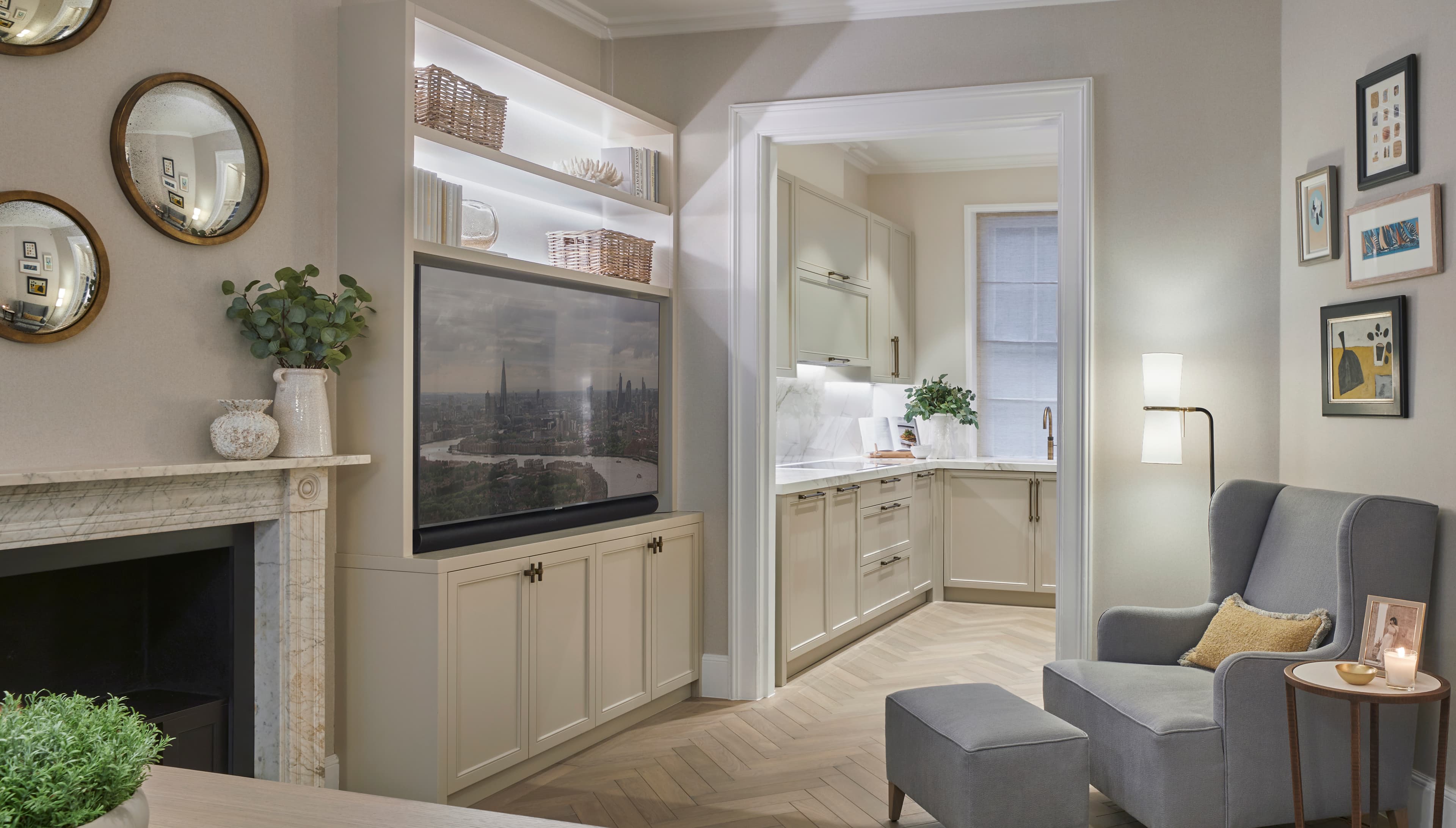
There is a particular kind of anxiety that afflicts anyone who has ever stood in a beautiful old house, staring at a kitchen that is very clearly wrong. The ceiling has original cornicing; the floor is handsome Victorian tile; the sash windows are perfectly proportioned — and then there, occupying the most important room in the house, sits a kitchen that might have been airlifted in from a new-build in Milton Keynes.
Period property kitchen design is, at its heart, a question of sympathy. Not mimicry, not pastiche, but a genuine understanding of the building you are working with — its proportions, its materials, its architectural language — and a kitchen that speaks the same dialect.
Getting this right is one of the most satisfying things we do at Albury House Kitchens. Getting it wrong is one of the most conspicuous mistakes a homeowner can make.
Why Period Properties Demand a Different Approach
A kitchen in a new-build starts with a blank canvas. Walls are plumb, floors are level, ceilings are a predictable height, and the room is an obliging rectangle. You choose a style, pick your finishes, and the cabinetry goes in with minimal fuss.
A period property offers none of these luxuries — and all of the charm.
Walls lean. Floors undulate. Ceilings may be gloriously high or charmingly low. There are chimney breasts, alcoves, beams, window seats, and original features that have been quietly defining the character of the room for a century or more. A bespoke kitchen for a period property must be designed around these features, not in spite of them.
This is precisely why off-the-shelf kitchens struggle in older houses. Standard cabinet depths and heights assume standard dimensions. Standard filler pieces assume straight walls. The result is a kitchen that is visibly fighting its surroundings, with awkward gaps, misaligned details, and that unmistakable sense that the room and the kitchen are having two entirely different conversations.
A truly bespoke approach begins with the building itself. We measure every wall, every reveal, every irregularity — and then design cabinetry that responds to the room as it actually is, rather than as a computer might wish it to be.
The Georgian Kitchen: Symmetry, Proportion, and Quiet Authority
Georgian architecture — roughly 1714 to 1837 — is governed by classical principles of symmetry, proportion, and restraint. Rooms are typically generous in height, with well-proportioned sash windows, elegant cornicing, and a sense of ordered calm that rewards equally ordered design.
Design Cues
A Georgian kitchen should feel balanced and composed. Cabinetry arranged symmetrically around a central focal point — a range cooker within a chimney breast alcove, for instance — echoes the architectural language of the house. Tall dresser units and floor-to-ceiling pantry cupboards make excellent use of the generous ceiling heights that Georgian rooms so often provide.
Materials and Cabinet Styles
In-frame cabinetry is the natural choice, with clean, well-proportioned panelled doors. Simple fielded panels or flat panels with a delicate applied moulding are more appropriate than heavy or ornate detailing — Georgian architecture derives its beauty from proportion, not decoration. Solid timber, hand-painted in eggshell or flat finishes, is entirely at home.
Colour Palette
The Georgian palette is subtle and considered. Think soft off-whites, pale stone, muted sage, duck egg blue, and warm grey. For a bolder statement, the deeper end of the Georgian spectrum — library green, deep blue, or a rich burgundy on an island or dresser unit — can be tremendously effective when balanced against lighter walls and joinery.
The Victorian Kitchen: Richness, Practicality, and Unashamed Detail
The Victorians built with confidence and without much interest in minimalism. Their houses are characterised by rich detailing, robust materials, decorative tilework, and a practical, no-nonsense approach to domestic space. The kitchen in a Victorian property should honour that spirit.
Design Cues
Victorian kitchens thrive on a degree of visual richness. Panelled cabinetry with more pronounced mouldings, corbels beneath mantel shelves, and turned pilasters all feel entirely appropriate. Where a chimney breast survives — and they often do in Victorian terraces — it provides a natural focal point for a range cooker, flanked by cabinetry designed to frame the alcove.
Original features are gold dust. Encaustic floor tiles, cast-iron fireplaces, built-in dressers, and ceiling roses all contribute to the room's character and should be preserved wherever possible.
Materials and Cabinet Styles
Beaded in-frame cabinetry — where a subtle bead moulding runs around the inner edge of the face frame — is particularly well suited to Victorian properties. The bead adds a line of shadow and detail that complements the more decorative character of the period. Door styles can range from simple Shaker-influenced panels to more traditionally moulded designs.
Worktops in natural stone, honed granite, or solid timber sit comfortably alongside Victorian detailing. Marble is period-appropriate and enduringly beautiful, though it does require an owner who is philosophical about patina.
Colour Palette
Victorians were not afraid of colour, and neither should you be. Deep blues, rich greens, warm terracottas, and confident darks all work splendidly. Two-tone schemes — a darker colour on base units with a lighter finish on wall cabinetry and dressers — add depth without heaviness. Hardware in aged brass, burnished copper, or blackened iron completes the picture.
The Edwardian Kitchen: Light, Elegance, and Quiet Refinement
Edwardian architecture (1901-1910, though the influence extends well into the 1920s) took the Victorian template and lightened it considerably. Rooms became airier, ceilings slightly lower but still generous, and decorative detailing grew more refined. There is an elegance to Edwardian houses that calls for a correspondingly refined approach.
Design Cues
Where Victorian kitchens can carry visual weight, Edwardian kitchens should feel lighter and more graceful. Glazed wall cabinets — with slender glazing bars and interior shelving for displaying ceramics — are wonderfully Edwardian. Dresser units with open shelving above closed cupboards capture the period perfectly. The proportions of the cabinetry should be slightly more delicate than in a Victorian scheme, with narrower frame widths and more refined moulding profiles.
Materials and Cabinet Styles
In-frame cabinetry remains the appropriate choice, but with a gentler touch. Simple panelled doors with a fine moulding, or even a clean flat-panel style, suit the lighter Edwardian sensibility. Tongue-and-groove panelling to dado height is a lovely period detail that also happens to be extremely practical in a kitchen.
Worktop choices might lean towards paler natural stones — honed Carrara marble, Portland limestone, or pale granite — or solid timber in lighter species such as maple or ash.
Colour Palette
The Edwardian palette is softer and warmer than its Victorian predecessor. Creams, soft whites, pale greens, lavender greys, and delicate blues all feel at home. Where colour is introduced more boldly, it tends towards dusty rather than saturated tones — a muted teal rather than a deep navy, a sage rather than a forest green.
The Arts and Crafts Kitchen: Handcrafted Honesty
The Arts and Crafts movement (roughly 1880-1920) was a reaction against industrial mass production and a celebration of traditional craftsmanship, honest materials, and the beauty of the handmade. A kitchen in an Arts and Crafts property should embody these values absolutely.
Design Cues
This is where bespoke cabinetmaking truly comes into its own. Arts and Crafts kitchens should look and feel handcrafted. Visible joinery details — exposed tenons, hand-forged ironwork, turned wooden handles — are not merely appropriate but essential. Freestanding or semi-freestanding furniture pieces (a substantial kitchen table, an unfitted dresser, a standalone larder cupboard) feel more authentic than a fully fitted layout.
The relationship between the kitchen and its natural surroundings matters here. Arts and Crafts houses typically have a strong connection to their gardens, so consider how the kitchen relates to the outdoors — generous windows, garden views, perhaps a door leading directly to a kitchen garden.
Materials and Cabinet Styles
Natural, honest materials are paramount. Solid oak — ideally quarter-sawn, which the Arts and Crafts movement prized for its distinctive medullary rays — is the defining timber of the period. Cabinetry should be solidly constructed with visible craftsmanship: frame-and-panel doors, pegged joints, and hardware that looks as though it was made by a blacksmith rather than stamped from a sheet of brass.
Natural stone, handmade tiles, and solid timber worktops are all appropriate. Engineered materials and high-gloss finishes are emphatically not.
Colour Palette
The Arts and Crafts palette draws from nature: warm oak tones, deep greens, russets, ochres, and earthy neutrals. If the cabinetry is in natural oak, the surrounding palette should be muted and sympathetic — lime-washed walls, natural stone, handmade tiles in soft, irregular glazes.
The 1930s Kitchen: Art Deco Meets Domestic Charm
The 1930s house — whether a bay-fronted semi or a streamlined Art Deco villa — has its own distinct character that is often overlooked in kitchen design. There is a cheerful modernity to 1930s architecture, a sense of optimism and clean lines that deserves recognition.
Design Cues
The 1930s kitchen can support a surprisingly contemporary approach, provided it respects the period's own brand of modernity. Curved cabinetry (echoing the curved bay windows and rounded doorways of the era), stepped details reminiscent of Deco architecture, and a cleaner, less ornamented aesthetic all feel appropriate. Built-in cabinetry was becoming the norm by the 1930s, so a fully fitted layout is historically honest.
Materials and Cabinet Styles
Cabinetry can be simpler and more streamlined than in earlier periods. A clean in-frame style with flat or lightly detailed doors works well. Painted finishes in semi-gloss or satin — slightly glossier than you might choose for a Georgian or Victorian property — nod to the period's enthusiasm for modern, hygienic surfaces.
Worktops in terrazzo, polished stone, or even stainless steel can complement the Deco influence, whilst solid timber provides warmth against the cleaner lines.
Colour Palette
The 1930s palette can be bold and graphic: cream and jade, black and white, warm peach with chrome accents. Alternatively, the softer side of the decade — primrose yellow, powder blue, mint green — creates a kitchen with genuine period charm. Chrome or polished nickel hardware is entirely at home.
Balancing Period Authenticity with Modern Living
Here is the tension at the heart of every period property kitchen: how do you honour the character of a house built in an era of sculleries, ranges, and cold larders, whilst creating a room that works for a family in 2026 — with integrated appliances, task lighting, USB charging points, and an island where the children do their homework?
The answer, we believe, is not to pretend. The most successful period property kitchens we have designed are those that are honest about what they are: a modern kitchen, made with traditional skill and quality materials, designed with deep respect for the building it inhabits.
This means using the proportions, materials, and detailing that belong to the house — but not attempting to create a museum piece. A beautifully crafted in-frame kitchen with handmade tiles, solid timber, and hand-forged hardware is entirely sympathetic to a Victorian terrace, even though no Victorian ever had one. The quality speaks across the centuries; the specific design does not need to.
Integrating Modern Appliances Sympathetically
The single biggest challenge in period property kitchen design is the appliance question. Modern appliances are visually assertive objects — large, rectangular, usually stainless steel or black glass — and they can easily overwhelm a room that was built for cast iron and candlelight.
Our approach is threefold:
Conceal where appropriate. Integrated refrigerators, freezers, and dishwashers can be housed behind panelled doors that match the surrounding cabinetry. When the doors are closed, the appliances simply disappear. This is particularly effective for the larger appliances that would otherwise dominate the room.
Celebrate where appropriate. A handsome range cooker sitting within a chimney breast alcove is a genuinely beautiful thing — it does not need to be hidden. Similarly, a well-chosen tap, a quality sink, or a statement extraction hood can be design features in their own right. The key is choosing appliances that have the visual weight and material quality to hold their own alongside traditional cabinetry.
Plan the sightlines. In any kitchen, there are things you see first when you enter the room and things you do not. Thoughtful planning places the most visually sympathetic elements — the dresser, the range, the island — in the primary sightlines, whilst the more aggressively modern items (the microwave, the built-in coffee machine) are tucked away in pantry cupboards or secondary zones.
Working with Original Features
Original features are precisely what give a period property its soul, and a good kitchen design should treat them as assets rather than obstacles.
Chimney breasts and fireplaces provide natural focal points and alcoves that are perfectly proportioned for range cookers, dresser units, or open shelving. Removing a chimney breast to gain a few inches of worktop is one of the great acts of domestic vandalism — resist it.
Exposed beams and joists bring warmth and character to a kitchen, particularly in older properties. Cabinetry should be designed to work around them, not up against them. A gap between the top of the wall units and the ceiling beam looks intentional and allows the timber to be appreciated; cramming a cabinet hard up against a beam looks careless.
Flagstone and stone floors are magnificent in kitchens and work beautifully with underfloor heating. Their irregularity is part of their appeal — bespoke cabinetry, scribed to follow the undulations of an ancient floor, looks far more refined than standard units sitting on uneven plinths.
Sash windows should dictate the height and positioning of any cabinetry on the same wall. The window architrave should be allowed to read clearly, uninterrupted by cabinet returns or filler panels. In many period kitchens, the window wall is best left free of tall cabinetry altogether, allowing the architecture to breathe.
"Of Its Time" vs "Timeless": A Considered View
There is a school of thought that says a kitchen in a period property should look as though it has always been there — as though it were installed when the house was built. There is another that argues for something more honestly contemporary: a kitchen that is clearly of the twenty-first century, designed in full knowledge of the building's history.
Both approaches have merit, and neither is universally correct. Our view is that the most enduring kitchens tend to fall somewhere between the two — not a period reproduction, but not a self-consciously modern statement either. They use the materials and proportions that the house understands, assembled with a clarity and restraint that transcends any specific era.
A kitchen of this kind does not date in the way that a fashion-led design inevitably does. It feels as natural in the house at twenty years old as it did on the day it was installed — which, when you have invested in genuinely bespoke cabinetry, is exactly as it should be.
Begin with the Building
If you are planning a kitchen for a period property and would value a conversation about how to approach it, we would be glad to hear from you. Every project at Albury House begins with the building — understanding its character, its history, and its particular opportunities — before a single door style or colour is discussed.
It is, we believe, the only way to design a kitchen that truly belongs.
Frequently Asked Questions
Thinking about a new kitchen?
Book Your Free ConsultationYou might also enjoy
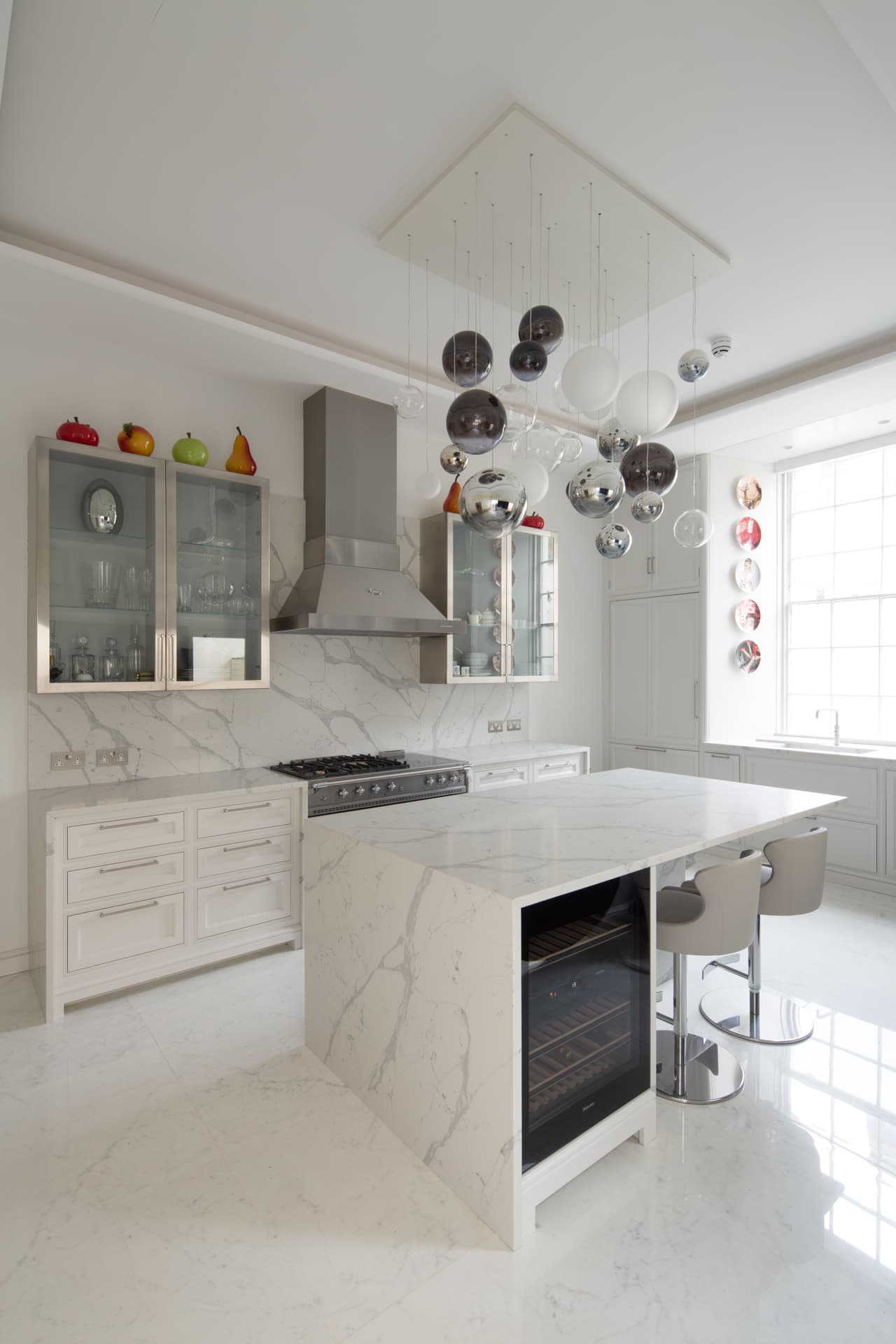
Edwardian Kitchen Renovation: A Thoughtful Guide to Getting It Right
How to renovate a kitchen in an Edwardian home without losing what makes it special. We cover layouts, extensions, colour palettes, original features, and the design decisions that matter most.
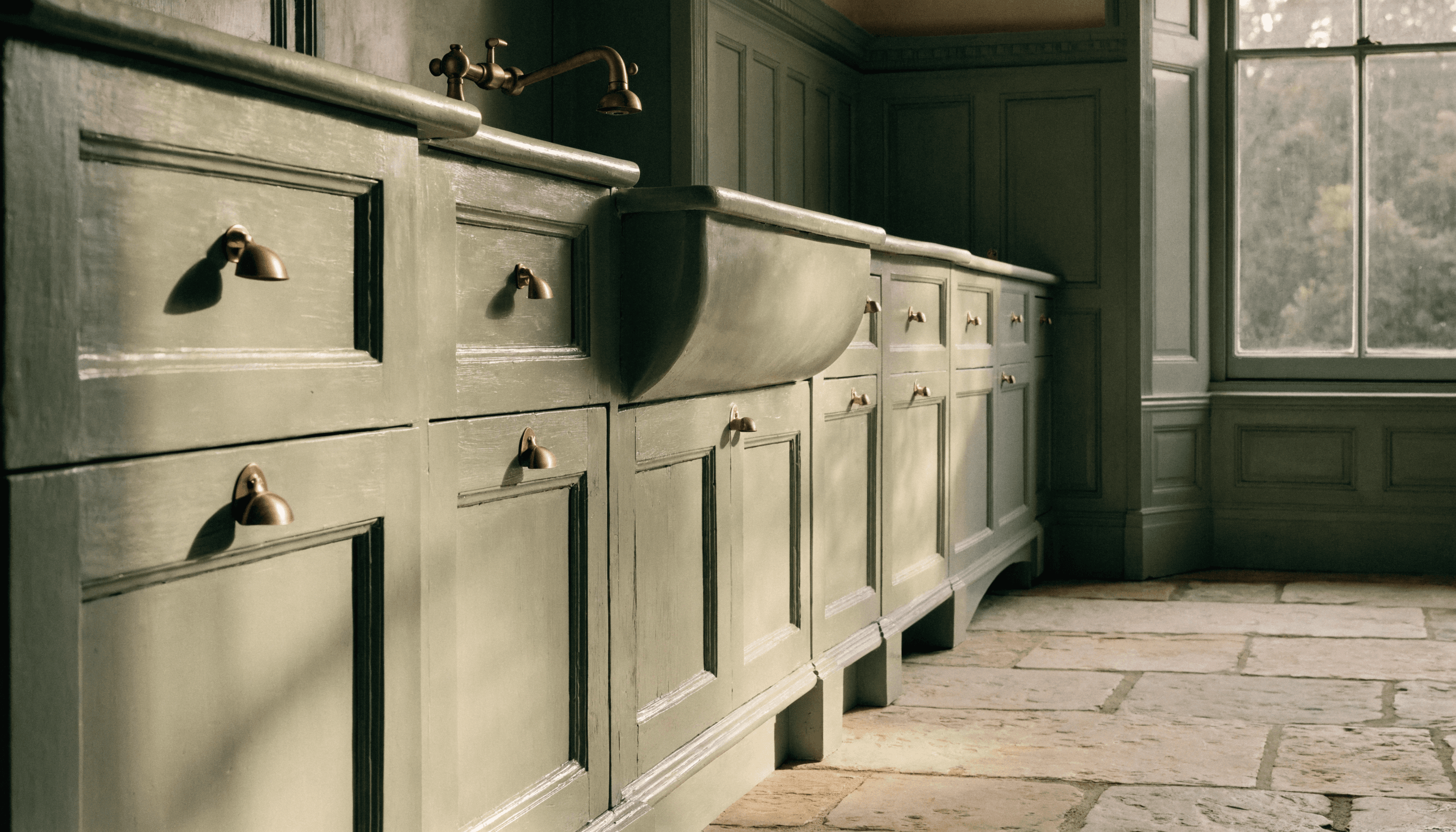
Shaker, In-Frame or Handleless: Choosing for a Period Home
Shaker, in-frame or handleless — which door style truly suits a period home? Albury House Kitchens, Essex maker-designers since 2007, explains the difference.
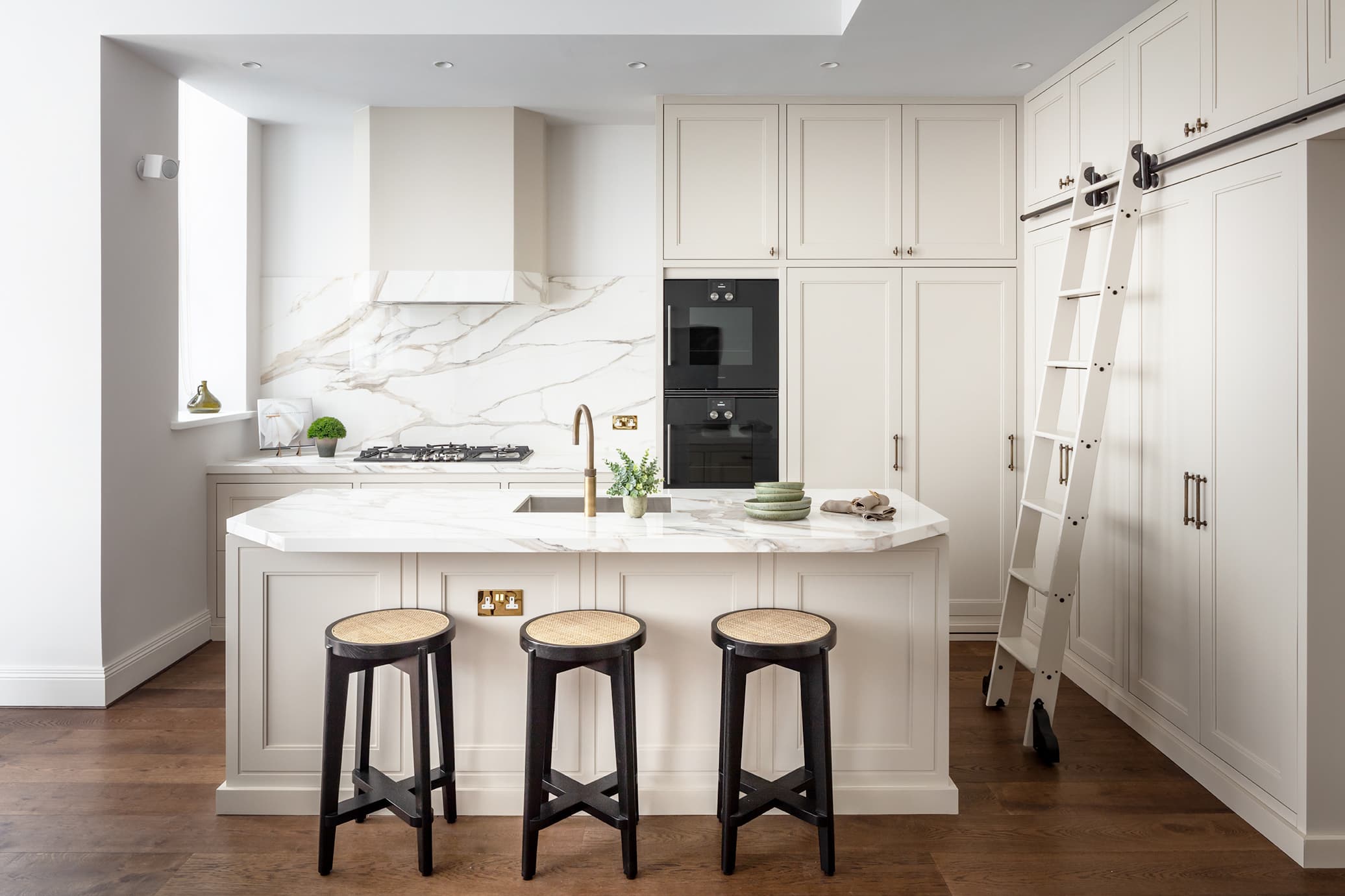
Bespoke Kitchen Cabinets: The Definitive Guide to Handmade Cabinetry
Everything you need to know about bespoke kitchen cabinets — from construction methods and timber selection to door styles, finishes, and the details that distinguish genuine craftsmanship from the merely expensive.