

English Country Kitchen Design: Warmth, Honesty, and Lived-In Beauty
Explore the art of English country kitchen design — from Aga range cookers and Belfast sinks to heritage colour palettes and natural materials. Discover how to create a kitchen with genuine country warmth, whether you live in a farmhouse or a townhouse.
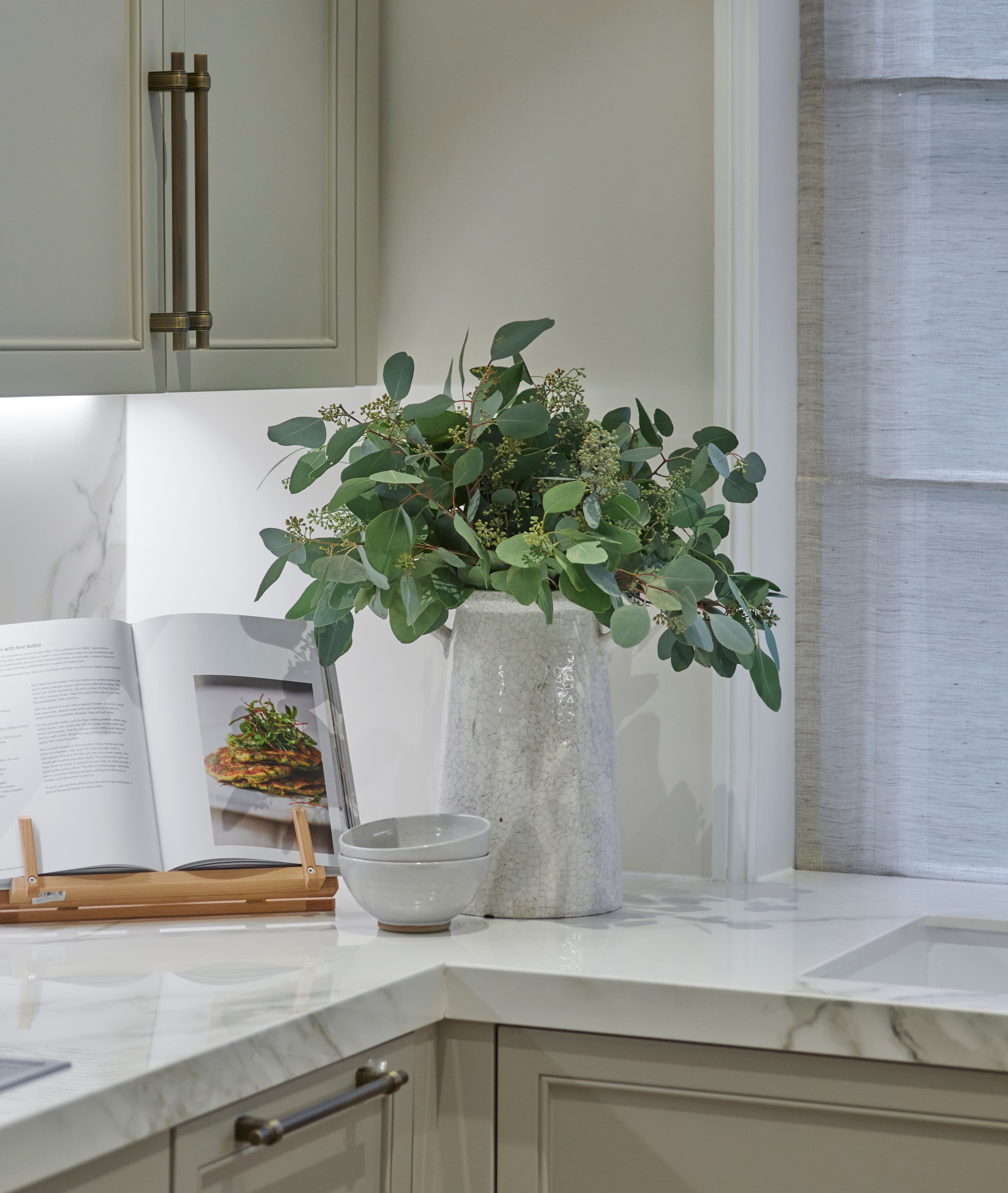
There is something about an English country kitchen that resists definition yet is instantly recognisable. You know it when you step into one. The warmth of the range cooker radiating through the room. A dresser laden with mismatched china. The deep stone sill of a window looking out over a garden, or a lane, or simply a well-tended window box. It is not a style you specify from a catalogue. It is a feeling — of home, of welcome, of a room that has been genuinely lived in and is all the better for it.
The English country kitchen is perhaps the most influential kitchen design philosophy in the world, admired and imitated from New England to New South Wales. Yet the best examples are never copies or period reconstructions. They are honest rooms, built with real materials and real skill, that happen to be beautiful because everything in them was chosen for a good reason.
At Albury House Kitchens, we have been building country kitchens for families across the Home Counties, Cambridge, and the M11 corridor for years. Some are in genuine farmhouses with flagstone floors and low beams. Others are in Edwardian villas, Georgian rectories, and brand-new houses whose owners simply want the warmth and generosity that only a country kitchen can provide. The building changes. The philosophy does not.
This guide explores what defines the English country kitchen, the materials and details that give it soul, and how to achieve its warmth — whether you live in deepest Suffolk or the middle of Hampstead.
What Defines the English Country Kitchen
The English country kitchen is not a single style but a design philosophy rooted in three principles: warmth, honesty, and lived-in beauty.
Warmth is the non-negotiable. A country kitchen must feel warm — literally, through the presence of a range cooker or Aga, and emotionally, through natural materials, soft colours, and a layout that invites people to sit, talk, and stay. This is not a kitchen designed to impress. It is a kitchen designed to embrace.
Honesty means materials are what they appear to be. Solid timber rather than veneered chipboard. Natural stone rather than printed laminate. Brass hardware that will develop a patina rather than plated metal that will flake. The country kitchen tradition has its roots in working rooms — the kitchens of farms, rectories, and manor houses where food was prepared seriously and in quantity. Those rooms used materials that could withstand daily use and improve with age. The principle still holds.
Lived-in beauty is the quality that separates a genuinely good country kitchen from a stage set. It means the room looks as though it has evolved over time, even if it was designed and installed in a single commission. Furniture-style pieces mix with fitted cabinetry. Open shelves display well-used crockery alongside cookbooks. A wooden chopping board sits on the worktop not as a prop but because someone was making lunch. This quality cannot be bought off the shelf. It must be designed in — and it requires a maker who understands the difference between decoration and character.
For those interested in how the broader bespoke kitchen process unfolds, our guide to commissioning a bespoke kitchen covers every stage.
The Heart of the Room: Range Cookers and the Aga
No element defines the English country kitchen more emphatically than the range cooker. Whether it is a traditional Aga nestled into an inglenook or a modern range cooker beneath a handsome mantel shelf, this is the heart of the room in every sense — the source of warmth, the anchor of the layout, and the piece around which family life organises itself.
The Aga, in particular, occupies a unique place in the English kitchen imagination. Its constant, gentle heat transforms the atmosphere of a room. Clothes dry on the rail. Cats sleep beneath it. Toast is made directly on the hotplate. It is less an appliance than a member of the household.
A bespoke country kitchen design takes the range cooker as its starting point. The cabinetry frames it, often with a chimney breast or mantel that gives the range the visual weight and ceremony it deserves. Flanking cabinets might house spice drawers, utensil storage, or integrated extractors concealed behind traditional cabinetry. The range cooker recess is frequently tiled — handmade tiles in natural tones are a particularly beautiful choice — creating a focal point that draws the eye and grounds the entire scheme.
For those who prefer a more contemporary cooking setup, a country kitchen can absolutely accommodate a modern induction hob and built-in ovens. The country philosophy is about atmosphere and materials, not a rigid checklist. What matters is that the cooking area feels generous, purposeful, and considered.
The Belfast Sink and the Working Kitchen
The Belfast sink — deep, ceramic, with a distinctive weir overflow — is another defining element of the English country kitchen. It is a supremely practical object: deep enough to soak large pans, wide enough to wash a baking tray without contortion, and robust enough to survive generations of daily use. There is a reason they are still prized in working kitchens.
In a bespoke country kitchen, the Belfast sink typically sits within a dedicated sink run, often positioned beneath a window for light and a view. The cabinetry around it is designed to accommodate the sink's dimensions precisely, with a traditional timber drainer to one side and perhaps open shelving above for everyday crockery and glassware.
This working quality is fundamental. An English country kitchen is not a showroom. It is a room where people cook, eat, talk, argue, do homework, arrange flowers, and feed the dog. The design must accommodate all of this with grace and good humour. A generous sink, ample worktop space, and storage that makes sense for how you actually live are far more important than visual flourishes.
Cabinetry: The Art of the Imperfect Match
One of the most distinctive characteristics of an English country kitchen is the way its cabinetry does not look entirely of a piece. Unlike a sleek contemporary kitchen where uniformity is the point, a country kitchen achieves its charm through a sense of gentle variety — as though the room has been assembled and added to over many years.
This is achieved through a careful mix of fitted and freestanding elements. The main runs of cabinetry might be built-in and painted in a single colour, but the island could be a freestanding piece in a contrasting shade. A dresser against the far wall might be taller and more ornate. A plate rack above the sink introduces a different visual rhythm. A butcher's block on legs sits in the middle of the room, clearly its own piece of furniture.
The skill lies in making this variety feel natural rather than contrived. Proportions need to be right. The palette needs coherence even if the colours differ. And the quality of construction needs to be consistent — each piece should feel as though it was made with equal care, even if it appears to be from a different era.
This is where bespoke craftsmanship becomes essential. A skilled cabinetmaker can create fitted runs, a freestanding dresser, and an island that all look distinct yet clearly belong together. It is a subtle art, and one that factory-made kitchens simply cannot replicate. Our hand-painted kitchen cabinets guide explores this further, including how paint finishes contribute to the country kitchen's sense of depth and age.
Open Shelving, Dressers, and Plate Racks
If fitted cabinetry provides the backbone of a country kitchen, then its open storage provides the personality. Shelves, dressers, and plate racks are where the kitchen reveals its owner — through the crockery they collect, the cookbooks they reach for, and the jars they keep filled.
Open shelving in a country kitchen is not the Instagram-styled floating shelf with three artfully placed objects. It is a working shelf, usually in solid timber, holding the plates and bowls that come out every day. Brackets might be in cast iron or turned timber. The shelves themselves develop a gentle curve over decades of holding stoneware. This is storage that earns its character.
The kitchen dresser is arguably the most English piece of kitchen furniture there is. Part storage, part display, part family archive, a good dresser is the room's most expressive element. The lower section offers closed cupboard storage; the upper section — open shelves with a plate rail and cup hooks — displays the household's ceramics, from inherited tea services to children's pottery projects. A bespoke dresser can be designed to fit a specific wall, with proportions that suit the room and shelving configured to hold particular collections.
Plate racks above the sink are both practical and beautiful. A timber plate rack allows washed crockery to drain and dry without a separate drainer cluttering the worktop. It also puts everyday plates within arm's reach — a small efficiency that makes a kitchen feel genuinely considered.
The Larder: A Country Kitchen Essential
The larder — or pantry — is experiencing a well-deserved renaissance in country kitchen design. For centuries, every serious kitchen had a cool, ventilated room or cupboard dedicated to food storage. The twentieth century's love affair with the refrigerator pushed the larder aside, but designers and homeowners have rediscovered what our grandparents knew: a larder is a tremendously useful thing.
A bespoke larder can take many forms. In a larger kitchen, it might be a full walk-in pantry with stone or marble shelves that keep naturally cool. In a more compact space, it might be a generous larder cupboard — a full-height unit with shelves, drawers, and hooks behind bi-fold or pocket doors that open to reveal the kitchen's entire dry-goods supply at a glance.
The practical benefits are considerable. A larder keeps tins, jars, spices, oils, baking supplies, and preserves organised and visible, freeing up the main kitchen cabinetry for crockery and cookware. It reduces trips to the main fridge. And it provides a satisfying visual order that makes meal planning and shopping considerably easier.
In an English country kitchen context, the larder also contributes to the room's sense of abundance and generosity. An open larder door revealing neatly stacked preserves, a ham on the bone, and a dozen jars of homemade chutney is one of the most appealing sights a kitchen can offer.
Colour Palettes: The Colours of the English Landscape
The English country kitchen takes its palette from the landscape it sits within — or aspires to. These are not bold, saturated colours but muted, chalky tones that seem to absorb light rather than reflect it. They are colours you might find on a walk through the countryside: the grey-green of sage, the pale blue of a duck egg, the soft white of chalk, the warm grey of slate.
Heritage Greens
Green is the quintessential country kitchen colour. Sage, olive, and muted forest tones connect the kitchen to the garden and the landscape beyond. Green sits beautifully against natural oak, brass hardware, and warm stone, creating a palette that feels rooted and timeless. It is also remarkably versatile — a very pale sage reads as almost neutral, while a deeper olive brings richness and drama.
Duck Egg and Soft Blues
Blue in a country kitchen is never bright. It is the colour of a winter sky, a robin's egg, or old Swedish paintwork — soft, slightly grey, and wonderfully calm. Duck egg blue cabinetry paired with a warm timber worktop and brushed nickel hardware is one of the most enduringly popular country kitchen combinations, and for good reason. It works in virtually any light.
Creams, Stones, and Warm Whites
For those who want a lighter scheme, the country kitchen palette offers creams and stone tones that are warmer and more interesting than plain white. These are colours with depth — a hint of yellow, a touch of pink, a whisper of grey — that change subtly throughout the day as the light shifts. They provide a quiet backdrop that lets the room's textures and materials do the talking.
Slate and Charcoal
A darker country kitchen is a magnificent thing. Slate grey or soft charcoal cabinetry, paired with a pale stone worktop and warm brass fittings, creates a kitchen with gravitas and intimacy — particularly effective in a room with generous proportions or good ceiling height. The English country tradition has always included dark-painted rooms; this is not a modern affectation but a return to historical authenticity.
Many of the finest country kitchens use two or three colours together. A deeper tone on the island or dresser, a lighter shade on the main runs, and perhaps a third colour on a larder cupboard or plate rack. This layered approach reinforces the sense that the kitchen has been assembled over time and gives the eye a gentle journey around the room.
Materials: What You Can Touch
In a country kitchen, materials matter more than anywhere else. This is a style that relies on texture, weight, and the patina of age rather than sharp lines or glossy surfaces. Every surface should reward the hand as well as the eye.
Solid Timber
The foundation of any serious English country kitchen. Oak, ash, and tulipwood are all excellent choices for cabinetry. Worktops in end-grain oak or wide-plank elm bring warmth and character that no synthetic material can match. Timber develops a beautiful patina over years of use — knife marks, oil stains, and the gentle wear of daily life all contribute to a surface that tells the story of a kitchen being properly used.
Natural Stone
Limestone, slate, and marble have been used in English kitchens for centuries. A honed limestone worktop has a soft, chalky quality that is distinctly English. Slate is virtually indestructible and develops a beautiful lustre. Marble, for all its susceptibility to staining, is incomparably elegant — and in a country kitchen, a few marks and rings are not a disaster but a record of a life well lived.
Stone floors — flagstone, limestone, or reclaimed quarry tiles — complete the material palette. They are cool underfoot in summer, and when paired with underfloor heating, warm and welcoming in winter.
Copper and Brass
Hardware, taps, and light fittings in copper and brass bring a warmth and richness to a country kitchen that chrome and stainless steel cannot quite achieve. These are materials that age gracefully. Unlacquered brass develops a gentle, uneven patina. Copper pans hanging from a ceiling rack become darker and more lustrous with use. They speak of permanence, of a kitchen that is built to last and expected to improve with time.
Country Kitchen Warmth Without Cliche
Here is where the conversation becomes important, because there is a version of the English country kitchen that has hardened into cliche: floral curtains, novelty teapots, twee signage instructing you to Keep Calm. This is not what we are talking about.
A genuinely beautiful country kitchen avoids cliche by being genuine. Every element earns its place through use or beauty, preferably both. A hanging rack of copper pans is beautiful because copper pans are beautiful, and because having them within reach makes cooking easier. A dresser full of blue-and-white china is charming because the china is actually used, not because it has been arranged for a photograph.
The distinction is between decoration and character. Decoration is applied; character is accumulated. A country kitchen gains character through the quality of its materials, the honesty of its construction, and the evidence of a life being lived within it. No amount of accessorising can substitute for this.
If you are designing a country kitchen from scratch, the principle is straightforward: choose the best materials you can afford, have them worked by the most skilled hands available, and then furnish the room with things you genuinely use and love. The warmth will follow naturally.
Modern Interpretations of the English Country Kitchen
The country kitchen is not a museum piece. It is a living tradition, and the best contemporary examples feel entirely current while honouring the style's fundamental values.
A modern country kitchen might feature shaker-style cabinetry in a deep heritage green with slim brass handles and a honed quartzite worktop. The range cooker might be a sleek Lacanche rather than a traditional Aga. The Belfast sink could sit alongside a modern boiling-water tap. Lighting might include contemporary pendant lamps over the island alongside traditional wall sconces.
The key is coherence, not purity. A country kitchen can happily accommodate a state-of-the-art wine fridge, an integrated coffee machine, and smart home controls, provided these elements are thoughtfully integrated into a design that remains warm, natural, and human in scale. Technology should serve the kitchen's purpose without dominating its personality.
This balance is particularly relevant for those designing kitchens in period properties, where the architecture demands respect but the homeowner rightly expects modern performance. A skilled bespoke designer can navigate this tension beautifully — creating a kitchen that feels as though it has always been there, while quietly delivering twenty-first-century functionality.
Textiles, Accessories, and the Finishing Layer
The final layer of an English country kitchen is the one that brings it to life — and it is the layer that cannot be designed on a drawing. It must be inhabited.
Textiles play a role no other kitchen style quite allows. Linen tea towels on the rail of the range cooker. A worn rug in front of the sink. Cushions on the window seat. Curtains — or, in a more contemporary scheme, simple Roman blinds — in a natural linen or muted check. These are not soft furnishings in the interior-design sense. They are the textures of a room that is warm enough and comfortable enough to sit in for hours.
Accessories follow the same principle of honest use. A stoneware jug holding wooden spoons. A breadboard with yesterday's crumbs. A fruit bowl with actual fruit. Fresh flowers from the garden in an imperfect vase. These details are not styled — they are simply what a kitchen looks like when someone is at home.
The country kitchen is, at heart, a generous room. It offers warmth, sustenance, comfort, and company. It invites people in and does not hurry them out. It ages well because it is made from things that age well. And it never goes out of fashion because it was never in fashion to begin with — it simply is.
Country Kitchens: Country Houses and Urban Homes
One of the most persistent myths about the English country kitchen is that it requires an actual country house. It does not. It requires good design, honest materials, and a commitment to warmth — things that are available at any postcode.
A country kitchen in a London terrace will differ from one in a Suffolk farmhouse, of course. The scale will be different. The ceiling height and floor area may be more modest. There may be no garden view through the window. But the fundamental qualities — solid timber cabinetry, natural stone, a generous sink, warm colours, and a layout that welcomes — translate beautifully to an urban setting.
In fact, some of the most compelling country kitchens we have designed are in towns and cities, for clients who wanted the antidote to the clean, hard surfaces that dominate urban life. A country kitchen in a Hampstead house or a Cambridge terrace becomes an oasis — a room that feels connected to an older, quieter tradition of domestic life, even if there is a bus route outside.
The practical considerations for an urban country kitchen are worth noting. Space is often tighter, which means the design must work harder. A larder cupboard rather than a walk-in pantry. A compact dresser rather than a full-width one. Clever use of a kitchen island to provide the generous worktop space and sociable seating that the country kitchen tradition demands. These constraints, handled well, can actually produce a more refined and considered design than an unlimited budget in a vast room.
Designing Your English Country Kitchen
The English country kitchen is not assembled from a parts list. It is designed — thoughtfully, carefully, and with a deep understanding of how you live, what you cook, and what makes you feel at home.
At Albury House Kitchens, every country kitchen we build begins with a conversation: about your house, your family, your daily routines, and your ambitions for the room. We visit the property, study the architecture, consider the light, and listen. Only then do we begin to draw.
What emerges is a kitchen that feels inevitable — as though it could only belong in this particular room, for this particular family. That is the test of a truly bespoke English country kitchen. Not whether it ticks a list of stylistic boxes, but whether it feels like home.
If you are considering an English country kitchen — whether in a period farmhouse or a contemporary new-build — we would be delighted to discuss your project. Get in touch to arrange a conversation, or explore our portfolio to see the kind of kitchens we make.
Frequently Asked Questions
Thinking about a new kitchen?
Book Your Free ConsultationYou might also enjoy
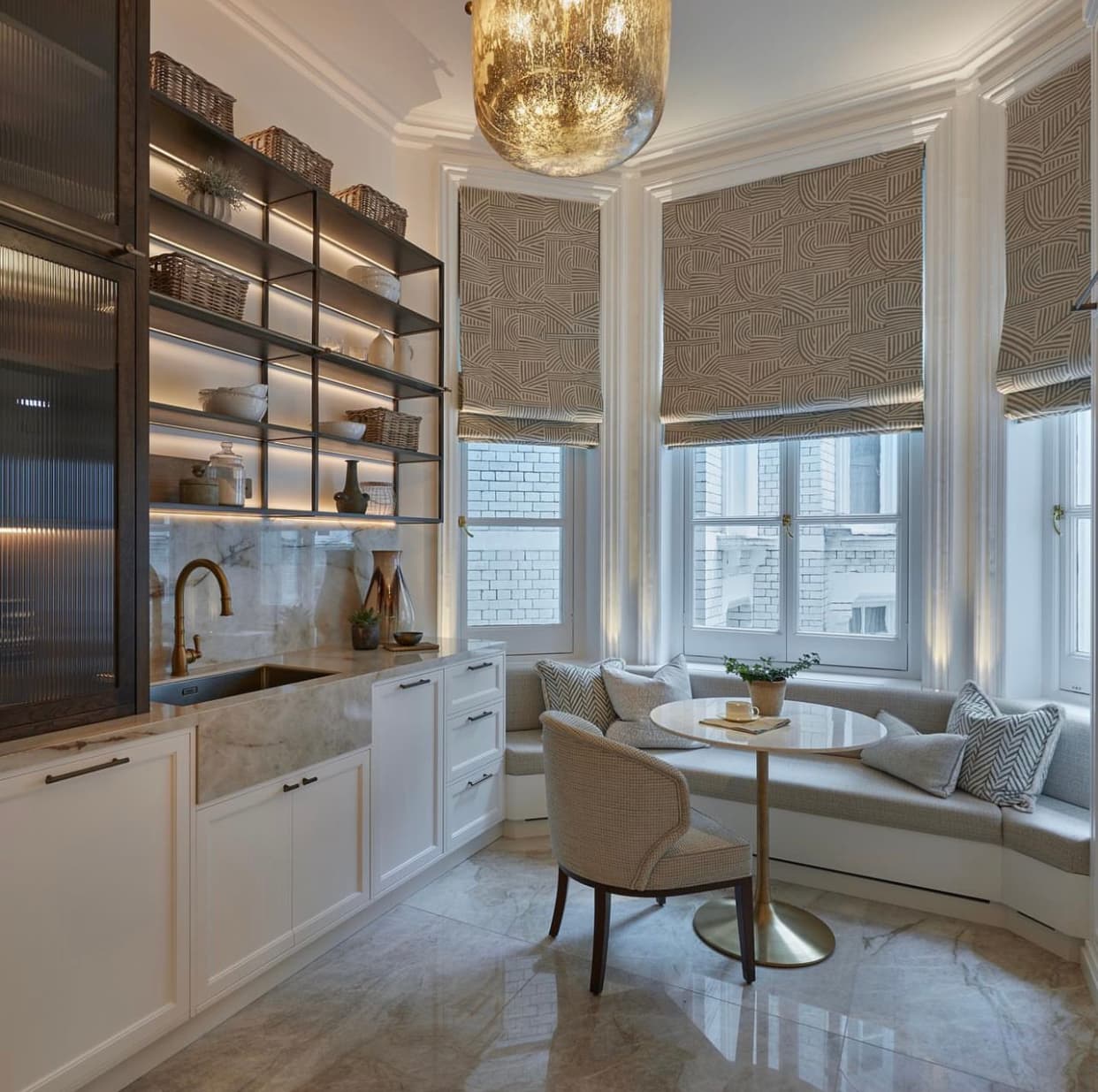
Banquette Seating Kitchen: The Art of Built-In Dining Done Properly
Explore how banquette seating transforms kitchen dining — from L-shaped corners and curved booths to storage-smart benches, upholstery choices, and dimensions that actually work. Inspiration for bespoke kitchens that invite you to sit down and stay.
Arts and Crafts Kitchen Design: Where Handcraft Meets the Heart of the Home
Explore how the Arts and Crafts movement inspires truly bespoke kitchen design — from hand-forged ironmongery and English oak to William Morris colour palettes. A guide to creating kitchens that honour the handmade.
Barn Conversion Kitchen Design: Bespoke Kitchens for Extraordinary Spaces
Designing a kitchen for a barn conversion demands a bespoke approach. From double-height ceilings and exposed trusses to acoustic management and island design, discover how Albury House Kitchens creates luxury kitchens that honour agricultural architecture whilst delivering modern performance.