

Bespoke Kitchen Design Ideas: Inspiration for Truly Individual Spaces
Explore bespoke kitchen design ideas from layout and material choices to island configurations, colour palettes, and period property adaptations. Inspiration for kitchens that are made, not chosen.
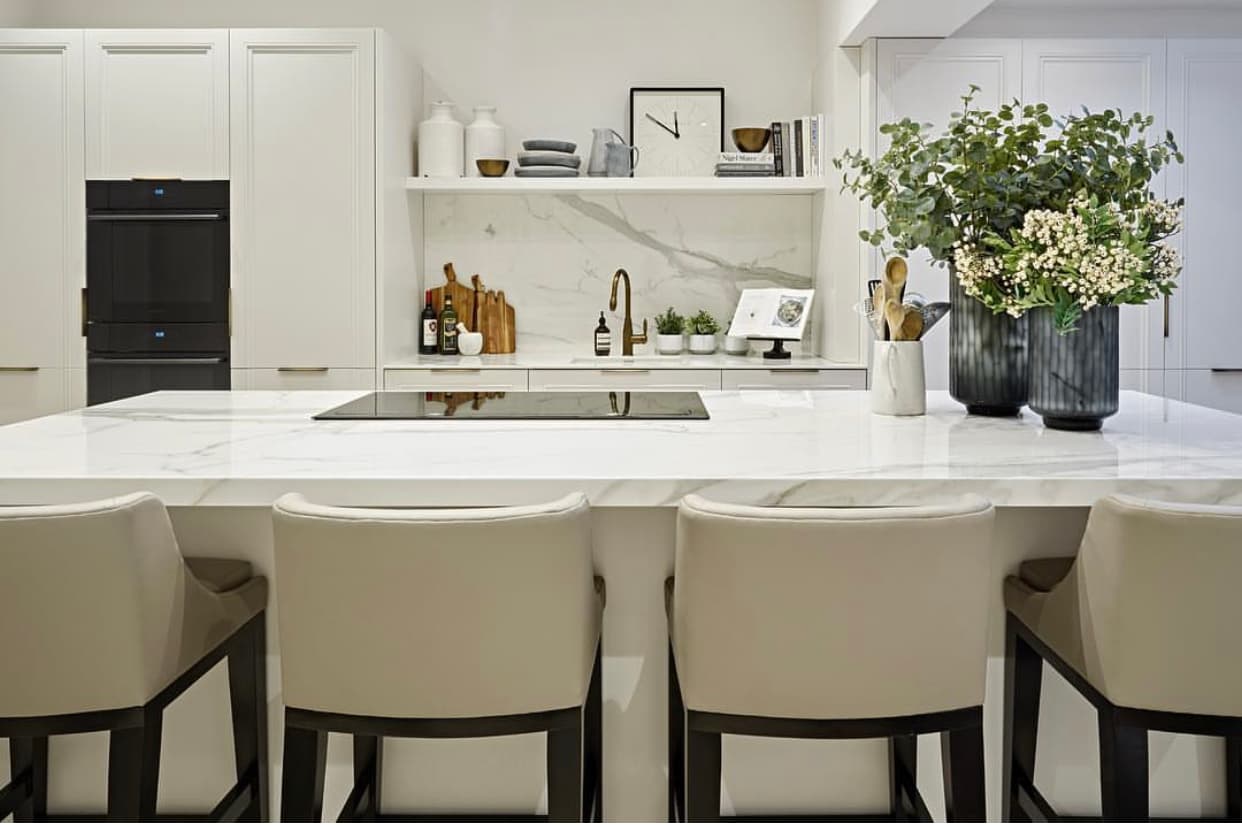
The trouble with most kitchen inspiration is that it shows you someone else's answer to someone else's question. A beautiful image of a marble island in a Georgian townhouse is lovely to look at, but it tells you nothing about whether marble is right for your family, your cooking habits, or your tolerance for patina.
Genuine bespoke kitchen design ideas start not with pictures but with principles — approaches to space, material, light, and daily ritual that can be adapted to any home. What follows is a collection of ideas drawn from years of designing and building kitchens for clients across Cambridge, Hampstead, and Essex. Some are bold. Some are quiet. All of them begin with the same question: how do you actually want to live in this room?
Layout Ideas That Earn Their Keep
The layout of a bespoke kitchen is its most consequential decision, and the one most often undercooked. Before choosing cabinets, colours, or worktop materials, you need to understand how the room will flow.
The Working Triangle — and When to Ignore It
The classic working triangle — sink, hob, fridge — has been gospel for decades, and for good reason. It minimises unnecessary movement during cooking. But it was conceived for single-cook kitchens in an era before islands, before open-plan living, and before kitchens became the social heart of the home.
In a bespoke kitchen, we design around how you move. If two of you cook together, you need parallel prep zones rather than a single triangle. If you entertain frequently, the kitchen needs to perform as much when you're hosting eight as when you're making Tuesday's pasta. If the children do homework at the island while you cook, sightlines and separation matter as much as workflow.
The best layouts we've designed have included:
- Galley kitchens with a twist — two parallel runs with a slim prep island between them, ideal for narrow Victorian side returns
- Broken-plan arrangements — where a tall larder unit or a change in worktop height subtly divides cooking from socialising without closing off the space
- L-shaped kitchens with a freestanding element — a dresser, a butcher's block, or an unfitted island that softens the room and adds character
The point is not to follow a formula. It's to interrogate your habits honestly and design a layout that serves them. If you're not sure where to start, our design consultation process is built precisely for this kind of thinking.
Open Plan Versus Defined Spaces
Open-plan kitchen living has dominated residential design for twenty years. It can be magnificent — a generous, light-filled space where cooking, dining, and living coexist gracefully. But it is not compulsory.
We've designed equally successful kitchens in dedicated rooms, particularly in period properties where the architecture resists being knocked through. A separate kitchen can be wonderfully focused: a proper cook's kitchen where you can make a mess, close the door, and deal with it later. There's something to be said for that.
The bespoke advantage here is flexibility. We can design cabinetry that defines zones within an open plan — a tall unit that acts as a room divider, an island that creates a natural boundary — or we can make a separate kitchen feel generous through intelligent use of light, mirror, and proportion.
Material Combinations That Tell a Story
Materials are where a bespoke kitchen becomes unmistakably yours. The freedom to combine anything with anything — unconstrained by a manufacturer's range — is one of the genuine privileges of commissioning bespoke.
Timber and Stone: The Enduring Partnership
There is a reason this combination has endured for centuries. The warmth of natural timber against the cool permanence of stone creates a tension that feels both grounding and refined.
Our favourite pairings include:
- Oiled oak cabinetry with honed Carrara marble — classic, tactile, and genuinely beautiful as it ages
- Painted tulipwood frames with a quartzite island top — the precision of the joinery set against the drama of natural stone
- Fumed oak drawers within painted carcasses — a subtle interior detail that rewards close attention
- Walnut open shelving above engineered quartz worktops — contemporary warmth with the practicality that busy kitchens demand
The key is understanding how materials age. Marble develops patina. Oak silvers. Paint can be refreshed. A bespoke kitchen should be designed to grow more characterful with time, not less.
Metal Accents and Hardware as Jewellery
Hardware is to a kitchen what cufflinks are to a suit — a small detail that reveals a great deal. In bespoke design, you're not limited to a catalogue of handles. We source from specialist foundries across Britain and Europe, and can commission entirely original designs.
Consider unlacquered brass against dark painted cabinetry: it arrives bright and mellows to a rich, living patina over months. Brushed nickel offers understated modernity. Aged bronze brings depth to country kitchens. Leather-wrapped pulls add a tactile warmth that metal alone cannot achieve.
The finish of your hardware should be considered alongside your taps, your light fittings, and your appliance trim. Consistency here — or deliberate, knowing contrast — separates a considered kitchen from a decorated one.
Bespoke Kitchen Design Ideas for Colour
Colour in a kitchen is braver territory than most people expect. A room you use daily, seen in every light condition, demands a palette that you won't tire of — but that doesn't mean it must be safe.
The Confident Neutrals
White kitchens are perennially popular for good reason: they reflect light, they feel clean, and they provide a calm backdrop. But not all whites are equal. A bespoke kitchen allows you to test and refine your white precisely — warm or cool, bright or chalky — rather than accepting a manufacturer's approximation.
Beyond white, the most successful neutral palettes we work with include:
- Warm putty tones — think Farrow & Ball's Elephant's Breath or Little Greene's French Grey — that feel sophisticated without severity
- Soft sage greens — enormously popular and for good reason; they bring the garden inside and complement both timber and stone
- Warm greys with blue undertones — a modern classic that works in north-facing and south-facing rooms alike
When to Be Bold
Some of the most memorable kitchens we've built have been the boldest. A deep navy island beneath pale wall cabinetry. A rich forest green that transforms a country kitchen into something both traditional and contemporary. An inky charcoal that makes a compact city kitchen feel deliberate and assured rather than cramped.
The trick with bold colour in a bespoke kitchen is commitment. A tentative splash of colour on an accent wall reads as indecision. A fully committed palette — where the bold colour is the main event and everything else supports it — reads as confidence.
If you're drawn to colour but uncertain, our design team will prepare physical paint samples on timber panels so you can see the actual finish in your actual space. Screens lie about colour. Timber panels don't.
Bespoke Kitchen Island Design Ideas
The island has become the defining feature of contemporary kitchen design, and for good reason. A well-designed island is a kitchen's social and functional anchor. A poorly designed one is an expensive obstacle.
Islands That Work for Their Living
The most successful islands serve at least three purposes. Consider combining:
- Prep zone and breakfast bar — with an overhanging worktop on one side for casual seating and a flush working surface on the other
- Cooking station and storage — an induction hob integrated into the island with deep pan drawers below and a downdraft extractor that disappears when not in use
- Display and dining — open shelving on the dining-room side for cookbooks and ceramics, with concealed storage facing the kitchen
In bespoke design, your island can be any shape the room demands. We've built curved islands that follow the line of a bay window, asymmetric islands that accommodate an existing structural column, and islands with a deliberately furniture-like quality — legs, open shelves, a sense of being placed rather than fitted.
Waterfall Edges and Contrasting Materials
A waterfall edge — where the worktop material cascades down the side of the island — creates a striking visual statement, particularly in boldly veined natural stone. It also protects the end panel from daily wear, which is quietly practical beneath the drama.
Alternatively, consider contrasting the island material with the perimeter cabinetry. A timber-topped island in a painted kitchen, or a dark stone island against pale cabinetry, gives the island a visual identity of its own — more like a piece of furniture than an extension of the fitted run.
Storage Innovations Worth Knowing About
Bespoke kitchens solve storage problems that fitted kitchens cannot even acknowledge, because every solution is designed around your actual possessions and habits.
The Walk-In Pantry Revival
The pantry is enjoying a well-deserved renaissance. Where space permits, a walk-in pantry — even a modest one — transforms how a kitchen functions. It moves bulk storage, small appliances, and rarely used items out of the main kitchen, keeping worktops clear and the room itself beautifully uncluttered.
Our bespoke pantries typically feature:
- Adjustable shelving calibrated to the heights of your actual jars, bottles, and containers
- Pull-out drawers at lower levels so nothing gets lost at the back of a deep shelf
- A dedicated worktop section for small appliances — toaster, coffee machine, mixer — with sockets concealed behind the cabinetry
- Integrated lighting that activates when the door opens
For homes without space for a walk-in pantry, a full-height larder cabinet with internally fitted shelving, pull-outs, and door-mounted racks achieves much of the same functionality within a single unit.
Drawers Over Cupboards
One of the simplest and most transformative bespoke kitchen design ideas is replacing base cupboards with deep drawers. A drawer reveals its entire contents at a glance; a cupboard hides them behind a door and demands that you crouch.
We specify soft-close, full-extension drawer runners as standard, and design internal dividers — in timber, not plastic — to organise everything from cutlery to pans. Spice drawers angled for visibility. Knife blocks integrated into drawer linings. Plate drawers with pegged dividers that adjust as your collection changes.
These details cost relatively little but transform daily experience. They are the kind of quiet innovation that makes a bespoke kitchen feel intelligent rather than merely expensive.
Lighting That Changes Everything
Lighting is the most underestimated element in kitchen design. The right lighting scheme makes a kitchen feel warm and inviting in the evening, focused and energising in the morning, and beautifully atmospheric when you're entertaining.
Layered Lighting for Bespoke Kitchens
We design kitchen lighting in three layers:
- Task lighting — under-cabinet LED strips that illuminate worktops without shadow, essential for safe and comfortable food preparation
- Ambient lighting — pendants over an island, recessed ceiling spots on a dimmer circuit, or concealed LED strips above wall cabinets that wash the ceiling with soft light
- Accent lighting — in-cabinet lighting that illuminates glassware or displayed objects, plinth lighting that makes the cabinetry appear to float, or a single dramatic pendant that anchors the dining end of the room
The key is independent control. Each layer should operate on its own circuit and dimmer, allowing you to shift the mood from bright working kitchen to intimate supper setting with a few adjustments.
Natural Light as a Design Material
In bespoke design, we treat natural light as seriously as any physical material. The orientation of your room, the size and position of windows, and the reflectivity of your chosen surfaces all influence how the kitchen feels throughout the day.
Light finishes bounce daylight deeper into a room. A glossy or polished worktop reflects more light than a honed one. Open shelving allows light to pass through where wall cabinets would block it. Even the position of your island can be adjusted to avoid casting a shadow over your main prep area.
These considerations are part of every Albury House design — because the best kitchens look as good at midday as they do by candlelight.
Period Property Kitchen Design Ideas
Designing a bespoke kitchen for a period property is one of the most rewarding challenges in our work. The architecture brings character, proportion, and constraint in equal measure — and a bespoke approach is uniquely suited to honouring all three.
Working With Original Features
A Georgian townhouse in Cambridge makes different demands from an Edwardian villa in Hampstead or a converted Essex farmhouse. In each case, the bespoke kitchen design ideas that succeed are those that respect the building's DNA.
This might mean:
- Designing around original sash windows with cabinetry that sits below the sill line, preserving the window's full proportions
- Incorporating existing ceiling beams into the kitchen's visual rhythm rather than fighting them
- Matching skirting board profiles and architrave details so the kitchen feels as though it has always been part of the house
- Using traditional paint finishes and hand-applied techniques that are consistent with the period of the property
In listed buildings, we navigate conservation requirements with experience and care. Our in-frame cabinetry and hand-finished surfaces satisfy even the most exacting conservation officers, because they are built using the same methods as the original joinery.
The English Country Kitchen
The English country kitchen — a loose, unfitted arrangement of dressers, freestanding larders, a substantial table, and a range cooker — is one of the most appealing bespoke kitchen design ideas for rural properties. It feels collected rather than installed, as though each piece arrived at a different time and found its place.
Achieving this look with genuine functionality requires bespoke craft. Each piece must be designed to work together hydraulically — sharing services, aligning worktops, integrating modern appliances — while appearing charmingly independent. It is, paradoxically, one of the most technically demanding styles to execute well.
Contemporary Design in Period Shells
For clients who love their period home but prefer a contemporary kitchen, the contrast can be electrifying. Clean, handleless cabinetry within a room of original cornicing and shuttered windows creates a dialogue between old and new that neither could achieve alone.
The secret is confidence and quality. Cheap contemporary fittings in a period room look like a renovation gone wrong. Beautifully crafted contemporary cabinetry — precise joinery, flawless finishes, restrained detailing — looks like a deliberate conversation between centuries.
Design Styles Worth Exploring
In-Frame Shaker
The Shaker kitchen endures because its proportions are inherently right. The inset door within a visible frame creates a grid of shadow lines that gives the kitchen visual rhythm and depth. In bespoke form, the frame and door dimensions can be adjusted to suit the scale of your room — wider rails in a generous country kitchen, slimmer profiles in a compact city galley.
Contemporary Handleless
Handleless cabinetry — using integrated grip channels or push-to-open mechanisms — delivers the clean lines that modern architecture demands. In bespoke, this approach allows true precision: shadow gaps aligned to the millimetre, panels that meet without visible fixings, and a monolithic quality that mass-produced handleless kitchens can only approximate.
Transitional Design
Many of our clients find themselves drawn to elements of both traditional and contemporary design. The transitional approach — traditional proportions and craftsmanship expressed through simplified detailing — offers the best of both. Think Shaker framing with minimal mouldings, natural materials in pared-back settings, or a classic layout with contemporary hardware and lighting.
Where Ideas Become Kitchens
The distance between a beautiful idea and a beautiful kitchen is bridged by craft, experience, and honest conversation. Every project in our portfolio began as a collection of ideas much like these — and became something unique through the collaborative design process we describe in our guide to commissioning a bespoke kitchen.
If you're gathering bespoke kitchen design ideas and wondering what's possible for your home, we'd welcome the conversation. Our services page explains how we work, and our cost guide offers transparent guidance on what different budgets can achieve.
Ready to Explore What's Possible?
Every Albury House kitchen begins with a conversation — relaxed, honest, and entirely without obligation. Whether you have a clear vision or simply a feeling that your kitchen could be better, we'd love to hear from you.
Book your free design consultation and let's talk about how these ideas might come to life in your home.
Frequently Asked Questions
Thinking about a new kitchen?
Book Your Free ConsultationYou might also enjoy
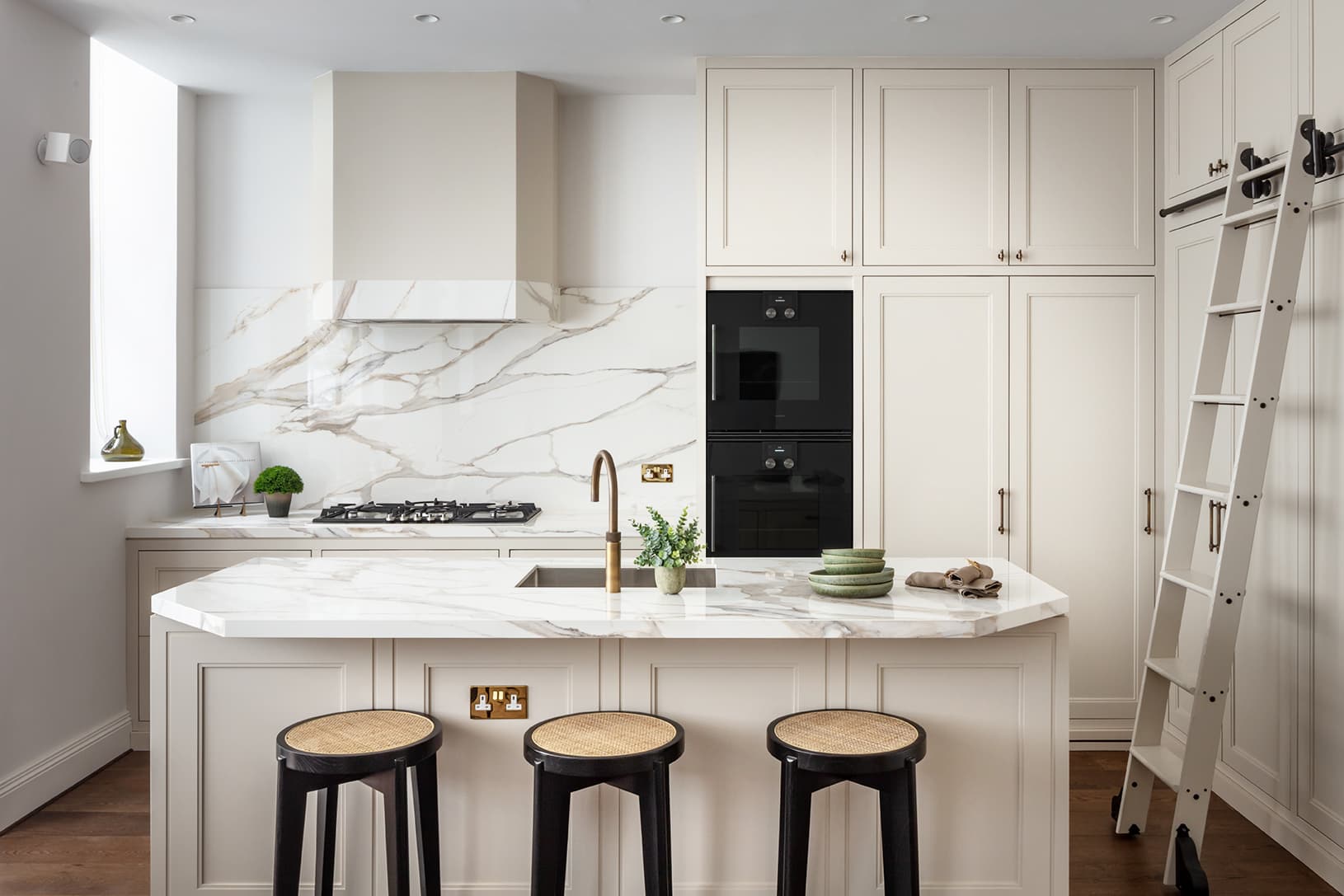
Kitchen Island Ideas: Inspiring Designs for the Heart of Your Home
From sculptural curves to working prep stations, explore kitchen island ideas that combine beauty with purpose. Shapes, sizes, seating, storage, materials, and configurations for every style of home.
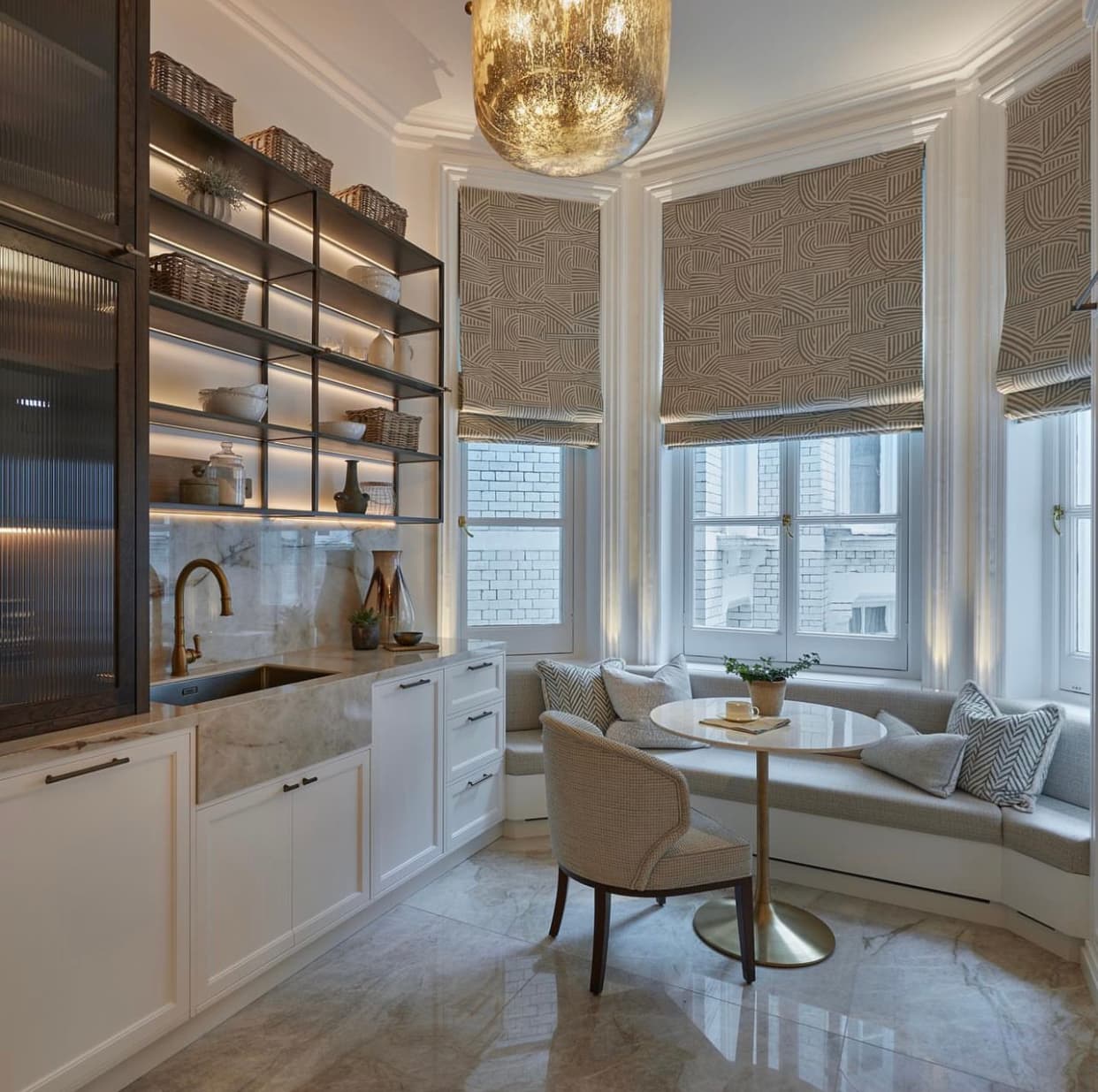
Banquette Seating Kitchen: The Art of Built-In Dining Done Properly
Explore how banquette seating transforms kitchen dining — from L-shaped corners and curved booths to storage-smart benches, upholstery choices, and dimensions that actually work. Inspiration for bespoke kitchens that invite you to sit down and stay.
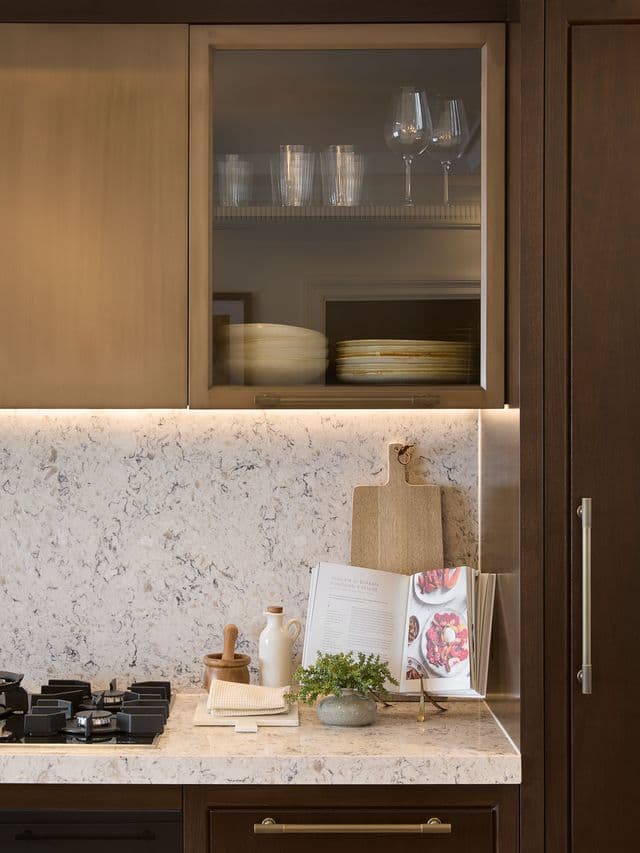
Arts and Crafts Kitchen Design: Where Handcraft Meets the Heart of the Home
Explore how the Arts and Crafts movement inspires truly bespoke kitchen design — from hand-forged ironmongery and English oak to William Morris colour palettes. A guide to creating kitchens that honour the handmade.