

Barn Conversion Kitchen Design: Bespoke Kitchens for Extraordinary Spaces
Designing a kitchen for a barn conversion demands a bespoke approach. From double-height ceilings and exposed trusses to acoustic management and island design, discover how Albury House Kitchens creates luxury kitchens that honour agricultural architecture whilst delivering modern performance.
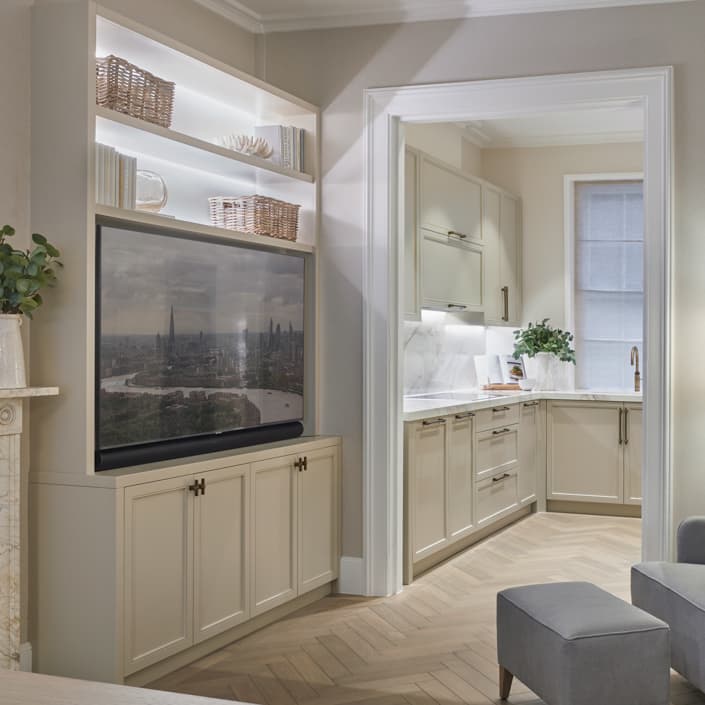
A barn conversion is not a house that happens to have high ceilings. It is a building with a former life — a structure that was designed to store grain, shelter livestock, or house the machinery of a working farm. When you step inside a well-converted barn, you feel that history in the bones of the place: the massive oak trusses overhead, the thickness of the walls, the way light enters through openings that were never intended for domestic comfort but have been coaxed into something quite beautiful.
Designing a kitchen for such a space is one of the most rewarding things we do at Albury House Kitchens. It is also one of the most demanding. Everything that makes a barn conversion extraordinary — the volume, the irregularity, the raw structural presence — presents a design challenge that off-the-shelf kitchens are simply not equipped to answer.
What follows is a thorough exploration of barn conversion kitchen design, drawn from our experience building bespoke kitchens for converted agricultural buildings across Essex, Cambridgeshire, and the wider M11 corridor. If you are planning a barn conversion kitchen, or already living in one and wondering why the space doesn't quite feel right, this should help.
Understanding the Character of Barn Spaces
Before we discuss cabinetry, materials, or layout, it's worth pausing to appreciate what makes barn conversions architecturally distinct. These are not simply large rooms. They are spaces with a specific structural logic and a particular relationship to light, volume, and material that demands respect.
Double-Height Ceilings and Open Trusses
The most immediately striking feature of most barn conversions is the ceiling — or rather, the absence of one. Where a conventional house offers a flat plane at eight or nine feet, a barn presents the full drama of the roof structure: king posts, tie beams, purlins, and rafters climbing to a ridge that may be twenty feet or more above the floor.
This volume is magnificent, but it profoundly affects how a kitchen feels and functions. Sound carries. Heat rises. The eye is drawn upward, which can make ground-level elements — including your kitchen — feel diminished if they're not designed with sufficient presence. We'll return to each of these challenges, but the starting point is simply to acknowledge that a barn kitchen must be conceived in three dimensions, not two.
Exposed Beams and Structural Columns
Many barns retain structural columns or posts at intervals across the floor plan — elements that were essential to the original building but can feel inconvenient in a domestic kitchen. Our approach is never to apologise for these features. A structural post in the middle of a kitchen is not a problem to solve; it is a design opportunity to celebrate.
We've framed columns within island designs, used them as natural divisions between cooking and dining zones, and treated them as anchoring elements around which the entire layout orbits. The trick is to design with the structure rather than despite it.
Stone Walls and Irregular Footprints
Agricultural buildings were not built to the neat rectangular plans of domestic architecture. Walls may be bowed, corners out of square, and surfaces far from flat. The walls themselves — whether local stone, flint, or rendered brick — are often the most characterful feature of the interior.
A bespoke kitchen thrives in this context precisely because every element is measured and built to fit the space as it actually exists. Standard modular kitchens leave gaps, demand filler panels, and fight the irregularity of the building. Bespoke cabinetry embraces it, scribing to walls with craftsman-like precision and turning every deviation into something that looks entirely intentional. For more on how we approach period properties with similar challenges, our guide to period property kitchen design covers many of the same principles.
Design Approaches: Celebrating Volume Versus Creating Intimacy
The central tension in barn conversion kitchen design is between honouring the grandeur of the space and creating a room that feels comfortable for everyday life. A barn can seat forty for a harvest supper, but you also need it to feel right when you're making a cup of tea on a wet Tuesday morning.
Letting the Space Breathe
In some barns — particularly those with exceptional roof structures or a single, uninterrupted volume — the right approach is to let the architecture dominate. The kitchen takes its cue from the building, working at a scale that matches the drama of the space.
This might mean an island of genuinely heroic proportions: three metres or more in length, substantial enough to anchor the room without being swallowed by it. Tall larder cabinets and dresser units can introduce verticality that engages with the height of the space. A statement range cooker set within a bespoke chimney breast or mantel surround can create a focal point worthy of the architecture.
The key is confidence. In a double-height barn, tentative design looks lost. Every element needs to earn its place through considered scale and material weight.
Creating Zones of Intimacy
The alternative — and often the more practical — approach is to use the kitchen design itself to create pockets of warmth and domesticity within the larger volume. This doesn't mean subdividing the barn with partition walls, which almost always diminishes the very quality that makes the space special. Instead, it means using furniture, lighting, ceiling treatment, and changes in material to suggest distinct zones without physically enclosing them.
A run of cabinetry with an overhanging worktop and pendant lighting above creates a cooking zone that feels contained and purposeful. A banquette or built-in seating area within the kitchen layout offers a snug corner for breakfast without closing off the view to the rafters. Open shelving, rather than wall units, maintains the visual connection to the full height of the space whilst keeping essential items within reach.
We find that the most successful barn kitchens employ both strategies — celebrating the volume where the building demands it, and creating intimacy where daily life requires it.
Material Choices That Complement Agricultural Architecture
Material selection in a barn conversion kitchen is not merely aesthetic. The materials you choose determine whether the kitchen feels as though it belongs to the building or has been parachuted in from a showroom catalogue.
Natural Timber
Timber is the most natural companion to agricultural architecture. Oak — particularly oiled or limed English oak — connects directly to the structural timbers of the barn itself. Where the building's frame is centuries-old oak blackened by age, introducing new cabinetry in a sympathetic species and finish creates a conversation between old and new.
We also work with reclaimed timber where appropriate, sourcing aged boards for open shelving, breakfast bars, or feature panels that carry a patina no new material can replicate. The grain, the marks of previous use, the slightly imperfect edge — these details tell a story that resonates with the history of the building.
Natural Stone
Stone worktops and flooring are entirely at home in a barn conversion. Honed limestone, leathered granite, or quartzite in muted tones complement stone walls without competing with them. For flooring, reclaimed flagstones or new stone laid in a traditional pattern can unify the kitchen with the rest of the barn, particularly where the ground floor was originally beaten earth or cobble.
We tend to favour finishes with texture rather than high polish in barn settings. A leathered granite surface has a tactility that suits the rustic honesty of the space, and it's considerably more forgiving of daily use than a mirror-polished slab.
Ironmongery and Metalwork
Hardware is a detail that punches well above its weight in a barn kitchen. Hand-forged iron handles, latches, and hinges echo the agricultural metalwork that was once an essential part of the building's function — strap hinges on barn doors, iron hooks for equipment, hand-wrought latches on stable gates.
We work with specialist English blacksmiths to produce bespoke ironmongery that sits authentically within the barn aesthetic. Unlacquered iron, aged brass, and bronze all develop a living finish over time, gaining character rather than losing it. The contrast between these raw, honest metals and the precision of bespoke joinery is one of the quiet pleasures of a well-designed barn kitchen.
Island Design for Large Open Barns
If any space justifies a truly substantial kitchen island, it is a barn conversion. The generous footprint of a former threshing barn or cattle shed offers the rare luxury of an island that functions as the room's gravitational centre — a place for cooking, eating, working, socialising, and everything in between.
Scale and Proportion
The most common mistake in barn island design is timidity. An island that would feel generous in a conventional kitchen can look rather forlorn in the middle of a barn. We design barn islands to be assertive: typically 2.4 to 3.6 metres long and at least 1.2 metres deep, with substantial end panels and a worktop that overhangs enough to provide comfortable seating.
Getting the proportions right requires understanding not just the floor area but the volume above. An island beneath a double-height ceiling needs visual weight — thick worktops, solid end panels, perhaps a raised section or integrated shelving that adds height to the piece. Pendant lighting suspended from the ridge above can draw the eye downward and create a visual canopy over the island, connecting it to the ceiling plane.
Functional Zoning
A barn island offers enough real estate for genuine functional separation. One end might house a preparation sink with integrated drainage; the centre provides an unbroken expanse of worktop for food preparation; the far end accommodates seating for four or six. Beneath, a combination of deep pan drawers, open display shelving, and integrated appliances — dishwasher, wine conditioning unit, waste separation — can be arranged to serve each zone without compromise.
We often design barn islands with services on the working side and clean display storage on the social side, so that guests seated at the breakfast bar look onto something rather more pleasing than plumbing connections and waste bins.
Managing Acoustic Challenges
This is the subject that many barn conversion owners discover too late: large open volumes with hard surfaces are acoustically punishing. Stone walls, timber floors, and glass create a reverberant space where conversation becomes effortful and every clatter of crockery seems amplified.
A well-designed kitchen can contribute meaningfully to acoustic management. Natural timber cabinetry absorbs more sound than painted or lacquered surfaces. Open shelving stacked with books, ceramics, and glassware breaks up reflective planes. Upholstered banquette seating and woven textile accents — linen blinds, woollen seat pads — introduce the soft surfaces that a barn so desperately needs.
Beyond the kitchen itself, we often advise clients on complementary measures: acoustic plaster applied to select wall areas, jute or sisal rugs beneath dining tables, and ceiling-mounted acoustic panels concealed behind timber battens that maintain the aesthetic of the roof structure. Addressing acoustics early in the design process avoids the disappointment of a visually stunning kitchen that nobody can comfortably hold a conversation in.
Lighting in Double-Height Spaces
Lighting a barn conversion kitchen is a discipline unto itself, and we have written at length about kitchen lighting principles in our kitchen lighting design guide. Here, we'll focus on what makes barn lighting specifically challenging — and specifically rewarding.
Layered Lighting at Multiple Heights
In a conventional kitchen, lighting operates in two layers: task lighting at worktop level and ambient lighting at ceiling level. In a barn, the ceiling may be six metres overhead, which means a single layer of ambient light up there does precisely nothing useful down here.
The solution is to create multiple horizontal planes of light. Pendant fixtures suspended at two to three metres above the island provide focused illumination and visual warmth. Under-cabinet task lighting handles the worktop zones. Wall-mounted fixtures at head height wash stone walls with gentle uplighting, revealing texture and creating a sense of enclosure. And yes, a few carefully placed fittings high in the roof structure can dramatise the trusses beautifully for evening entertaining — but this is theatre, not task lighting, and it should be on its own circuit.
Natural Light
Barns were not designed with generous glazing, but most conversions introduce significant natural light through roof lights, glazed gable ends, or full-height windows in new openings. The interplay between these light sources and the existing structure — the way a shaft of sunlight catches a chamfered beam at midday, or the way a roof light illuminates the underside of the trusses — is one of the most enchanting qualities of barn living.
We design kitchens to take full advantage of this. Positioning the main working area beneath roof lights ensures excellent natural task lighting during the day. Locating the island to catch light from a glazed gable creates a naturally welcoming focal point. Understanding where natural light falls at different times of day allows us to place breakfast seating in morning sun and dining areas in the warm glow of evening.
Heating Considerations
The same generous volume that makes a barn conversion so spatially magnificent also makes it expensive and difficult to heat. Stone walls, whilst beautifully characterful, are not known for their insulation properties. Heat rises enthusiastically into the apex of the roof, leaving the ground floor — where you are actually trying to live — comparatively cool.
Underfloor heating is almost essential in a barn conversion kitchen. It delivers warmth at ground level where it's needed, avoids the visual intrusion of radiators on stone walls, and provides an even, comfortable temperature across the floor. We design our cabinetry with appropriate ventilation to accommodate underfloor heating systems, and we specify plinths and kickboard details that allow warm air to circulate naturally.
For particularly large or tall barns, supplementary heating — a wood-burning stove, a range cooker that contributes meaningful warmth, or discreet ceiling-mounted radiant panels — may be necessary. A range cooker in a bespoke surround does double duty in this respect: it serves as the functional heart of the kitchen and as a genuine heat source that takes the edge off a cold morning.
Balancing Rustic Character With Modern Luxury
The phrase "rustic but luxurious" appears in approximately nine out of ten barn conversion briefs we receive, and it's a perfectly reasonable aspiration. The challenge is executing it without descending into pastiche on one hand or bland modernity on the other.
Our approach is to let the building provide the rustic and the kitchen provide the luxury. The exposed stone, the weathered timbers, the patina of agricultural history — these elements carry all the rustic character anyone could want. The kitchen's role is to introduce precision, comfort, and contemporary performance within that raw setting.
This means supremely well-made cabinetry with crisp joints and perfect geometry, sitting against a wall that hasn't been straight since the Napoleonic Wars. It means an induction hob and a combi-steam oven concealed behind handcrafted door fronts. It means soft-close drawers lined in walnut, integrated lighting that responds to a single touch, and a boiling water tap that delivers instant hot water while looking entirely at home next to hand-forged ironmongery.
The contrast itself is the luxury. When craftsmanship meets character, neither needs to pretend to be something it isn't.
Storage Solutions for Open-Plan Barns
Open-plan barn living is wonderful until you need somewhere to put everything. Without the natural compartmentalisation of traditional rooms, storage must be designed with particular care — visible enough to be accessible, considered enough to be beautiful, and generous enough to serve a kitchen that functions as the home's primary living space.
The Working Pantry
A dedicated pantry — either a walk-in room or a substantial bank of full-height cabinets — is invaluable in a barn kitchen. It allows the visible kitchen to remain clean and composed whilst housing the less photogenic necessities of daily life: small appliances, bulk dry goods, baking supplies, and the overflow that every kitchen accumulates.
We design pantry interiors with the same attention as the kitchen itself: adjustable shelving, dedicated spice racks, integrated power for appliances, and lighting that makes it a pleasure to use rather than a cupboard you dread opening.
Display Storage
Open barns call for open storage. Where wall units would feel oppressive against the height of the space, open shelving in natural timber or painted finish provides accessible storage that doubles as a display opportunity. Stoneware, glassware, and well-chosen ceramics contribute texture and colour to the kitchen, and the slight imperfection of hand-thrown pottery resonates with the agricultural character of the building.
Integrated and Concealed Storage
For the items that benefit from being neither seen nor heard, we design integrated storage within island units, window seats, and bench seating. A window seat in a deep barn window reveal can house a full run of drawers beneath. The seating end of an island can incorporate a blanket drawer, a charging station, or a children's activity cupboard — all invisible when closed, all contributing to the sense of considered order.
The Essex and Cambridgeshire Barn Conversion Market
We are fortunate to work in a region that is remarkably rich in agricultural buildings. Essex and Cambridgeshire between them contain an extraordinary concentration of converted barns, ranging from medieval timber-framed aisled barns to Victorian brick-and-slate farmstead buildings.
The villages along the M11 corridor — Saffron Walden, Great Dunmow, Thaxted, the Rodings, and the countryside around Cambridge — are home to some of the finest barn conversions in the south-east of England. Many were converted in the 1980s and 1990s and are now due a kitchen that matches the quality of the building itself. Others are newly converted to the highest contemporary standards and require a kitchen conceived as part of the original architectural vision.
For homeowners considering a bespoke kitchen in an Essex barn conversion, our bespoke kitchens Essex guide covers our approach to the county's diverse property landscape. For those in Cambridgeshire, our bespoke kitchens Cambridge guide offers similar insight into how we work with the region's exceptional homes.
In both counties, our workshop's location on the M11 corridor means we are ideally placed for home surveys, workshop visits, and the kind of attentive installation process that a barn conversion demands. These are not kitchens that can be fitted in a day by a team who have never seen the space before. They require patience, skill, and an intimate understanding of the building.
Beginning the Conversation
If you are living in a barn conversion and your kitchen doesn't do the space justice, or if you are mid-conversion and thinking seriously about what the kitchen should become, we would welcome the chance to talk. Every barn is different — in structure, in character, in the story it tells — and every kitchen we design for one begins with a thorough understanding of the building before a single line is drawn.
The first step is always a home visit. We come to you, spend time in the space, study the structure, understand the light, and listen to how you want to live. From there, we develop a design that honours the architecture, meets the demands of modern family life, and delivers the kind of quiet, confident craftsmanship that makes an Albury House kitchen unmistakable.
Get in touch to arrange a visit. We are particularly well-placed for barn conversions across Essex, Cambridgeshire, and the M11 corridor — and we'd rather enjoy meeting yours.
Frequently Asked Questions
Thinking about a new kitchen?
Book Your Free ConsultationYou might also enjoy
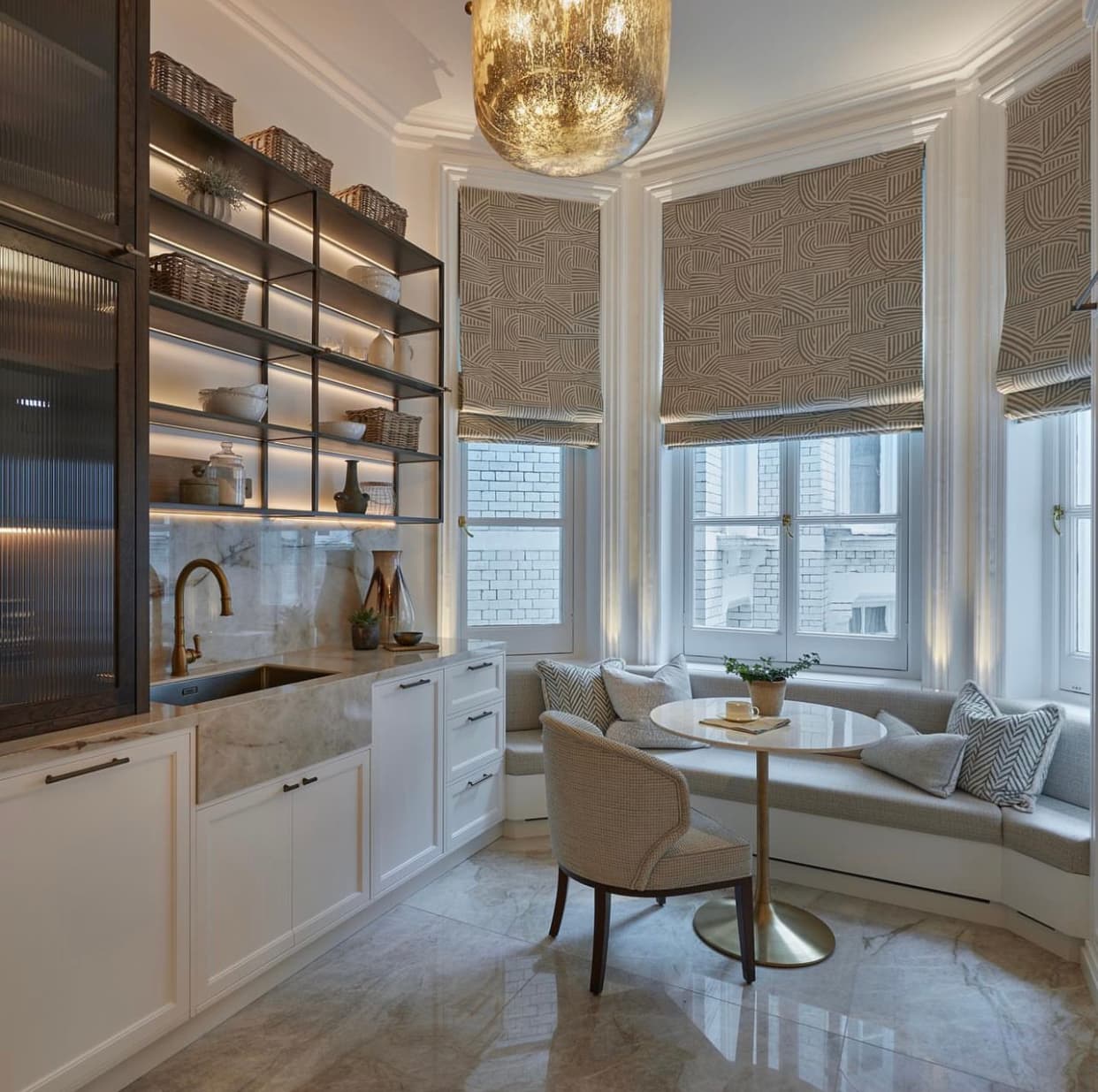
Banquette Seating Kitchen: The Art of Built-In Dining Done Properly
Explore how banquette seating transforms kitchen dining — from L-shaped corners and curved booths to storage-smart benches, upholstery choices, and dimensions that actually work. Inspiration for bespoke kitchens that invite you to sit down and stay.
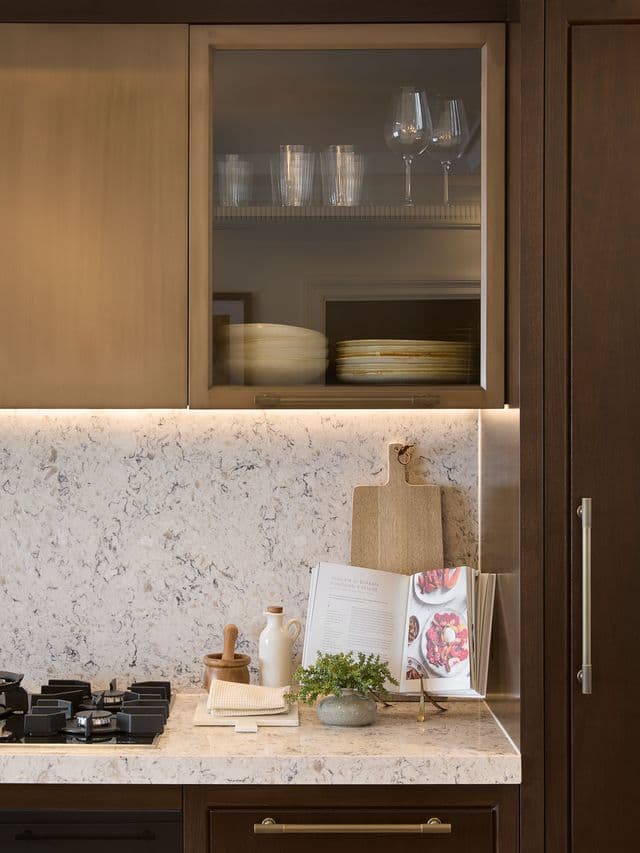
Arts and Crafts Kitchen Design: Where Handcraft Meets the Heart of the Home
Explore how the Arts and Crafts movement inspires truly bespoke kitchen design — from hand-forged ironmongery and English oak to William Morris colour palettes. A guide to creating kitchens that honour the handmade.
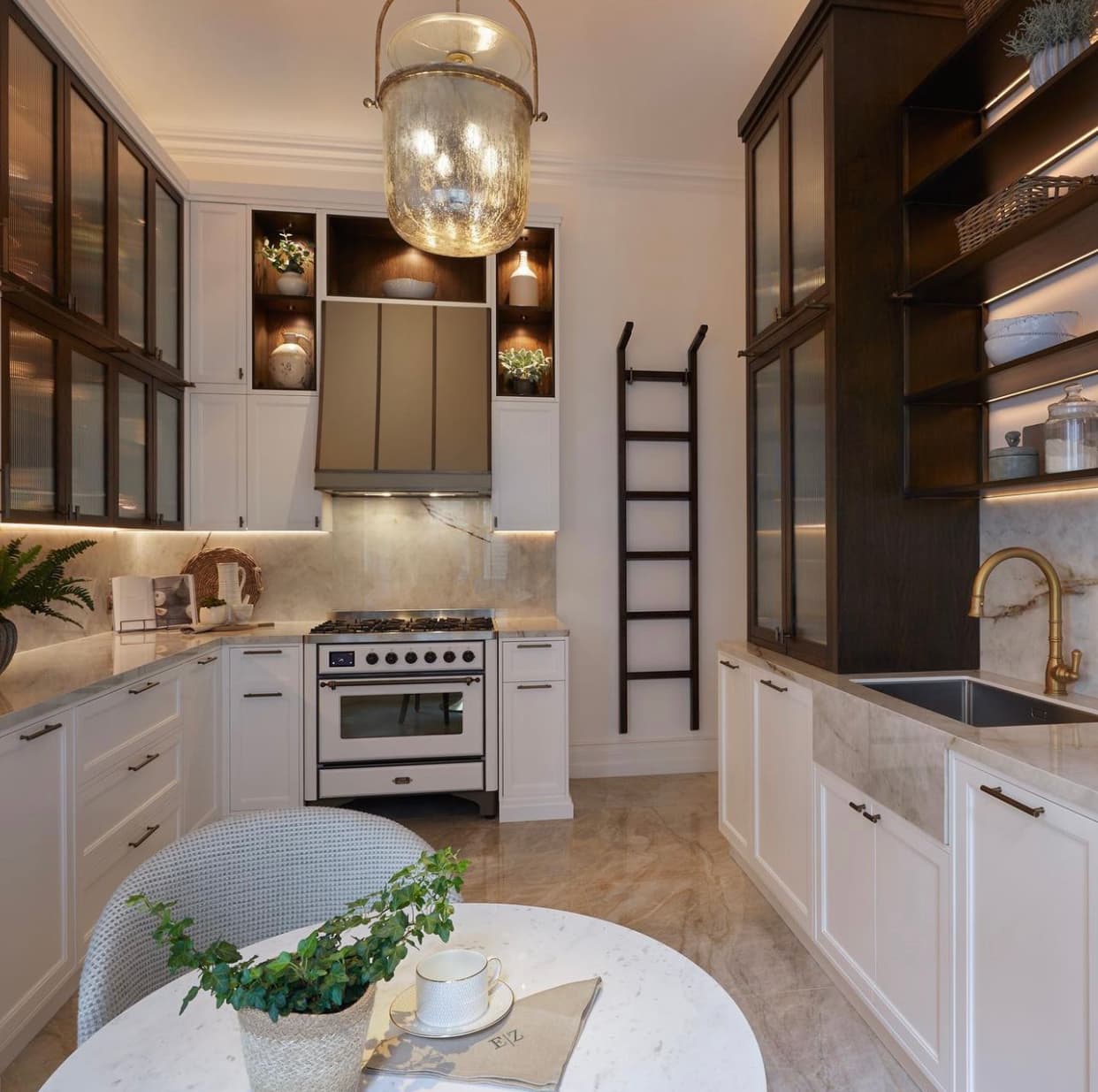
Bespoke Shaker Kitchen Design: The Enduring Appeal of the Finest Kitchen Style
Discover why the bespoke shaker kitchen remains the most sought-after style in luxury kitchen design. From its humble origins to contemporary interpretations, explore colours, worktops, hardware, and island ideas for your shaker kitchen.