

Kitchen Design for Listed Buildings: A Complete Guide to Getting It Right
Designing a kitchen for a listed building requires specialist knowledge, careful planning, and genuine craftsmanship. We explain the consent process, conservation constraints, and why bespoke is the only sensible approach for heritage properties.
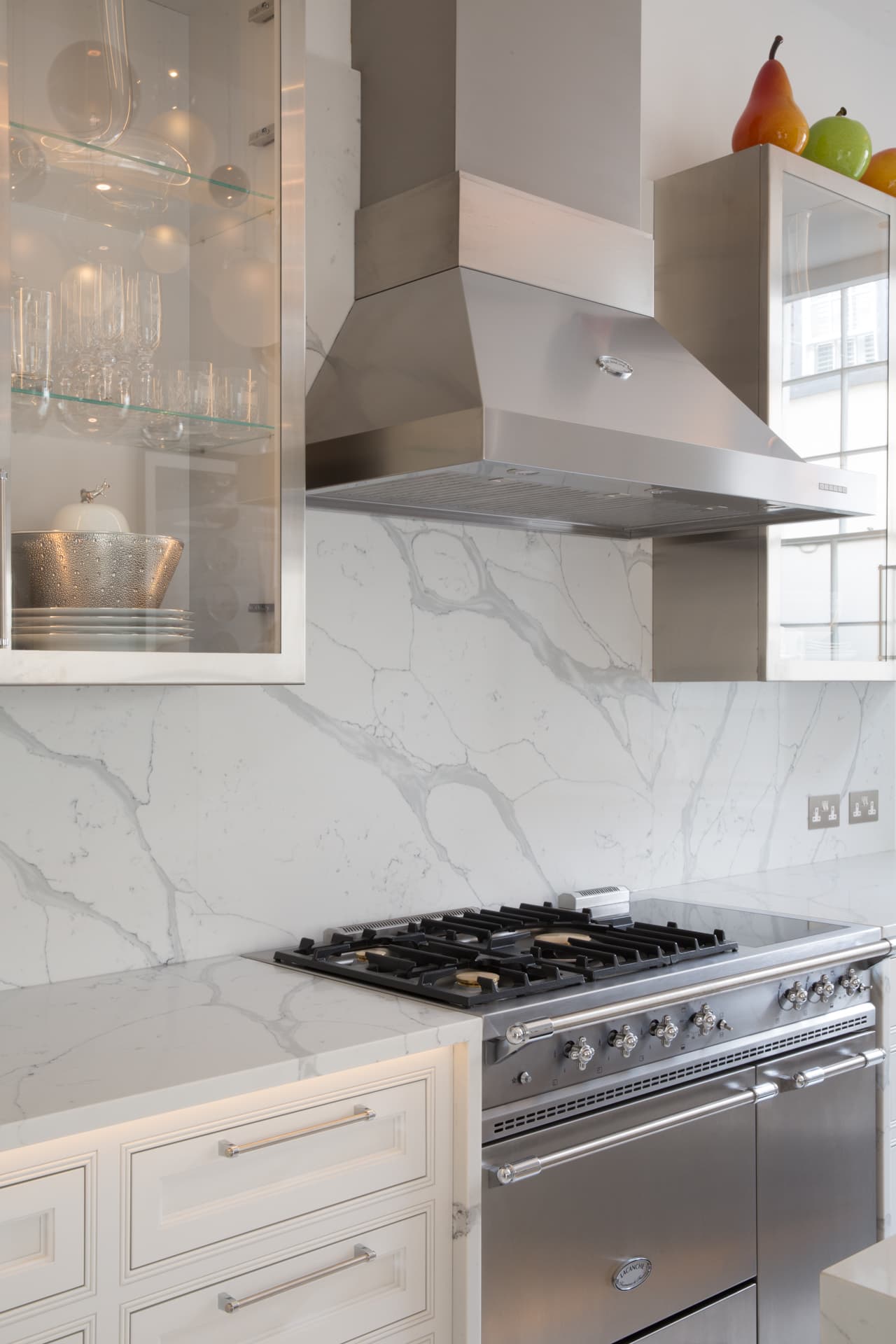
There is a particular moment in every listed building kitchen project that separates the experienced designer from the enthusiastic amateur. It usually arrives at the survey stage, when the spirit level reveals that the floor drops forty millimetres across the room, the walls lean in three different directions, and the window that looked perfectly centred from outside turns out to be anything but.
For a standard kitchen company, this is where the problems begin. For a bespoke kitchen maker with heritage experience, it is simply where the interesting work starts.
Designing a kitchen for a listed building is one of the most rewarding — and most demanding — projects in residential cabinetmaking. It requires an understanding of architectural history, a respect for building conservation, a fluency with the planning system, and a level of craftsmanship that mass production cannot deliver. Get it right, and the result is a kitchen that feels as though it has always belonged to the house. Get it wrong, and you risk damaging something irreplaceable.
This guide covers everything you need to know about designing, consenting, and installing a bespoke kitchen in a listed building, drawn from our extensive experience working with heritage properties across Cambridgeshire, Essex, Hertfordshire, and beyond.
Understanding Listing Grades: What Does It Mean for Your Kitchen?
Before any design work begins, it is essential to understand what the listing on your property actually means in practice. Not all listings are equal, and the grade of listing directly affects the scope of what you can do.
Grade I
Grade I buildings represent the top 2% of listed buildings in England — structures of exceptional interest. If you own a Grade I property and are reading this with kitchen plans in hand, you are in rarefied territory. Every proposed alteration will be scrutinised with the utmost rigour by Historic England, and the bar for consent is extremely high. Kitchen works in a Grade I building are possible, but they require meticulous justification, often supported by a detailed heritage impact assessment prepared by a conservation-accredited architect.
Grade II*
Grade II* (pronounced "Grade Two Star") buildings are particularly important structures of more than special interest, accounting for roughly 5.8% of listed buildings. The level of scrutiny is a step below Grade I but remains considerable. Historic England will typically be consulted on any substantive alterations, and your local conservation officer will expect a high standard of design and documentation.
Grade II
The overwhelming majority of listed buildings — around 92% — are Grade II. These are buildings of special interest, warranting every effort to preserve them. For kitchen design purposes, Grade II listing still requires Listed Building Consent for internal works, but the process is generally more straightforward than for the higher grades, provided the proposed design is sympathetic and well-presented.
Regardless of grade, the underlying principle is the same: the listing protects the character of the building, both externally and internally. Any work that affects that character requires consent.
The Listed Building Consent Process
Listed Building Consent is a separate process from standard planning permission, and the two should not be confused. You may need one, the other, or both, depending on the scope of your project. Here is how the consent process typically works for a kitchen project.
Pre-Application Advice
The single most valuable step you can take — and one that too many homeowners skip — is to seek pre-application advice from your local authority's conservation officer. This is an informal conversation, usually free or modestly charged, in which you discuss your proposals before committing to a formal application.
Conservation officers are not adversaries. They are, in our experience, knowledgeable professionals who genuinely want to see listed buildings used and enjoyed. Engaging them early allows you to understand what is likely to be acceptable, identify potential sticking points, and adjust your design before you have invested heavily in detailed drawings.
Preparing the Application
A Listed Building Consent application requires detailed drawings and a heritage statement explaining what you propose, why you propose it, and how the works will affect the character of the building. For a kitchen project, this typically includes:
- Existing and proposed floor plans, elevations, and sections
- A schedule of works describing every alteration to the building fabric
- A heritage impact assessment identifying original features and explaining how they will be preserved, enhanced, or — if unavoidable — sensitively altered
- Material specifications and samples, particularly for surfaces that will be visible
- Photographs of the existing space and any features of historic interest
The quality of this documentation matters enormously. A well-prepared application with clear drawings and a thoughtful heritage statement is far more likely to receive a smooth passage through the consent process than a vague proposal with insufficient detail.
Determination
The local planning authority has eight weeks to determine a Listed Building Consent application, though in practice it often takes longer. During this period, the conservation officer may request amendments, additional information, or conditions. For higher-grade listings, Historic England will be formally consulted.
We advise our clients to allow three to four months for the entire consent process and to treat it as a parallel workstream alongside the design development — not a hurdle to be cleared at the last moment.
Working With Conservation Officers
If there is one piece of advice we could offer above all others, it is this: make the conservation officer your ally, not your obstacle.
Conservation officers respond well to designs that demonstrate genuine understanding of the building. They are looking for evidence that you have studied the history of the property, identified its significant features, and developed a design that works with the architecture rather than against it. They are not looking for a pastiche of period features — indeed, many conservation officers actively prefer a well-designed contemporary intervention over a clumsy attempt to mimic the original.
What they will resist is any proposal that involves irreversible damage to original fabric, the removal of features that contribute to the building's character, or a design that is clearly indifferent to the heritage context. Arriving with a standard kitchen catalogue and asking the conservation officer to approve it is unlikely to end well.
Design Approaches That Respect Heritage
Designing a kitchen for a listed building is an exercise in creative sensitivity. The goal is to create a space that functions brilliantly for modern life whilst preserving — and ideally revealing — the historic character of the building. Several principles guide our approach.
Reversibility
Wherever possible, interventions should be reversible. This means using methods of fixing and construction that can be removed in the future without damaging the original building fabric. Freestanding furniture, cabinetry fixed to battens rather than directly to historic walls, and service runs that avoid cutting into original stonework or plasterwork all embody this principle.
Reversibility is not merely a planning requirement; it is good design philosophy. A kitchen that can be removed cleanly, leaving the building's fabric intact, demonstrates a proper respect for the building's longevity — it was here long before you, and it should be here long after.
Sympathetic Materials
Material selection is critical. The materials used in a listed building kitchen should complement the existing palette of the building — its stone, its timber, its plaster, its ironwork — without slavishly copying them.
Natural hardwoods, hand-painted finishes in heritage-appropriate colours, natural stone worktops, brushed or unlacquered metal hardware, and handmade tiles all tend to sit comfortably in a heritage context. High-gloss acrylics, laminated chipboard, and chrome-plated plastic handles do not. This is not snobbery; it is a question of visual and tactile coherence. The materials in a listed building have a depth and texture that cheap alternatives simply cannot match.
We often recommend unlacquered brass or aged bronze for ironmongery, oiled or waxed timber worktops for secondary surfaces, and honed rather than polished stone for worktops. These materials develop a patina over time, growing more sympathetic to the building as they age rather than less.
Preserving Original Features
A listed building kitchen should celebrate the original features of the room, not conceal them. Exposed ceiling beams, stone flag floors, inglenook fireplaces, original window shutters, lime plaster walls, bread ovens, and built-in cupboards are all elements that contribute to the character of the building and should be retained and incorporated into the design wherever possible.
This often means designing around these features rather than attempting to create a uniform run of cabinetry. A kitchen layout that steps around an original chimney breast, frames an inglenook as a cooking alcove, or leaves a stone wall exposed behind open shelving will feel more authentic — and more interesting — than one that boxes everything in behind standardised panels.
Common Challenges (And How to Solve Them)
Listed buildings are endlessly characterful, which is a polite way of saying that they present challenges at every turn. Here are the ones we encounter most frequently.
Uneven Walls and Floors
Walls that are out of plumb by thirty or forty millimetres, floors that slope visibly across the room, and corners that are nowhere near ninety degrees are the norm in pre-Victorian buildings. Standard kitchen units, which assume a level, plumb, and square world, simply cannot cope.
A bespoke kitchen addresses this by scribing every unit to the exact contour of the walls and floor. Each cabinet is individually measured and built to accommodate the irregularities of the space, resulting in a kitchen that fits the room precisely without the need for unsightly packing pieces or filler strips. This is, quite candidly, the single strongest argument for bespoke cabinetry in a listed building.
Low Ceilings and Restricted Heights
Many period properties — particularly cottages, farmhouses, and the lower storeys of timber-framed buildings — have ceiling heights that make standard wall units either impossible or oppressive. A bespoke approach allows us to design cabinetry that is proportioned to the room, using reduced-height wall cabinets, open shelving, or dresser-style units that give the illusion of greater height whilst providing ample storage.
Limited Services
Older buildings frequently have constraints on where plumbing, electrical, and gas services can be routed. Original floors may be flagstone or compacted earth, making underfloor service runs difficult. Solid stone or cob walls may not accommodate the depth of standard electrical back boxes. Lead pipework may need careful replacement.
We work closely with specialist heritage contractors — plumbers, electricians, and builders who understand the particular requirements of working within listed buildings — to find service routes that avoid damaging the building fabric. Surface-mounted conduit in appropriate finishes, carefully routed pipe runs, and discreet extraction solutions are all part of the toolkit.
Integrating Modern Appliances
A range cooker in an inglenook is a thing of beauty. A full-height American fridge-freezer in a sixteenth-century cottage is rather less so. Selecting and positioning appliances in a listed building requires care, and this is an area where bespoke cabinetry really earns its keep.
Built-in appliances can be concealed behind cabinetry that matches the rest of the kitchen, maintaining the visual calm of the room. Extraction can be handled discreetly through concealed ducting or recirculating systems where external venting would harm the external appearance. And the layout can be arranged so that the most visually intrusive appliances are positioned away from the room's most sensitive features.
Why Bespoke Is Essential for Listed Buildings
We are, of course, a bespoke kitchen manufacturer, so you might reasonably expect us to advocate for the bespoke approach. But in the context of listed buildings, this is not a matter of preference — it is a matter of practicality.
A standard fitted kitchen is designed for a standard room. Listed buildings do not have standard rooms. The irregular dimensions, the need for reversible fixings, the requirement to work around original features, and the sensitivity of the materials all demand a kitchen that is designed and built specifically for that space.
We have seen too many listed building kitchens where a standard range has been forced into a space it was never meant to occupy — gaps packed with filler, original plasterwork cut away to accommodate oversized units, characterful beams boxed in behind bulkheads. These are not just aesthetic failures; they are conservation failures, and they can have real consequences when it comes to enforcement.
A bespoke kitchen, designed from a detailed survey of the actual space and built to accommodate its every quirk, avoids these compromises entirely. Every cabinet fits. Every material is chosen for its appropriateness. Every fixing is considered. And the result is a kitchen that the conservation officer can approve with confidence, because it demonstrably respects the building.
If you are considering a kitchen for a period property, or specifically a Georgian home, bespoke is not simply the best option — it is the only responsible one.
A Typical Listed Building Kitchen Project: Challenges and Solutions
To illustrate how these principles come together in practice, consider a project typical of the work we undertake: a Grade II listed farmhouse in the Essex-Cambridgeshire borders, dating from the late seventeenth century, with a kitchen that had last been updated in the 1980s.
The challenges: The kitchen occupied the original hall of the house, with a magnificent but structurally delicate inglenook fireplace, exposed oak ceiling beams at a height of just over two metres, a flagstone floor that undulated by fifty millimetres across its length, lime-plastered walls, and a single small window. The existing kitchen was a standard fitted range that had been packed and shimmed into submission, with chipboard panels concealing the sides of the inglenook and a suspended ceiling hiding the beams.
The approach: We began by stripping back the 1980s additions to reveal the original features beneath — which, mercifully, had survived largely intact. Our design placed a range cooker within the inglenook, framed by hand-built oak cabinets that followed the irregular profile of the fireplace. Base units were freestanding in character, raised on legs to allow the flagstone floor to read continuously through the room. Wall cabinets were deliberately omitted on the most sensitive elevations, replaced by open shelving on wrought-iron brackets. All cabinetry was fixed to independent battens, leaving the lime plaster untouched. Services were routed through the flagstone floor along an existing channel, avoiding any new cuts.
The result: A kitchen that functions impeccably for a family of five, with ample storage, integrated modern appliances, and a layout that makes the most of the available space — all whilst revealing and celebrating features that had been hidden for forty years. The Listed Building Consent application was approved without amendment, and the conservation officer described it as a model of sympathetic design.
Choosing the Right Materials
Material selection for a listed building kitchen deserves particular attention. The materials should not only complement the existing fabric of the building but also perform well in a working kitchen environment.
Timber: We typically recommend hardwoods such as oak, ash, or walnut for visible elements, finished with hand-applied paint or natural oil and wax. Tulipwood is an excellent choice for painted cabinetry — stable, fine-grained, and beautifully receptive to paint. Softwoods can work well for utilitarian interiors where they will not be seen.
Worktops: Natural stone — particularly honed marble, slate, or locally sourced limestone — sits beautifully in a heritage context. Oiled hardwood worktops offer warmth and can be maintained and refreshed over decades. For areas around sinks and hobs, we sometimes recommend a composite or engineered stone that offers greater resilience whilst still reading sympathetically alongside natural materials.
Hardware: Unlacquered brass, aged bronze, hand-forged iron, and pewter all develop a patina that complements the character of a listed building. We source ironmongery from specialist British manufacturers who still produce hardware using traditional methods.
Finishes: Hand-painted finishes in muted, heritage-appropriate colours are our default recommendation for listed building kitchens. We work with premium paint systems that offer durability whilst maintaining the subtle, chalky depth of traditional finishes. The colour palette of the kitchen should feel connected to the wider decorative scheme of the house.
The Role of the Architect
For any listed building kitchen project of substance, we strongly recommend engaging a conservation-accredited architect. Their role is not merely to produce drawings — although good drawings are essential — but to navigate the regulatory landscape, prepare the heritage impact assessment, liaise with the conservation officer, and ensure that the design meets both the aspirations of the homeowner and the requirements of the listing.
A good heritage architect understands what conservation officers look for, how to present proposals persuasively, and where the boundaries of acceptable intervention lie. They act as a bridge between the homeowner's vision, the kitchen designer's expertise, and the planning authority's statutory responsibilities.
We work alongside several architects who specialise in heritage projects, and we are always happy to recommend practitioners who understand the particular demands of kitchen design within listed buildings. If you already have an architect, we welcome the collaboration — the best results come from a team that shares a common respect for the building.
Timelines and Planning
A listed building kitchen project takes longer than a standard kitchen installation, and it is important to set realistic expectations from the outset.
Pre-application and survey: 2-4 weeks. This covers the initial home visit, the detailed measured survey, and the pre-application discussion with the conservation officer.
Design development: 4-8 weeks. This is an iterative process involving the homeowner, the kitchen designer, and the architect, resulting in a design that satisfies all parties and is ready for the consent application.
Listed Building Consent: 8-16 weeks. The formal consent process, including any requests for additional information or amendments.
Manufacture: 6-10 weeks. Once consent is granted and the design is finalised, your kitchen is built by hand in our workshop.
Installation: 2-4 weeks. Listed building installations are inherently slower than standard projects due to the care required when working around original features and the need for specialist trades.
Total typical timeline: 6-10 months from initial consultation to completion.
The most common source of delay is beginning the consent process too late. We advise all listed building clients to engage with the planning process at the earliest opportunity — ideally before the kitchen design is finalised — to allow time for dialogue and adjustment without jeopardising the programme.
Starting the Conversation
If you are considering a new kitchen for a listed building, we would be delighted to discuss your project. Our experience with heritage properties across the M11 corridor — from the colleges of Cambridge to the market towns of Saffron Walden and beyond — means we understand the challenges, the consent process, and the standard of craftsmanship that these buildings demand.
Every project begins with a home visit, where we see the space, discuss your ideas, and offer honest advice about what is achievable within the constraints of the listing. There is no charge for this initial consultation, and no obligation.
You can get in touch with us here, or explore our full range of design and build services to learn more about how we work. If your listed building kitchen project is still at the daydreaming stage, that is perfectly fine — the best projects often begin with a conversation long before they begin with a pencil.
Frequently Asked Questions
Thinking about a new kitchen?
Book Your Free ConsultationYou might also enjoy
Bespoke Kitchen Cabinets: The Definitive Guide to Handmade Cabinetry
Everything you need to know about bespoke kitchen cabinets — from construction methods and timber selection to door styles, finishes, and the details that distinguish genuine craftsmanship from the merely expensive.
Bespoke Kitchen Joinery: The Craft Behind Cabinets That Last Generations
A detailed guide to the joinery techniques used in bespoke kitchen craftsmanship — from dovetail drawers and mortise-and-tenon frames to tongue and groove panels. Learn how to recognise quality joinery and why it determines how long your kitchen will last.
The Bespoke Kitchen Design Process: From Brief to Blueprint
How does a bespoke kitchen get designed? We walk through every stage of the design process — from developing the brief and spatial analysis to 3D visualisation, technical drawings, material specification, and sign-off.