

Bespoke Kitchen Cabinets: The Definitive Guide to Handmade Cabinetry
Everything you need to know about bespoke kitchen cabinets — from construction methods and timber selection to door styles, finishes, and the details that distinguish genuine craftsmanship from the merely expensive.
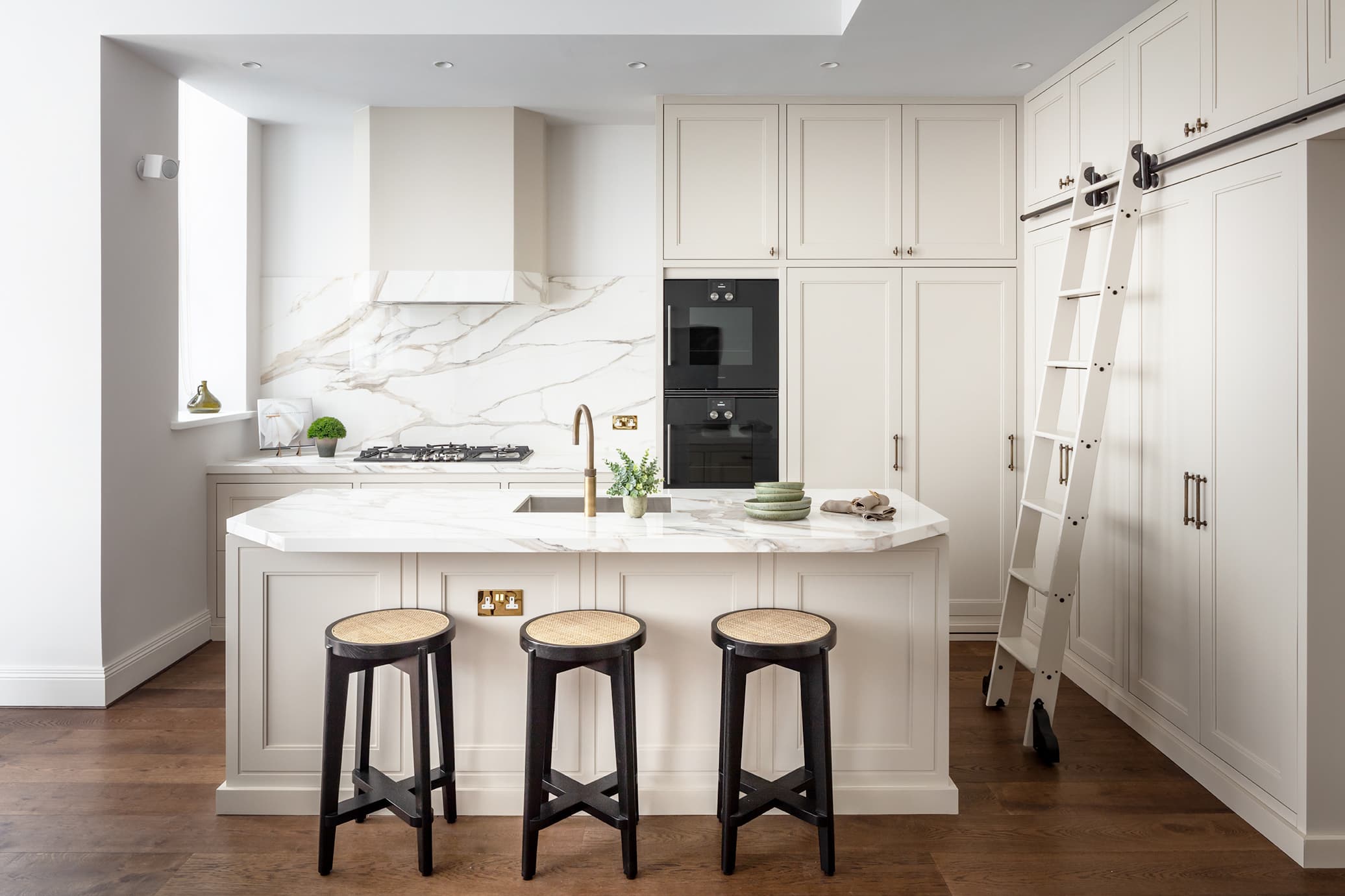
Open a drawer in a mass-produced kitchen and you'll notice the same things every time: a chipboard carcass, a plastic runner, and a melamine lining that will look tired within five years. Open a drawer in a genuinely bespoke kitchen and the experience is entirely different. The solid timber box glides on precision runners. The dovetail joints are visible at the corners — not because they need to be, but because they're a mark of how the thing was made. The interior is as considered as the exterior.
Bespoke kitchen cabinets are the bones of a fine kitchen. They determine how the room looks, how it functions, and — perhaps most importantly — how long it lasts. Yet for something so fundamental, cabinetry is often the least understood part of a kitchen commission. Clients know what worktop they want. They have strong feelings about tap design. But the cabinets themselves? They're frequently left to the maker's discretion.
This guide is here to change that. Whether you're beginning the commissioning process or simply trying to understand what makes a kitchen truly bespoke, the following pages will give you the knowledge to make confident, informed decisions about the most important investment in your kitchen.
Types of Cabinet Construction
Not all bespoke kitchen cabinets are built the same way. The construction method has a direct bearing on strength, longevity, and the quality of the finished result.
Framed Construction
Framed (or face-frame) cabinets feature a solid timber frame fixed to the front of the carcass. The doors and drawers sit within or over this frame. It is the traditional English method and remains the standard for high-end bespoke cabinetry. The frame adds structural rigidity, allows for precise door fitting, and creates the distinctive shadow lines that give a handmade kitchen its visual depth.
At Albury House, our framed cabinets use mortise-and-tenon joinery at every frame junction. This isn't decorative tradition for its own sake — a well-cut mortise and tenon produces a joint that is stronger than the timber surrounding it.
Frameless Construction
Frameless cabinets dispense with the front frame entirely. The doors attach directly to the carcass sides, creating a cleaner, more contemporary aesthetic with minimal gaps between doors. This method is common in modern European design and works particularly well with handleless or push-to-open configurations.
Frameless construction demands exceptional precision in carcass building, as there is no frame to conceal minor inconsistencies. The carcass edges are typically lipped in solid timber or finished with a matching veneer.
In-Frame Construction
In-frame is a subset of framed construction where the doors and drawers sit flush within the face frame. It is widely considered the hallmark of fine English cabinetry. The precision required is considerable — each door must be fitted with consistent margins of around 2mm on all sides, and any warping or movement will be immediately visible.
This is the construction method we use most frequently at Albury House. It suits everything from traditional country kitchens to pared-back contemporary designs, and it ages beautifully.
Choosing Your Timber
The timber you select for your bespoke kitchen cabinets influences everything from appearance and character to durability and cost. There is no single best timber — only the right timber for your design, your lifestyle, and the finish you have in mind.
European Oak
Oak is the stalwart of English cabinetry for good reason. It is hard, stable, and takes virtually any finish beautifully — oiled, waxed, lacquered, or painted. The grain is pronounced and characterful, lending warmth and texture to both traditional and contemporary settings. Quarter-sawn oak, with its distinctive medullary ray figure, is particularly prized for visible surfaces.
Walnut
American black walnut is the choice for clients who want richness and drama. Its deep chocolate tones, swirling grain, and natural lustre make it a statement timber. Walnut is softer than oak but perfectly adequate for cabinetry. It responds beautifully to a hand-rubbed oil finish, which deepens the colour and reveals the grain's full complexity.
Tulipwood
If your bespoke kitchen cabinets are to be hand-painted, tulipwood is very likely what your cabinetmaker will recommend. This American hardwood has an exceptionally fine, even grain that produces a flawless surface under paint. It machines cleanly, accepts primer readily, and is stable enough to resist the seasonal movement that can crack painted finishes on less suitable timbers.
Maple
Hard maple offers a clean, pale, tight-grained surface that suits contemporary and Scandinavian-influenced designs. It is one of the hardest domestic timbers available, making it excellent for drawer boxes and interior components. Its subtle grain allows the form of the cabinetry — rather than the timber figure — to take centre stage.
Painted MDF
While purists may raise an eyebrow, high-quality MDF has a legitimate place in bespoke cabinetry. It offers perfect dimensional stability (no seasonal movement whatsoever), which makes it ideal for large painted door panels and long runs of cabinetry where timber movement might cause issues. The best makers use moisture-resistant MDF for carcass panels, with solid timber frames, rails, and structural components where strength matters.
At Albury House, many of our kitchens combine materials — solid oak for the carcass frames and structural joints, tulipwood for painted doors, and MDF for internal panels where stability is paramount. This isn't compromise. It's intelligent material selection.
Door Styles
The door is the face of your kitchen. It establishes the design language and often determines whether a space reads as traditional, transitional, or contemporary. With bespoke kitchen cabinets, the door is not chosen from a catalogue — it is designed as part of your kitchen.
Shaker
The Shaker door remains the most requested style in British bespoke kitchens, and for good reason. Its flat centre panel surrounded by a simple frame is elegant without being ornate, and it works across an extraordinarily broad range of settings. The proportions of the frame rails and stiles can be adjusted to suit your space — wider for a more traditional feel, narrower for a cleaner contemporary line.
Slab
A plain, flat door with no frame detail. Slab doors are the natural partner for handleless and push-to-open designs, offering an uninterrupted surface that emphasises material and colour over form. In timber, a slab door showcases grain beautifully. In a painted finish, it creates a calm, minimal backdrop.
In-Frame Beaded
An evolution of the standard in-frame door, beaded cabinetry features a small moulded bead around the inside edge of the face frame where it meets the door. This bead serves a practical purpose — it disguises the gap between door and frame — but its primary role is aesthetic. It adds a layer of refinement and shadow that transforms simple cabinetry into something demonstrably handmade.
Raised Panel
A more formal, traditional door where the centre panel is shaped with a raised profile. This style carries a Georgian elegance and suits grander architectural settings — think large country houses, rectories, and period townhouses. It requires considerable skill to execute well, particularly the panel raising, which must produce a consistent profile across every door.
Finishes: Hand-Painted, Lacquered, Oiled, and Waxed
The finish is where bespoke kitchen cabinets reveal their character. It affects how the kitchen looks on day one, and — just as importantly — how it looks after ten years of daily use.
Hand-Painted
Hand-painting is the traditional English finish for bespoke cabinetry. The process is slow and painstaking: a bare timber door receives a coat of specialist primer, followed by two or three undercoats and two topcoats. Each coat is sanded by hand between applications to produce a surface that is smooth, opaque, and subtly textured — quite different from the plastic uniformity of a sprayed finish.
A well-executed hand-painted kitchen develops a gentle patina over time. Minor marks and wear add character rather than looking damaged, which is why painted bespoke cabinets can look better at twenty years than spray-finished alternatives do at five.
We work with specialist heritage paint formulations that are developed specifically for furniture and cabinetry — harder-wearing than wall paint, more forgiving than automotive lacquer, and available in any colour you can imagine.
Lacquered
A sprayed lacquer finish produces a harder, more uniform surface than hand-painting. It suits contemporary designs where a flawless, almost glass-like surface is desired. Lacquer is available in virtually any colour and sheen level, from dead matt to high gloss.
The trade-off is repairability. A scratch or chip in a lacquered surface is more difficult to touch up invisibly than the same mark on a hand-painted surface. For this reason, lacquered finishes tend to work best in kitchens with a more careful, design-led sensibility.
Oiled
An oiled finish is the most natural-looking treatment for timber cabinets. The oil penetrates the wood surface, enhancing the grain and colour while leaving the texture of the timber fully tactile. It produces a matt, low-sheen surface that is warm and inviting.
Oiled cabinets do require periodic maintenance — a fresh coat of oil every year or two — but the process is simple and satisfying. The finish is also the most repairable: scratches and marks can be sanded out and re-oiled locally without affecting the surrounding area.
Waxed
A wax finish sits on the surface of the timber rather than penetrating it, producing a soft, lustrous sheen with a lovely tactile quality. It is the most traditional of all finishes and suits heritage and country-style kitchens particularly well. Wax is less durable than oil or paint and requires more frequent reapplication, but its beauty and authenticity are undeniable.
Hardware and Hinges
The hardware on your bespoke kitchen cabinets is the jewellery of the room. It is touched every day, seen at close range, and — if chosen well — becomes one of the details that lifts a kitchen from excellent to extraordinary.
Handles and Knobs
Options range from solid brass cup handles and hand-forged iron knobs to sleek stainless steel bars and integrated timber pulls. The choice is both aesthetic and ergonomic — a handle must feel right in the hand as well as looking right on the door.
We generally recommend selecting hardware during the design development phase, as handle proportions influence door and drawer sizing. A large cup handle, for instance, requires a different rail width than a slim D-bar.
Hinges
Quality hinges are invisible but indispensable. For in-frame bespoke cabinets, we use concealed cup hinges with integrated soft-close mechanisms. These allow precise three-dimensional adjustment — crucial for maintaining consistent margins as timber settles after installation.
The hinge should be matched to the door weight. A heavy solid oak door demands a different hinge specification than a lightweight painted MDF panel. Getting this right ensures smooth operation for decades.
Drawer Runners
The quality of a drawer runner is something you feel rather than see. We specify full-extension, soft-close runners rated to substantial loads — typically 40kg to 80kg per drawer, depending on purpose. Pan drawers and larder pull-outs require the higher specification.
A well-made drawer, running on quality hardware, should glide open with a fingertip and close with a gentle push. This is one of the quiet pleasures of bespoke cabinetry — the daily experience of something made properly.
Joinery: The Craft Behind the Cabinet
The joinery inside your bespoke kitchen cabinets is the clearest indicator of how they were made. It is also the primary determinant of how long they will last.
Dovetail Joints
The dovetail is the signature joint of fine cabinetmaking. Its interlocking fan-shaped tails and pins create a mechanical bond that resists pulling apart under load — making it ideal for drawer boxes, which endure constant stress in use. Hand-cut dovetails are the mark of a workshop that takes its craft seriously. Machine-cut dovetails are faster to produce and perfectly functional, but lack the subtle irregularity and character of hand-cut work.
At Albury House, our standard drawer boxes feature hand-cut dovetails in solid timber. It takes longer. It costs more. And every time you open a drawer, you'll understand why.
Mortise and Tenon
The mortise and tenon is the workhorse joint of frame construction. A projecting tenon on one piece fits into a corresponding mortise (slot) in another, creating a strong, rigid connection. This joint is used throughout framed and in-frame cabinetry — at every junction where rails meet stiles and where frames meet carcasses.
A well-executed mortise and tenon, glued and clamped with precision, will outlast the timber it joins.
Storage Solutions
Bespoke kitchen cabinets offer something that no standard kitchen can match: storage designed precisely for your belongings and your habits.
Larder Cupboards and Pantry Units
Full-height larder cupboards with adjustable shelving, internal drawers, and pull-out racks are among the most requested features in our commissions. The beauty of bespoke is that the larder can be sized to suit your space and configured for exactly what you store — from spice jars to stand mixers.
Drawer Configurations
Deep pan drawers, shallow cutlery trays, internal dividers, and bespoke knife blocks can all be incorporated into your cabinetry. We design drawer layouts during the specification phase, often asking clients to photograph the contents of their existing drawers so we can ensure nothing is overlooked.
Corner Solutions
Corners are where standard kitchens waste space and bespoke kitchens reclaim it. Carousel units, Le Mans pull-outs, and magic corner mechanisms make every inch accessible. Alternatively, a well-designed corner drawer — angled to follow the cabinet geometry — is a beautifully elegant solution.
Integrated Bins and Recycling
A concealed waste and recycling system is now standard in virtually every bespoke kitchen we build. The unit is typically housed within a pull-out drawer beneath the main prep area, with separate compartments for general waste, recycling, and compost.
What to Look for: Quality Indicators
When you're evaluating bespoke kitchen cabinets — whether ours or anyone else's — there are several indicators of genuine quality:
- Solid timber carcass construction with proper joinery, not simply glued and screwed chipboard
- Consistent door margins throughout — a sign of precise manufacturing and careful fitting
- Hand-cut or machine-cut dovetails on drawer boxes, not stapled or glued butt joints
- Soft-close mechanisms on every door and drawer as standard
- Adjustable shelving with discreet, sturdy shelf supports
- Finished interiors — the inside of the cabinets should be as considered as the outside
- A willingness to show you the workshop — makers with nothing to hide will always invite you in
These are not luxury extras. They are the minimum standard of genuinely bespoke cabinetry.
Ready to Explore Bespoke Cabinetry for Your Kitchen?
The details outlined in this guide are not academic — they are the decisions you'll make when commissioning bespoke kitchen cabinets for your home. Understanding them puts you in a stronger position to collaborate with your maker, ask the right questions, and ensure the finished kitchen meets the standard you deserve.
At Albury House Kitchens, we design and build every cabinet by hand in our own workshop. We work with clients across Cambridge, Hampstead, Essex, and the M11 corridor — from initial conversation through to installation and aftercare. If you'd like to explore what bespoke cabinetry could look like in your home, we'd genuinely enjoy the conversation.
Book your free design consultation — or learn more about our design and build services.
Frequently Asked Questions
Thinking about a new kitchen?
Book Your Free ConsultationYou might also enjoy
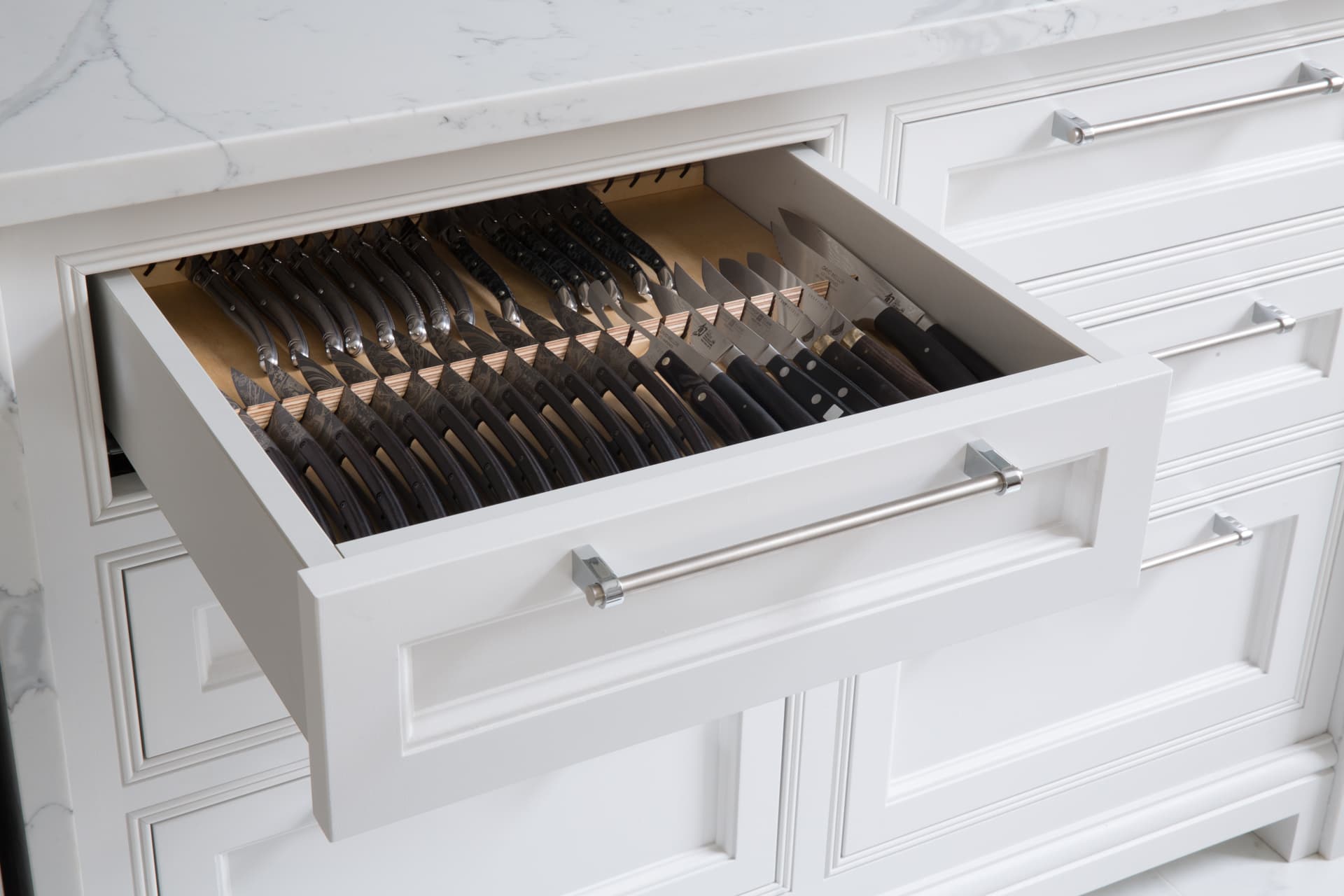
Bespoke Kitchen Joinery: The Craft Behind Cabinets That Last Generations
A detailed guide to the joinery techniques used in bespoke kitchen craftsmanship — from dovetail drawers and mortise-and-tenon frames to tongue and groove panels. Learn how to recognise quality joinery and why it determines how long your kitchen will last.
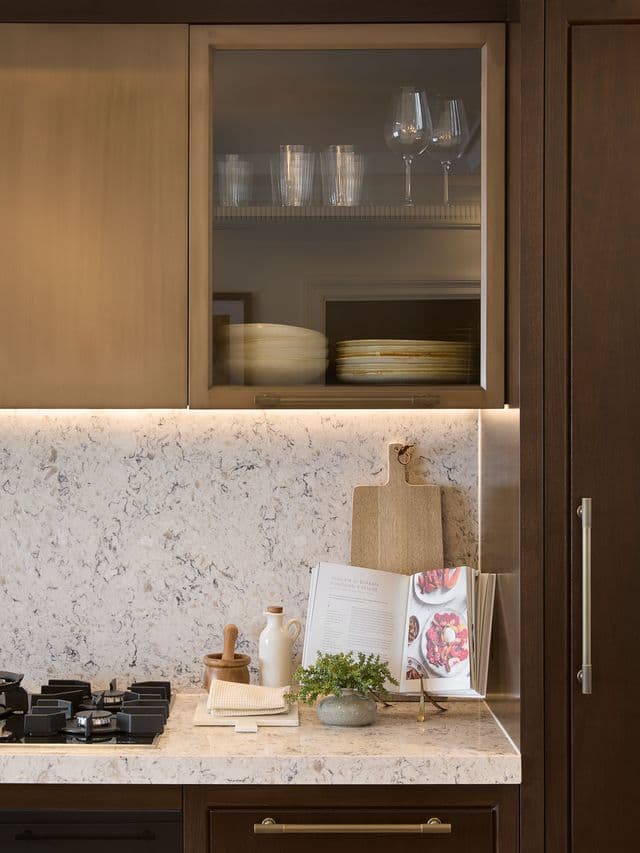
The Bespoke Kitchen Design Process: From Brief to Blueprint
How does a bespoke kitchen get designed? We walk through every stage of the design process — from developing the brief and spatial analysis to 3D visualisation, technical drawings, material specification, and sign-off.
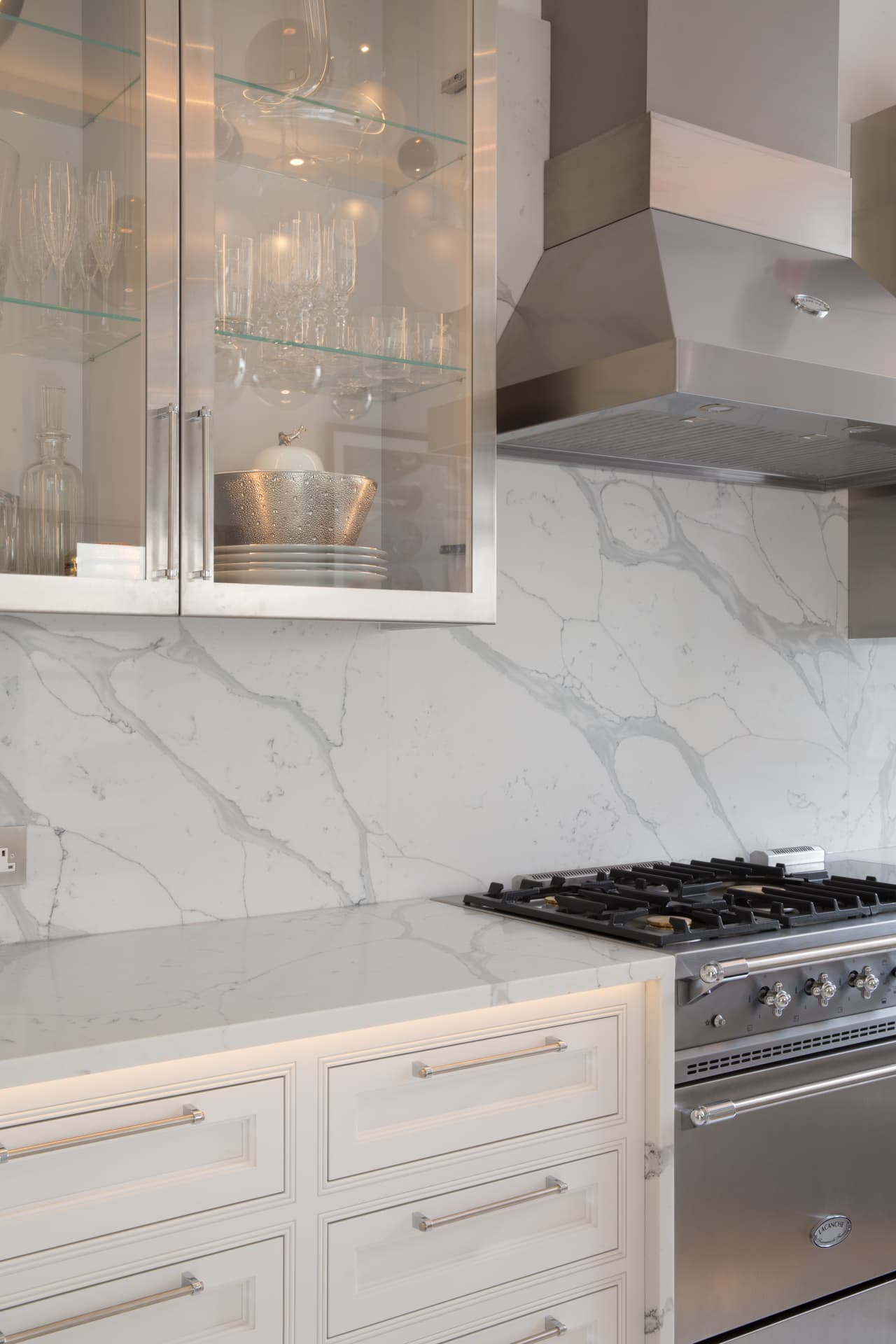
How Much Does a Bespoke Kitchen Cost in the UK? A Transparent Guide
A straightforward breakdown of bespoke kitchen cost in the UK — what drives the price, what to budget for, and why the investment is worth every penny. No vague ranges, no hard sell.