

Luxury Kitchen Hardware: The Complete Guide to Handles, Hinges, and Fixtures
A thorough guide to choosing hardware and fixtures for a bespoke kitchen — from solid brass handles and cup pulls to concealed hinges, soft-close runners, and the art of mixing metals with confidence. Honest advice from the makers who fit them every day.
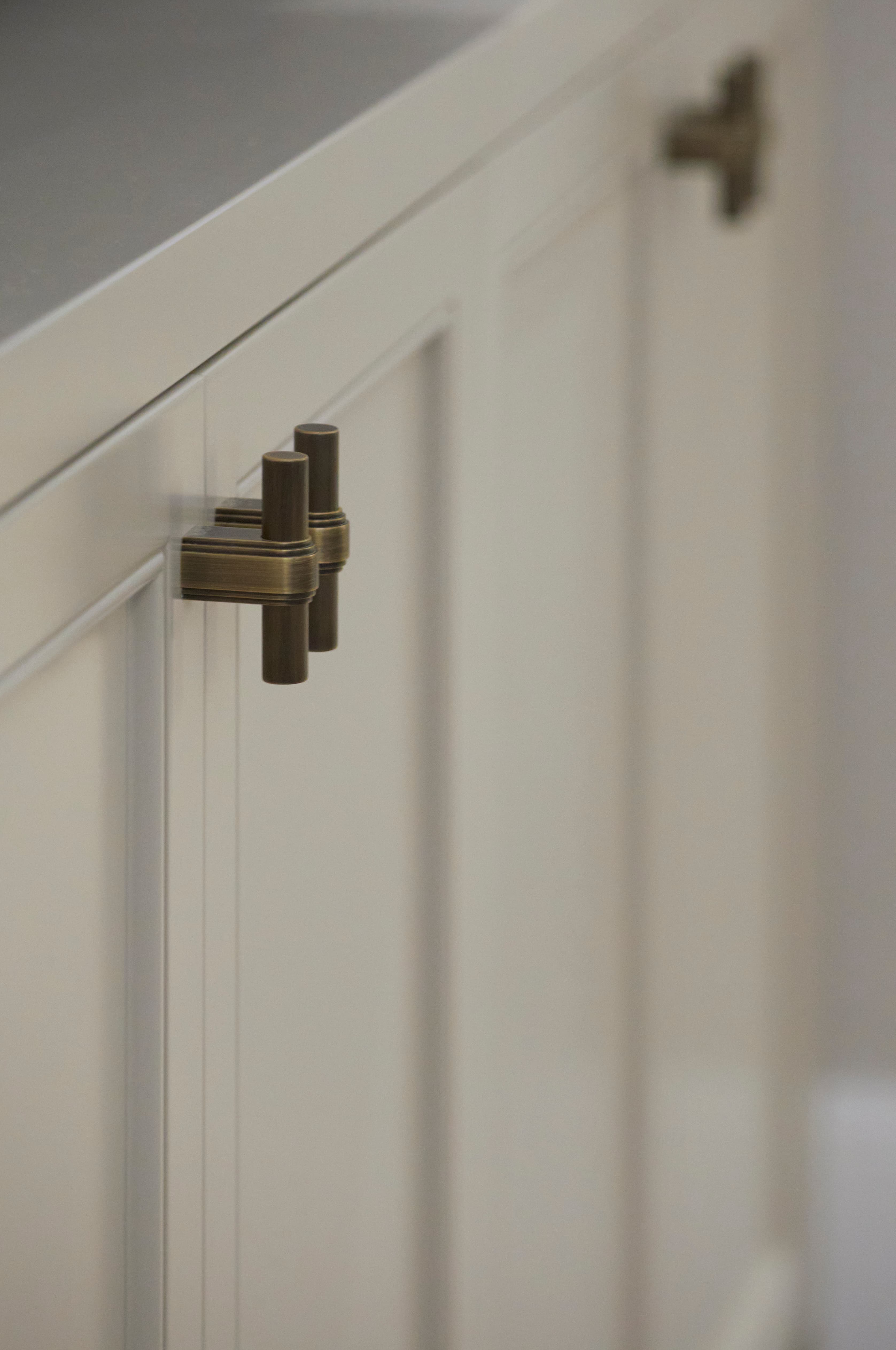
There is a question we ask every client, usually about halfway through the design process, that catches most people slightly off guard: "What do you want your kitchen to feel like when you touch it?"
Not how it should look. Not what colour. What it should feel like under your hand, twenty or thirty times a day, for the next two decades.
It is not a trivial question. The handles on your kitchen cabinets are the single most frequently touched element in your entire home. More than door handles. More than light switches. You will reach for a drawer pull before your morning coffee and again after your last glass of wine in the evening. If those handles are poorly made, badly proportioned, or simply wrong for the design, you will know it — not intellectually, but in your hand, every single time.
At Albury House Kitchens, we have long believed that luxury kitchen hardware is the area where the gap between a good kitchen and a truly exceptional one becomes most apparent. It is also, curiously, the area that receives the least attention in the planning stages. Clients will agonise for weeks over worktop materials and spend hours choosing the perfect shade of paint, then select their handles in twenty minutes from a catalogue. We are here to suggest, gently but firmly, that this is the wrong way round.
This guide covers everything you need to know about choosing hardware and fixtures for a bespoke kitchen — from handle types and materials to hinge quality, drawer runners, and the quietly satisfying art of mixing metals.
Why Hardware Matters More Than You Think
Consider the arithmetic. A typical bespoke kitchen might have 20 to 30 cabinets and drawers, each with its own handle or opening mechanism. If you use the kitchen actively for 20 years, you will reach for those handles somewhere in the region of half a million times. That is not a number that rewards compromise.
Beyond the tactile dimension, hardware is the jewellery of the kitchen. It punctuates the cabinetry, catches the light, and establishes a visual rhythm across the room. The wrong handles on beautiful bespoke kitchen cabinets is rather like wearing plastic buttons on a Savile Row suit. The tailoring might be impeccable, but something feels irretrievably off.
Good hardware also speaks to the seriousness of the maker. When we see a kitchen fitted with hollow, die-cast handles and budget hinges, it tells us something about where priorities lay — and it is rarely a flattering story. The hardware a kitchen maker specifies is, in many ways, a declaration of intent.
Handle Types: A Guide to the Options
The world of cabinet handles is broader than most people realise. Each type has its own character, ergonomic profile, and aesthetic suitability.
Knobs
The simplest and most traditional form. A knob is a single point of contact, typically round or oval, projecting from the door or drawer front. Knobs work beautifully on traditional and Shaker-style cabinetry. They are less practical on wide drawers, where a single central knob requires you to pull from one point — heavy drawers can rack slightly as a result. For doors, particularly on upper cabinets, they are perfectly suited.
Knobs come in an extraordinary range of forms, from the plain Georgian mushroom to the faceted crystal designs beloved of Edwardian pantries. For most bespoke kitchens, a well-proportioned solid brass or bronze knob is difficult to improve upon.
Cup Pulls
Also known as bin pulls or shell pulls, these are the semi-circular handles that sit in a recessed cup on the drawer front. Cup pulls are a staple of English country kitchens and work equally well in transitional and contemporary settings. They are supremely ergonomic — your fingers curl naturally into the cup — and they suit drawers of all sizes.
A combination of knobs on doors and cup pulls on drawers is one of the most enduringly successful hardware schemes we specify. It creates a gentle visual distinction between doors and drawers whilst maintaining a cohesive family feel.
T-Bar Handles
Clean, linear, and modern. The T-bar is a straight bar mounted on two posts, forming a T-shape when viewed from the side. It is the natural choice for contemporary and handleless-look kitchens where a minimal profile is desired. T-bars work well on both doors and drawers and are available in lengths from compact 96mm centres to generous 320mm spans.
The quality of a T-bar handle is evident in its weight and fixings. A solid stainless steel or brass T-bar feels planted and assured. A hollow, lightweight imitation feels exactly like what it is.
D-Handles
The D-handle — sometimes called a bow handle or bridge handle — is a curved or straight bar mounted on two posts, forming a D-shape in profile. It is arguably the most versatile handle type, spanning traditional to contemporary with equal ease depending on its proportions, material, and finish. A slender, brushed nickel D-handle reads as thoroughly modern. A chunky, unlacquered brass version belongs in a farmhouse kitchen.
Integrated Grip Channels
Rather than a separate handle, an integrated grip is a channel machined or routed into the top or bottom edge of the door or drawer front. The result is a clean, uninterrupted facade with no visible hardware. This approach is particularly effective on slab-front contemporary cabinetry and pairs well with matte kitchen finishes where an unbroken surface is central to the design.
Integrated grips require precise machining and careful consideration of the door profile. They are a detail that looks effortless but demands exacting execution.
Push-to-Open (Touch Latch)
The ultimate in minimalism. Push-to-open mechanisms eliminate handles entirely — a gentle press on the door front releases the catch and the door swings open. This approach is used extensively in German and Italian kitchen design and works beautifully in handleless contemporary kitchens.
The caveats are worth noting. Push-to-open doors show fingerprints more readily (there is no handle to aim for, so the entire door becomes the contact point). The mechanism must be paired with a robust soft-close hinge to prevent slamming. And some clients simply miss the tactile reassurance of a proper handle. We recommend experiencing push-to-open in person before committing — it is a system that inspires strong opinions in both directions.
Materials: What Your Handles Are Made Of
The material of your kitchen hardware determines its weight, feel, durability, and how it ages over time. In luxury kitchen hardware, the distinction between solid metal and plated metal is fundamental.
Solid Brass
The gold standard — if you will pardon the expression — for luxury kitchen handles. Solid brass is dense, weighty, and immensely satisfying to hold. It can be finished in dozens of ways (polished, brushed, antiqued, unlacquered) and it will never peel or flake because the material is consistent throughout. Solid brass handles from quality makers such as Armac Martin will comfortably outlast the kitchen itself.
Solid Bronze
Warmer and darker than brass, with a depth of colour that is immediately apparent. Bronze has been used in architectural hardware for millennia and brings a richness that suits period properties and traditional kitchens. Croft Architectural Hardware produces some of the finest bronze cabinet fittings available in Britain.
Nickel
Available in polished, brushed (satin), and aged finishes. Nickel is cooler in tone than brass and sits somewhere between the warmth of traditional metals and the clinical sharpness of chrome. Brushed nickel is an excellent choice for transitional kitchens — it has enough softness to feel welcoming but enough refinement for contemporary settings.
Pewter
A quiet, understated metal with a soft grey tone that complements painted cabinetry beautifully. Pewter handles never shout. They recede gently into the design, allowing the cabinetry and the room itself to take centre stage. It is a particularly effective choice for heritage and country kitchens.
Stainless Steel
The professional's choice. Stainless steel is impervious to corrosion, easy to clean, and has the honest, utilitarian character of a commercial kitchen. In a domestic setting, brushed stainless steel handles work well on contemporary cabinetry — particularly when paired with stainless steel appliances and a stone or concrete worktop.
Leather
An unexpected but increasingly popular option. Leather-wrapped handles — typically a strap of vegetable-tanned leather looped through a metal fixing — bring extraordinary warmth and softness to a kitchen. Like unlacquered brass, leather darkens and develops character with use. It suits Scandinavian-influenced and rustic contemporary designs particularly well.
Ceramic
Ceramic knobs have a long history in English kitchens, from the white porcelain knobs of Victorian dressers to the hand-painted designs of country house sculleries. They are best used sparingly and are most effective on furniture pieces — a dresser, a larder cupboard, or a standalone pantry — rather than across an entire kitchen run.
Finishes: The Surface That Tells the Story
The same metal can look entirely different depending on its finish. The finish you choose is as much a statement of personal philosophy as it is an aesthetic decision.
Polished
High-shine, reflective, and unmistakably luxurious. Polished brass and polished nickel catch every available photon of light and give a kitchen a crisp, formal character. Polished finishes do require more maintenance — fingerprints and water spots show readily — but the effect is undeniably striking.
Brushed (Satin)
A soft, directional texture that reduces reflectivity and conceals fingerprints. Brushed finishes are the most practical choice for busy family kitchens and remain the most popular finish we specify across all handle types. Brushed brass, brushed nickel, and brushed stainless steel all offer beauty with minimal upkeep.
Antiqued
An artificially applied patina that gives new hardware the appearance of age. Antiqued brass, antiqued bronze, and antiqued nickel all have a rich, mellow quality that suits period kitchens and traditional cabinetry. The finish is sealed to prevent further change, so it will look the same in ten years as it does on the day it is fitted.
Unlacquered (Living Finish)
This is where things become genuinely interesting. Unlacquered brass, bronze, or copper is supplied without any protective coating. From the moment it is installed, the metal begins to react with the oils in your skin, with moisture, and with the atmosphere. It tarnishes, darkens, and develops a patina that is entirely unique to your kitchen and your habits.
The handles you use most will polish themselves to a warm golden glow through the natural friction of daily contact. Handles you touch less frequently will darken to a deeper, more complex tone. Over months and years, the hardware develops a depth and character that no factory finish can replicate.
We are passionate advocates of unlacquered brass at Albury House. It is a finish for people who understand that a kitchen is a living space, not a showroom — and who find beauty in the evidence of a life well lived. If this philosophy resonates, you will love it. If the thought of uneven patination keeps you awake at night, brushed brass is your friend.
The Hidden Hardware: Hinges and Runners
Handles are the visible hardware — the part your guests see and your hand reaches for. But the hidden hardware is, if anything, more critical to the daily experience of using your kitchen. Cheap hinges and poor-quality drawer runners will make a beautiful kitchen feel mediocre within months.
Concealed Hinges
Modern bespoke kitchens use concealed (cup) hinges — the type that mount inside the cabinet and are invisible when the door is closed. The industry standard for luxury cabinetry is Blum or Hettich, and there is no good reason to accept anything less.
A quality concealed hinge offers three-dimensional adjustment (up/down, left/right, in/out), allowing doors to be aligned with precision after installation. Soft-close damping is now standard on all Blum Clip Top and Hettich Sensys hinges, eliminating the curse of slamming doors. The damping mechanism is integrated into the hinge itself, not bolted on as an afterthought.
Opening angle matters too. Standard hinges open to 110 degrees, which is adequate for most situations. Wide-angle hinges (155 degrees or more) are essential for corner cabinets and situations where full internal access is required.
Drawer Runners
The drawer runner is the single component that does the most to determine how your kitchen feels in daily use. A drawer that glides open with a fingertip's pressure and closes itself with a whisper — that is the product of a quality runner. A drawer that sticks, judders, or slams shut is the result of a poor one.
Undermount runners are the standard for luxury bespoke kitchens. They mount beneath the drawer box, completely hidden from view, leaving the drawer interior clean and unobstructed. Blum Tandem and Blum Movento are the benchmarks. Movento runners, in particular, offer featherlight opening, full extension (the entire drawer box clears the cabinet front for unrestricted access), and integrated soft-close with Blumotion damping.
Full-extension runners allow the drawer to pull out fully, giving you access to the entire contents — including whatever has migrated to the very back. This seems obvious, but many standard runners only extend to three-quarters, leaving a frustrating dead zone at the rear. For a bespoke kitchen, full extension should be non-negotiable.
Weight capacity is worth discussing with your kitchen maker. Standard runners handle 30 to 40 kilograms. Heavy-duty runners for deep pan drawers and larder units are rated to 60 kilograms or more. An overloaded runner is a miserable thing — it is sluggish, noisy, and shortens the mechanism's life considerably.
For those designing a comprehensive luxury kitchen, the specification of hinges and runners should be settled early and treated with the same seriousness as any other material decision.
Matching Hardware to Kitchen Style
Hardware should feel inevitable — as though no other choice could possibly have been made. This means understanding the relationship between handle design and kitchen character.
Traditional and country kitchens suit knobs, cup pulls, and D-handles in brass, bronze, or pewter. Unlacquered or antiqued finishes reinforce the sense of heritage and warmth. Proportions should be generous — there is nothing worse than a tiny knob lost on a large Shaker door.
Transitional kitchens — the space between traditional and contemporary — benefit from simpler handle profiles in brushed nickel or satin brass. A slim D-handle or a clean cup pull in a muted finish bridges the two worlds gracefully.
Contemporary kitchens call for T-bars, integrated grips, or push-to-open mechanisms. Materials tend towards stainless steel, darkened brass, or black finishes. Restraint is the guiding principle — let the form of the cabinetry speak.
Period property kitchens deserve particular care. If you are designing a kitchen for a listed building or a house with strong architectural character, the hardware should respond to the building's period without descending into pastiche. Georgian properties suit elegant knobs and simple drop handles. Victorian homes can carry slightly more ornament. Arts and Crafts houses call for honest, handmade hardware with visible craft.
Mixing Metals: The Art of Deliberate Contrast
There was a time when matching every metal in the kitchen was considered essential — brass handles, brass taps, brass light fittings, brass hinges on the window, and probably a brass dog bowl for good measure. That era has, thankfully, passed.
Mixing metals is not only acceptable in contemporary kitchen design, it is actively encouraged. The key is intentionality. A kitchen with three carefully chosen metals — say, brushed brass handles, a polished nickel tap, and blackened iron shelf brackets — feels considered and layered. A kitchen with five different metals applied at random feels chaotic.
Our rules of thumb: limit yourself to two or three metals. Ensure each metal appears in at least two places (a single anomalous finish looks like a mistake). Keep the undertones sympathetic — warm metals (brass, bronze, gold, copper) and cool metals (nickel, chrome, stainless steel) can coexist, but one family should dominate. And remember that the finish matters as much as the metal — brushed brass and polished brass are almost different materials visually.
Where to Source Quality Hardware
The UK is fortunate to have several outstanding hardware manufacturers, many of them with histories stretching back a century or more.
Armac Martin — Based in Birmingham, Armac Martin is the name most frequently associated with luxury kitchen hardware in Britain. Every piece is sand-cast in their own foundry and hand-finished by their team. The range spans traditional to contemporary, and the quality is exceptional. We use Armac Martin hardware across a significant proportion of our projects.
Croft Architectural Hardware — Specialists in solid bronze and brass fittings with an emphasis on period-appropriate designs. Croft's pieces have a warmth and heft that is instantly recognisable. They are a particularly strong choice for heritage kitchens and listed buildings.
Samuel Heath — Another Birmingham maker, Samuel Heath produces beautifully engineered hardware with a focus on precision and finish quality. Their contemporary range is particularly accomplished, and their finishes — including City Bronze and Antique Gold — are superb.
Dauby — A Belgian maker producing hand-forged hardware in iron, bronze, and brass. Dauby's pieces have a raw, artisanal quality that suits country and rustic contemporary kitchens. Each handle is slightly unique due to the hand-forging process.
Buster + Punch — For clients who want hardware with a more fashion-forward, industrial edge. Buster + Punch offer solid metal hardware in finishes including brass, black, steel, and a smoked bronze that is quite unlike anything else on the market.
Cost: Hardware as a Proportion of Kitchen Spend
It is worth addressing the question of budget directly, because luxury kitchen hardware is not inexpensive — and it should not be.
A single solid brass knob from Armac Martin costs between £15 and £40. A cup pull runs from £30 to £70. A D-handle or T-bar, depending on size and finish, might be £50 to £120. Multiply these figures across 25 to 35 handles for a typical kitchen, add the cost of premium Blum hinges and runners throughout, and the hardware budget for a bespoke kitchen usually falls between £3,000 and £8,000.
That represents roughly 3 to 8 per cent of the total kitchen cost — a modest proportion for the element you interact with most intimately and most frequently. By comparison, the worktop often accounts for 10 to 15 per cent and the appliances a similar figure. Hardware is, pound for pound, the best value upgrade available in a luxury kitchen.
Where we counsel against economising is on the hidden hardware. Saving £500 by specifying budget hinges and runners instead of Blum or Hettich is a false economy that will declare itself within two to three years. The drawers will lose their silky action. The soft-close will become a firm-close, then a no-close-at-all. The doors will drift out of alignment. These are not problems you can solve with a screwdriver — they require wholesale replacement of the mechanisms, which means removing every door and drawer in the kitchen.
A Final Thought
We sometimes describe hardware as the handshake of the kitchen. It is the first point of physical contact between you and the room, and first impressions — as in all areas of life — are remarkably persistent.
Choose hardware that feels right in your hand. Choose materials that will age gracefully alongside your kitchen and your family. Choose quality that justifies the investment you have made in everything else. And if you are unsure, come and visit us — we keep an extensive collection of samples from all the makers mentioned above, and there is no substitute for holding a handle in your hand and knowing, immediately, that it is the one.
If you would like to discuss hardware and fixtures for your bespoke kitchen project, we would be delighted to hear from you. Get in touch with our design team to arrange a consultation.
Frequently Asked Questions
Thinking about a new kitchen?
Book Your Free ConsultationYou might also enjoy
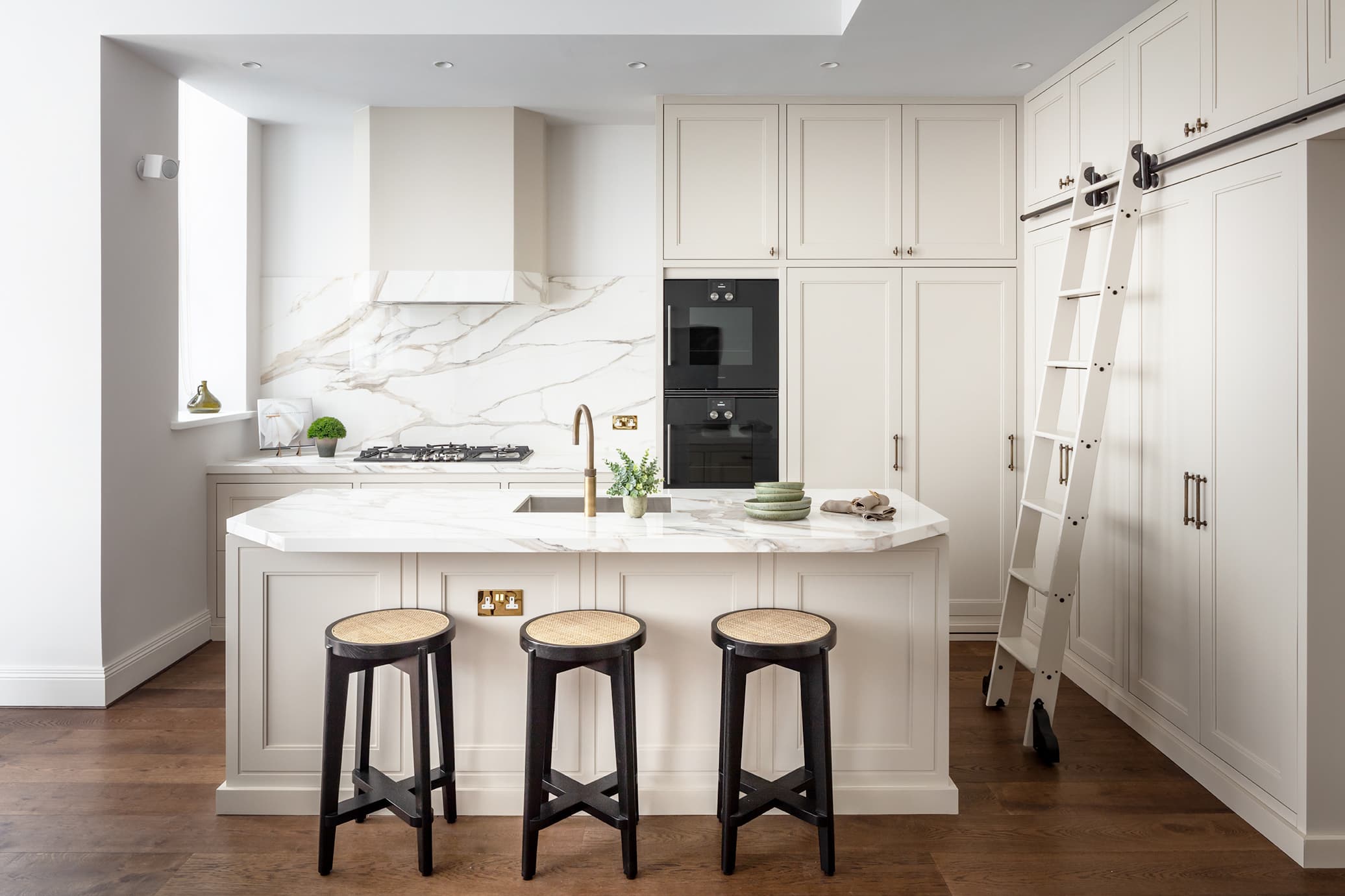
Bespoke Kitchen Cabinets: The Definitive Guide to Handmade Cabinetry
Everything you need to know about bespoke kitchen cabinets — from construction methods and timber selection to door styles, finishes, and the details that distinguish genuine craftsmanship from the merely expensive.
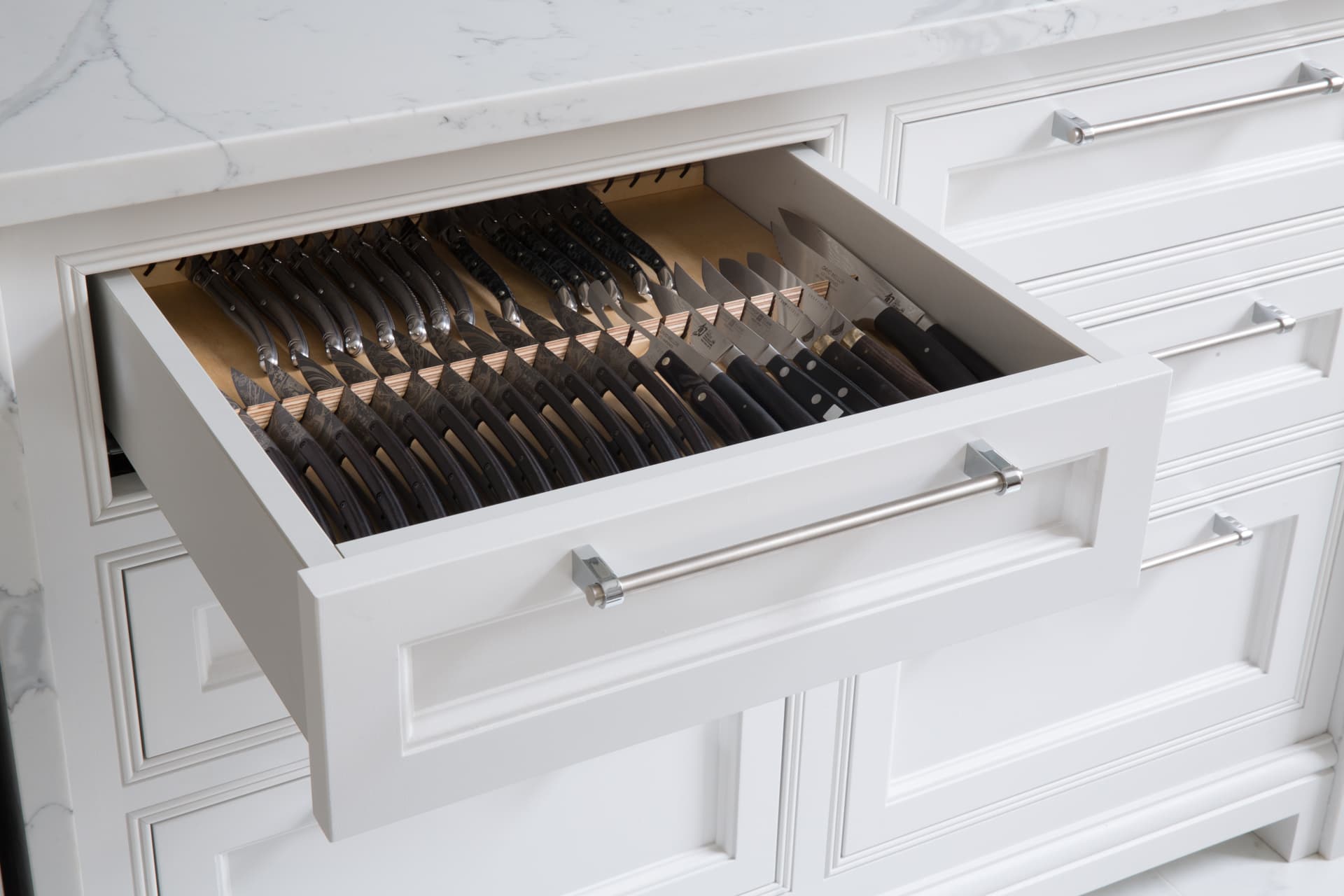
Bespoke Kitchen Joinery: The Craft Behind Cabinets That Last Generations
A detailed guide to the joinery techniques used in bespoke kitchen craftsmanship — from dovetail drawers and mortise-and-tenon frames to tongue and groove panels. Learn how to recognise quality joinery and why it determines how long your kitchen will last.
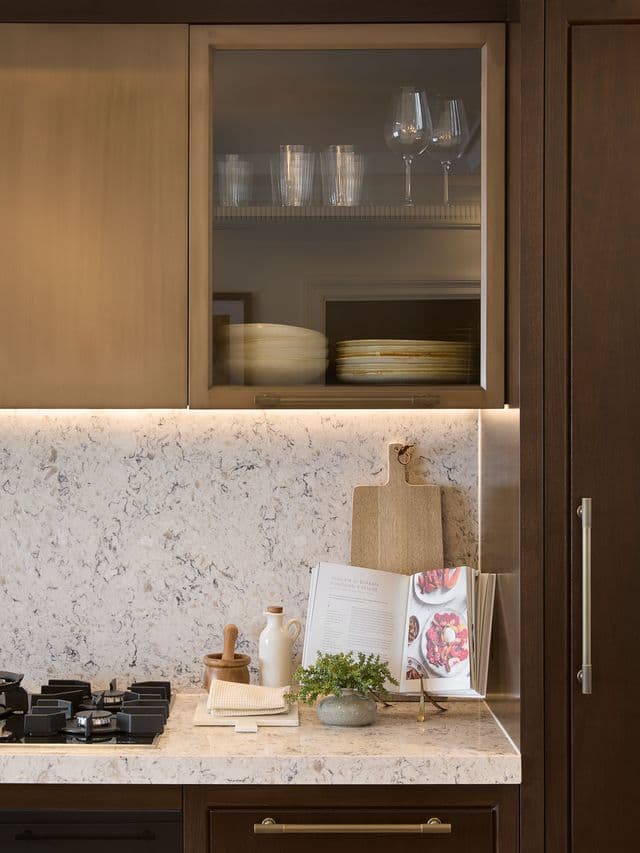
The Bespoke Kitchen Design Process: From Brief to Blueprint
How does a bespoke kitchen get designed? We walk through every stage of the design process — from developing the brief and spatial analysis to 3D visualisation, technical drawings, material specification, and sign-off.