

Matte Kitchen Finishes: Why the Quiet Surfaces Are Having Their Moment
The definitive guide to matte finishes in luxury kitchen design — from matt lacquer cabinetry and honed stone worktops to brushed brass hardware and limewash paint. How to use texture, sheen, and restraint to create a kitchen that feels as good as it looks.
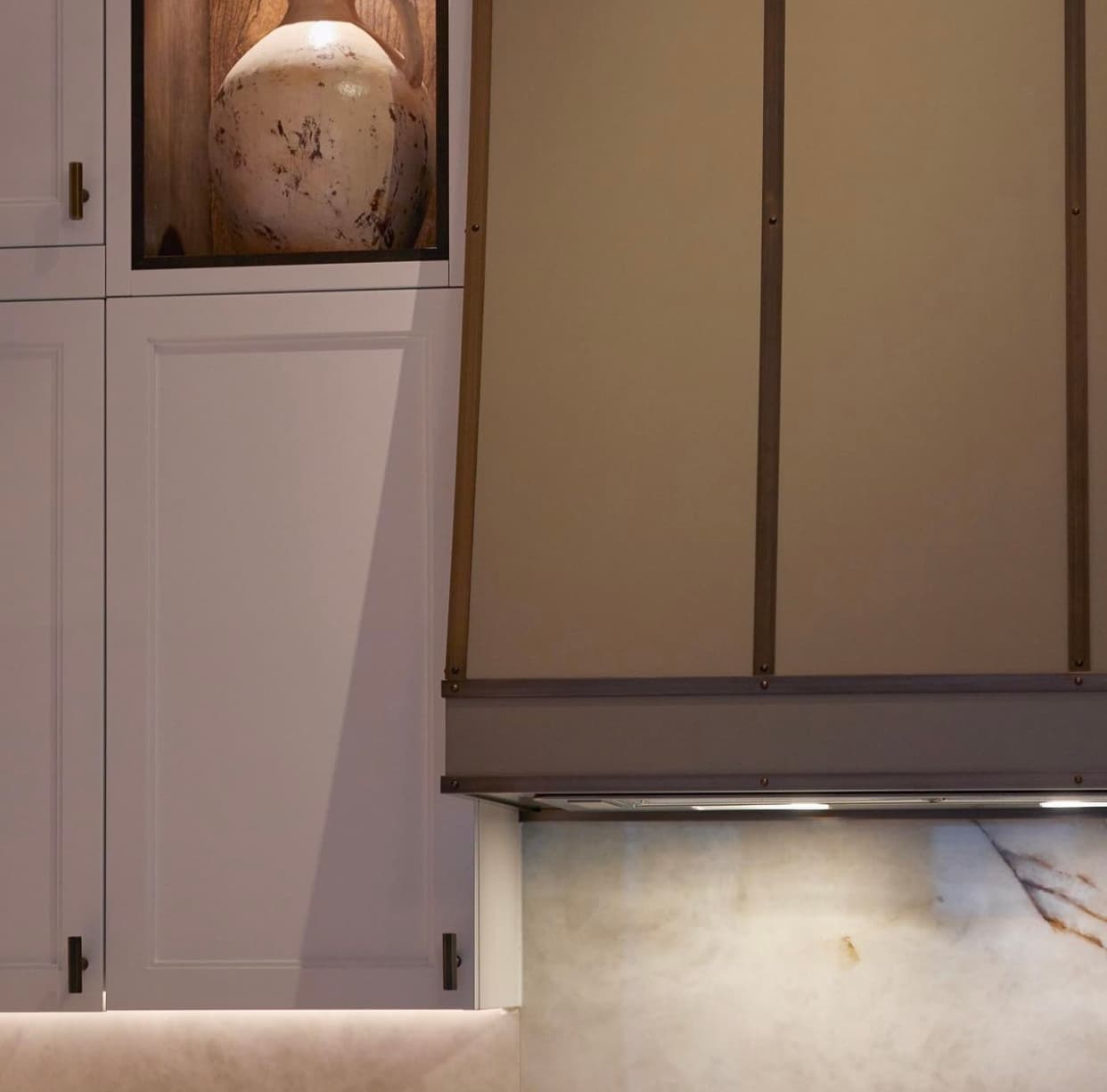
There is a moment in almost every kitchen design consultation when a client picks up a sample — a piece of honed marble, a square of matt-lacquered timber, a swatch of chalky paint — and runs their thumb across it. They don't hold it up to the light. They don't step back to assess it. They touch it.
That instinct tells you everything about where kitchen design has been heading. After years of surfaces that looked impressive but felt like nothing in particular, the kitchen world has rediscovered something rather fundamental: the most beautiful finishes are the ones that invite your hand.
Matte kitchen finishes are not new. They have been the quiet backbone of fine cabinetry and interior design for generations. What is new is their dominance — the confident, wholesale move away from reflective surfaces towards materials and finishes that absorb light, reward touch, and age with the kind of grace that gloss never could.
This is not a backlash against modernity. It is a recalibration towards quality. And for those designing a luxury bespoke kitchen, it opens up a world of textural possibility that makes high-gloss cabinetry look, if we're honest, rather one-dimensional.
Why Matte Is Replacing Gloss
The shift from gloss to matte in luxury kitchen design has been building for the better part of a decade, and it is now decisive. Walk through any serious kitchen showroom, flick through any design publication worth its salt, and the message is unambiguous: matte has won.
But why? There are practical reasons, certainly. High-gloss surfaces are unforgiving. Every fingerprint, every watermark, every smudge is amplified and lit up like a stage. Families with young children — or, let's be honest, families with adult members who occasionally touch things — know the exhausting cycle of polishing that gloss demands. Matte surfaces, by contrast, are mercifully indifferent to fingerprints. They look the same at nine in the morning as they do at nine in the evening, regardless of how many hands have passed across them.
But the real reasons run deeper than housekeeping. Matte finishes have a quality that gloss simply cannot replicate: they feel honest. A hand-painted cabinet in a chalky matt finish reads as a piece of craftsmanship. The same cabinet in high gloss reads as a product. There is a warmth, a softness, a sense of the human hand in matte surfaces that speaks directly to the way we want our kitchens to feel — less showroom, more home.
There is also the matter of sophistication. In fashion, in architecture, in automotive design, in every discipline where aesthetics are taken seriously, matte has long been the marker of confidence. It says: this material is good enough that it does not need to shout. That principle translates beautifully to kitchen design, where the most accomplished rooms are invariably the quietest.
Matte Cabinetry Finishes
The doors are where most people encounter matte first, and the range of options is wider — and more interesting — than many realise.
Matt Lacquer
A spray-applied matt lacquer finish produces an exceptionally smooth, uniform surface with a velvety softness to the touch. It is the finish of choice for contemporary and handleless kitchen designs where clean lines and precision matter. The surface absorbs light evenly, creating a sense of depth in the colour that gloss lacquer, with its mirror-like reflections, tends to overwhelm.
Matt lacquer works particularly well on flat-panel, slab, and J-pull door styles. It is available in virtually any colour and can be colour-matched with great accuracy, which makes it ideal for clients who have a very specific shade in mind.
Hand-Painted Chalky Finishes
For kitchens with a more traditional or hand-painted character, a chalky matt paint finish is difficult to beat. Applied by brush or roller over carefully prepared timber, it has a texture and depth that no spray finish can reproduce. Each brushstroke subtly catches the light differently, giving the surface a living quality that changes gently through the day.
This is the finish that suits Shaker, in-frame, and panelled door styles most naturally. It pairs beautifully with natural timber, aged brass, and stone — the materials of a kitchen that feels as though it has always been there.
The practical advantage of hand-painted finishes is that they can be touched up and refreshed over the years with relative ease. A minor scuff or mark that would ruin a gloss door can be invisibly repaired on a matt-painted surface.
Eggshell and Satin-Matt
Between dead-flat matt and anything approaching sheen, there is a sweet spot that many of our clients find irresistible. An eggshell or satin-matt finish — somewhere around five to fifteen per cent sheen — has the warmth and restraint of matte with just enough light return to give the surface a gentle luminosity.
Eggshell is particularly effective on moulded or detailed doors where a completely flat finish can look a little lifeless. The slight sheen catches the edges of panelling and moulding profiles, lending them definition without the hard reflections of satin or gloss.
Limewash and Mineral Finishes
At the more artisanal end of the spectrum, limewash and mineral-based paints produce finishes of extraordinary depth and character. These are paints that work with the timber rather than sitting on top of it — the grain shows through, the colour develops variation and movement, and the surface has a chalky, almost powdery beauty that is unlike anything else.
Limewash finishes are not for every kitchen. They demand a setting that can carry their rustic honesty — a farmhouse, a period property, a barn conversion. But in the right context, they are simply stunning. They are the matte finish at its most uncompromising and its most rewarding.
Matte Worktops: Honed, Leathered, and Brushed
The worktop is where matte finishes perhaps make their most persuasive case. A polished marble worktop is undeniably beautiful, but it is also demanding — it shows every water ring, every fingerprint, every imperfection with forensic clarity. A honed or leathered version of the same stone is equally beautiful and considerably more forgiving.
Honed Stone
Honing produces a smooth, flat surface with a soft, matte appearance. It retains the colour and veining of the stone but strips away the reflective finish, leaving something that feels more natural, more honest, and more tactile. Honed Carrara marble, for example, has a warmth and quietness that its polished counterpart — for all its drama — cannot match.
Honed finishes are available across virtually every natural stone used in kitchen design: marble, granite, quartzite, limestone, and slate. They are also increasingly popular on engineered stone and porcelain worktops, where the matte treatment lends a more convincing materiality.
Leathered and Brushed Granite
Leathered granite takes the matte principle a step further. The surface is treated to create a subtle, dimpled texture that is extraordinarily satisfying to touch — somewhere between suede and very fine sandstone. It retains the depth and colour of the stone whilst adding a three-dimensional quality that honed and polished finishes lack.
Brushed finishes achieve a similar effect through a different process, creating fine linear grooves across the surface that diffuse light and add directional texture. Both treatments work superbly on darker granites and quartzites, where the textured surface plays beautifully against the crystalline structure of the stone.
These are worktops that people genuinely enjoy touching. And in a room where your hands are on the surface for hours each day, that is no small thing. For a deeper exploration of stone and surface options, our worktop guide covers the full range.
Matte Metals: Hardware and Fixtures
If matte cabinetry is the canvas, then matte hardware is the punctuation. The move towards matte metal finishes has been one of the most significant shifts in kitchen hardware and fixtures in recent years, and it has transformed the way a kitchen feels in the hand.
Brushed Brass and Aged Bronze
Brushed brass has become the defining hardware finish of the current era, and for good reason. It has warmth without flashiness, presence without ostentation. The brushed texture softens the metal's natural lustre to a gentle glow that works equally well in contemporary and traditional settings.
Aged and antiqued brass goes further still, with a deliberately developed patina that gives handles and knobs the look and feel of something that has been in place for decades. It is supremely effective in kitchens that aim for an unfitted, furniture-like quality.
Antiqued Nickel and Pewter
Where brass brings warmth, antiqued nickel and pewter bring a cooler, more silvered character — still matte, still tactile, but with a quieter, more recessive personality. These finishes are particularly well suited to kitchens in paler colour palettes, where warm brass might feel too assertive.
Gunmetal and Matt Black
At the darker end of the spectrum, gunmetal and matt black hardware make a strong but understated statement. Matt black, in particular, has moved from niche to mainstream with remarkable speed. It is crisp, architectural, and uncompromising — best used in kitchens with a contemporary edge where its graphic quality can be fully appreciated.
Gunmetal occupies the middle ground: darker than brushed nickel, warmer than matt black, with a subtle industrial quality that works beautifully in kitchens that blend contemporary and traditional elements.
Taps and Sinks
The matte treatment extends naturally to taps and sinks, where brushed and matt finishes are now available from every serious manufacturer. A brushed brass tap above a honed marble worktop has a coherence and warmth that polished chrome simply cannot replicate. Matt black taps paired with dark stone worktops create a seamless, architectural quality.
The practical benefit is, once again, fingerprints. A polished chrome tap in a busy kitchen is an endless source of smudges. Its brushed counterpart remains unflustered.
Matte Tiles and Splashbacks
Tiles have been available in matte finishes for as long as tiles have existed, of course. What has changed is the sophistication and variety of the options, and the confidence with which designers are using them.
Handmade zellige tiles, with their irregular surfaces and chalky finishes, have become a defining choice for luxury kitchen splashbacks. No two tiles are quite alike, and the cumulative effect — a wall of subtly different tones and textures — is rich, warm, and deeply characterful.
Large-format porcelain in matte finishes has also come of age. Slabs that mimic the appearance of honed stone or raw concrete can be used for splashbacks, walls, and even worktops, creating a monolithic, seamless aesthetic that is striking in its restraint.
Encaustic and cement tiles in matte finishes bring pattern and colour without the visual noise that glossy versions can create. The matte surface softens the pattern, lending it a vintage, worn-in quality that feels established rather than newly installed.
Mixing Matte with Subtle Sheen
Here is where the art lies. A kitchen composed entirely of dead-flat matte surfaces can, in certain lights and certain colour palettes, feel a touch austere. The most accomplished matte kitchens are not matte throughout — they are predominantly matte, with carefully placed moments of contrast that provide depth, definition, and a touch of life.
This might be as simple as an eggshell finish on the cabinetry against a fully matte worktop. Or a honed splashback below polished open shelving. Or matt-painted cabinets with hardware that carries just enough sheen to catch the light.
The key is subtlety. You are not introducing gloss — you are introducing the memory of it. A satin tap against a matt wall. A silk-finish stone against brushed metal. These are not contrasts that announce themselves. They are felt rather than seen, and they are what give a matte kitchen its quiet sophistication.
Consider, too, the role of timber. An oiled oak shelf or a natural walnut island top introduces an organic warmth and a soft, low sheen that breaks up expanses of painted matte cabinetry beautifully. Timber has always understood matte finishes — an oiled surface is, by definition, matte — and its grain provides textural interest that painted surfaces alone cannot.
The Matte Palette: Colour Without Shine
One of the most compelling arguments for matte finishes is what they do to colour. Gloss finishes tend to simplify colour — the reflections bounce light around, washing out subtlety and making everything look slightly plastic. Matte finishes absorb light, and in doing so, they reveal the full complexity of a colour.
Deep, saturated tones are where the difference is most dramatic. A rich midnight blue in matte has a depth and gravity that the same blue in gloss cannot approach. Forest greens, charcoals, warm burgundies, and inky dark greys all come alive in matte, gaining a quality that is almost velvety — dense, rich, and absorbing.
This is why the current appetite for darker kitchen colours and matte finishes have risen in tandem. They are natural partners. A dark kitchen in gloss risks looking cold and corporate. The same kitchen in matte feels sophisticated, enveloping, and deeply inviting.
Paler colours benefit too. A matte white is softer and more forgiving than a gloss white, which can feel clinical under certain lighting. Chalky whites, warm greys, and putty tones have a tactile, almost edible quality in matte that makes them endlessly liveable.
And then there are the heritage shades — the colours with history and character — that seem designed for matte. Sage green, Swedish blue, terracotta, old ochre, and the whole family of colours associated with traditional British interior design find their truest expression in flat and eggshell finishes. These are colours that have been mixed and applied by hand for centuries, and they look most authentic when treated that way.
For a broader look at where colour and finish trends are heading, our overview of kitchen design trends in 2026 puts matte in context alongside other developments worth watching.
Combining Textures for Visual Interest
A matte kitchen is a textured kitchen, and texture is what gives these spaces their extraordinary richness. The absence of reflection means the eye reads surfaces differently — it notices the grain of the timber, the brushstroke in the paint, the crystalline structure of the stone, the weave of a linen curtain.
This is a gift for designers. In a matte kitchen, every material choice becomes more expressive. A fluted island front catches shadows in its grooves. A riven slate floor provides an earthy counterpoint to smooth painted cabinetry. Woven rattan panel inserts in upper cabinets introduce a textural warmth that glass or solid panels cannot.
The most successful matte kitchens layer four or five different textures within a restrained palette. Imagine, for instance: hand-painted cabinetry in a deep olive green, a honed Carrara marble worktop, brushed brass hardware, a zellige tile splashback in a slightly paler green, and oiled oak open shelving. Every surface is matte or near-matte, but the range of textures — smooth paint, cool stone, warm metal, irregular tile, open grain timber — creates a richness and depth that a uniformly glossy kitchen could never achieve.
Practical Considerations
Clients sometimes approach matte finishes with a degree of anxiety about practicality. Will they stain? Will they scratch? Will they look tired after a few years? These are fair questions, and they deserve honest answers.
Cleaning
Matte surfaces are easier to live with than many people expect. They do not show fingerprints, water spots, or cooking splashes the way gloss does, which in practical terms means you spend less time wiping them down. When cleaning is needed, a soft cloth with a mild, non-abrasive cleaner is all that is required. Avoid anything with a wax or silicone content, which can build up and create patchy sheen over time.
Matte stone worktops should be sealed appropriately — honed marble, in particular, benefits from a quality impregnating sealer that protects without altering the appearance. Once sealed, daily maintenance is straightforward.
Durability
Matt lacquer is every bit as durable as its gloss counterpart — arguably more so in practice, because minor scuffs and scratches are far less visible on a matte surface. Hand-painted finishes are durable for their type, though they will develop the occasional mark over the years. Many clients consider this a feature rather than a flaw — it is what gives a kitchen character and history.
Honed and leathered stone is no less structurally sound than polished stone. The textured surface can actually be more resistant to visible scratching, as the existing surface variation absorbs minor marks.
Touch-Ups and Maintenance
This is where matte finishes have a genuine, decisive advantage. A scratch on a gloss door is visible and virtually impossible to repair invisibly. A mark on a hand-painted matte door can be touched up with a brush and matching paint, often to the point of invisibility. Matt lacquer can similarly be locally repaired by a skilled finisher.
This repairability extends the life of a matte kitchen considerably. It is a finish that can be maintained, refreshed, and even subtly updated over the decades — something that gloss, with its factory-perfect-or-nothing quality, cannot offer.
A Finish That Rewards the Hand
The ascendancy of matte kitchen finishes is not, in the end, about aesthetics alone. It is about how a kitchen makes you feel when you move through it, touch its surfaces, and live with it day after day.
Gloss kitchens are designed to be looked at. Matte kitchens are designed to be used. They welcome your hand rather than punishing it with a fingerprint. They age gracefully rather than clinging to a factory finish. They reveal the quality of their materials rather than hiding it behind a reflective veil.
At Albury House Kitchens, we have been building kitchens in matte finishes for as long as we have been building kitchens. It is how fine cabinetry has always been finished — with paint, with oil, with wax, with the materials that reward the maker's hand and the owner's touch. That it has taken the wider industry this long to catch up is, if anything, rather reassuring.
If you are considering a kitchen where the surfaces feel as considered as they look, where the materials tell you something about their quality every time you touch them, we would be glad to show you what is possible. The quietest finishes, as it turns out, have the most to say.
Frequently Asked Questions
Thinking about a new kitchen?
Book Your Free ConsultationYou might also enjoy
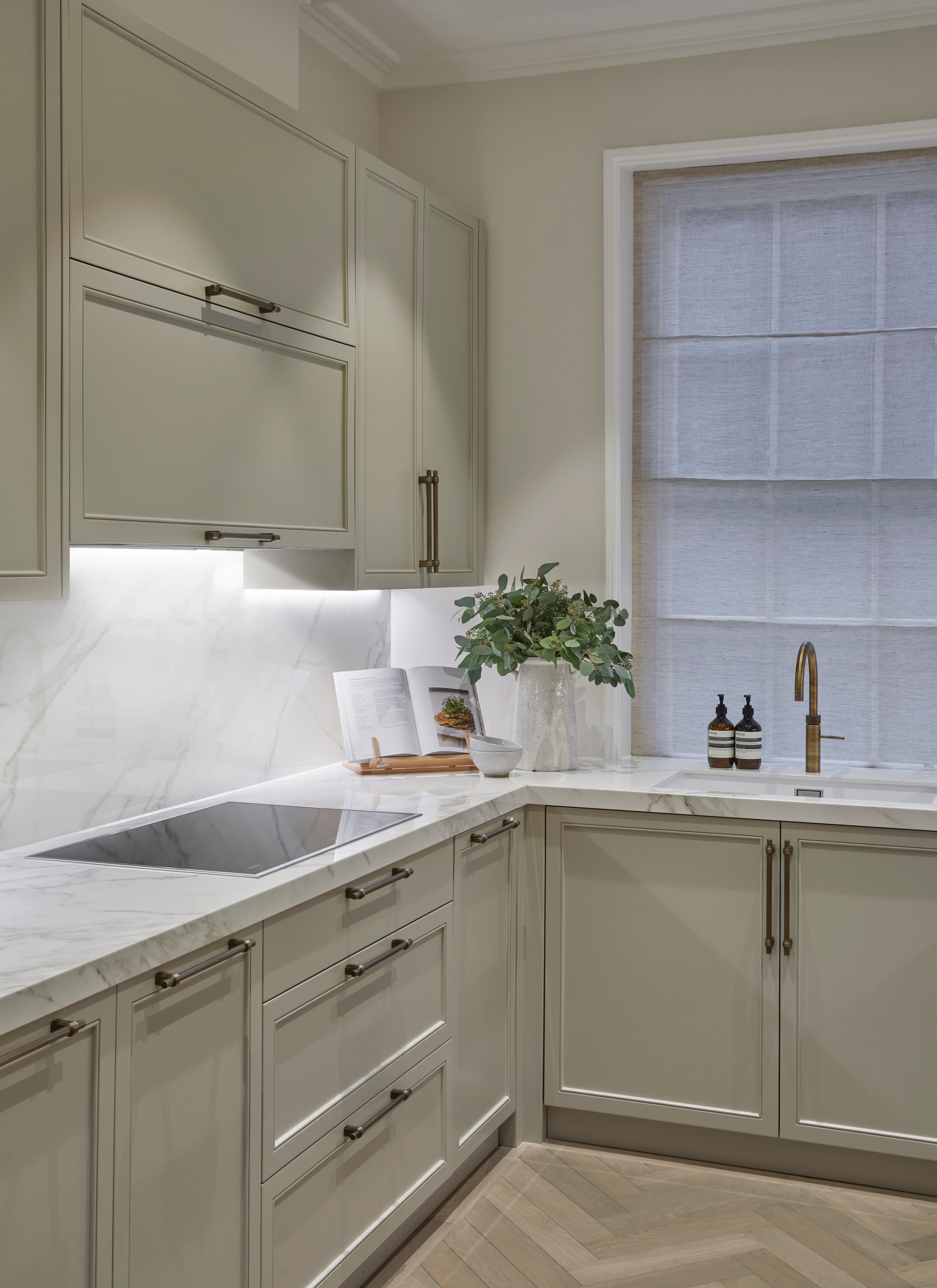
Earthy Kitchen Colours 2026: The Palette Shift Every Luxury Kitchen Needs
Why cool greys are fading and earthy, saturated kitchen colours are defining 2026. From sage green and terracotta to deep plum and burnt umber — how to choose, test, and live with the new warm palette in a bespoke kitchen.
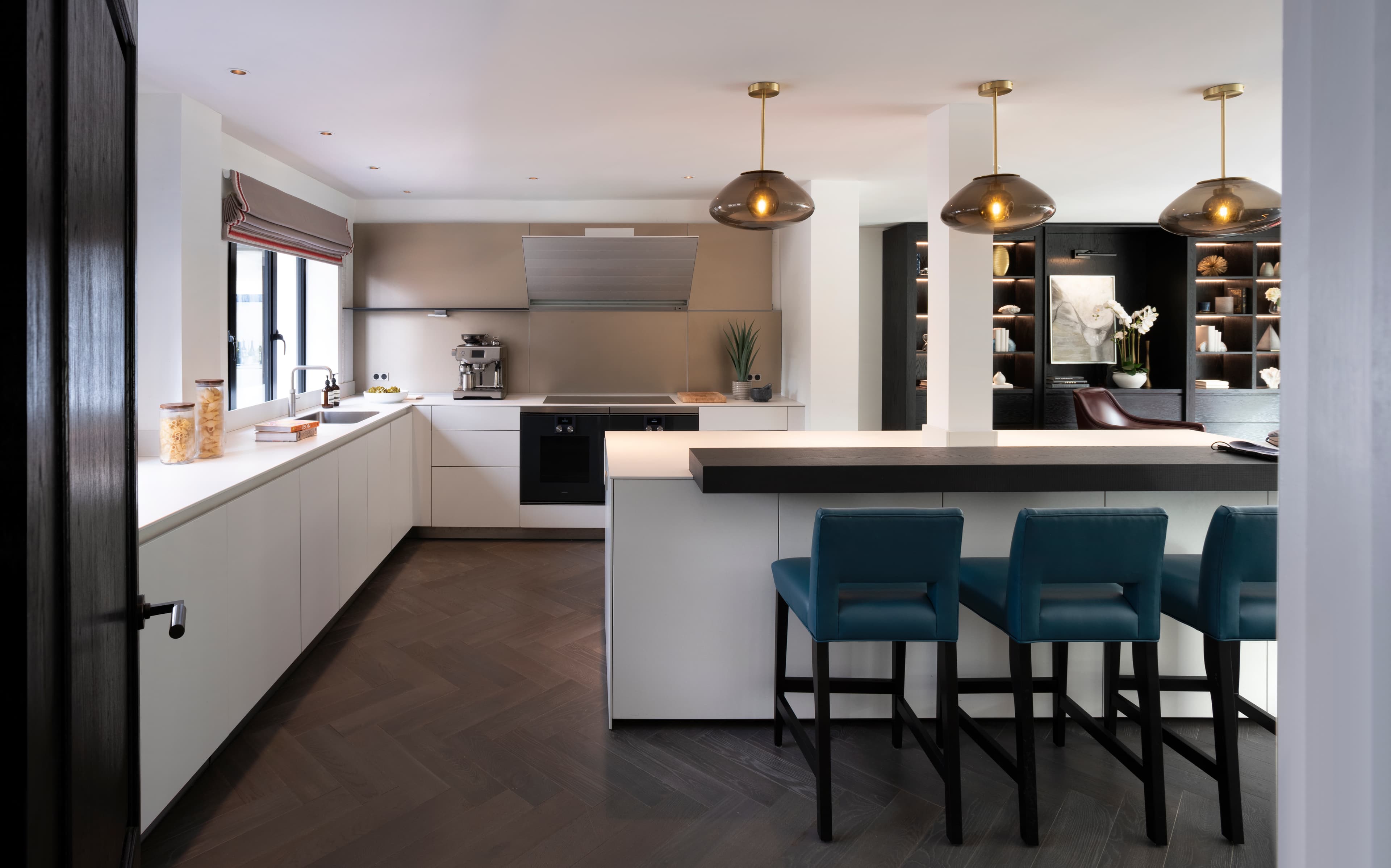
Kitchen Design Trends 2026: The Definitive Guide to What's Shaping Luxury Kitchens This Year
The 10 kitchen design trends defining 2026 — from the return of real wood and earthy colour palettes to sculptural islands, hidden sculleries, and the quiet triumph of handcraft over mass production. An authoritative guide from Albury House Kitchens.
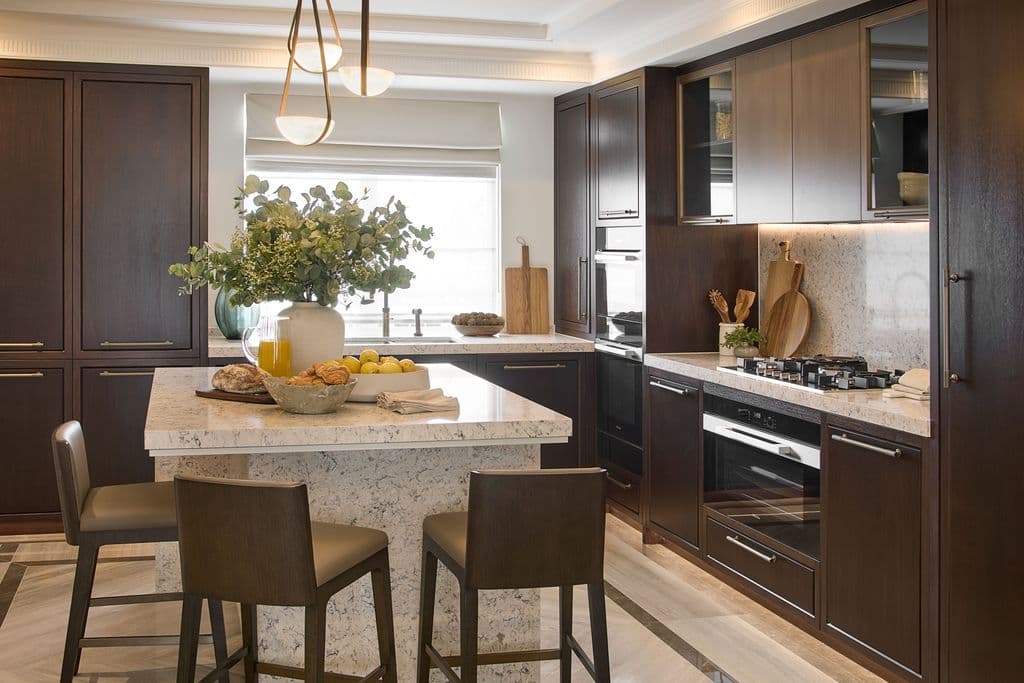
The Return of Real Wood Kitchens: Why Natural Timber Is the Defining Trend of 2026
After two decades of painted cabinetry, real wood kitchens are making a remarkable comeback. We explore the timbers, finishes, and design philosophies driving the return to natural, unpainted kitchen cabinetry.