

Kitchen Design Trends 2026: The Definitive Guide to What's Shaping Luxury Kitchens This Year
The 10 kitchen design trends defining 2026 — from the return of real wood and earthy colour palettes to sculptural islands, hidden sculleries, and the quiet triumph of handcraft over mass production. An authoritative guide from Albury House Kitchens.
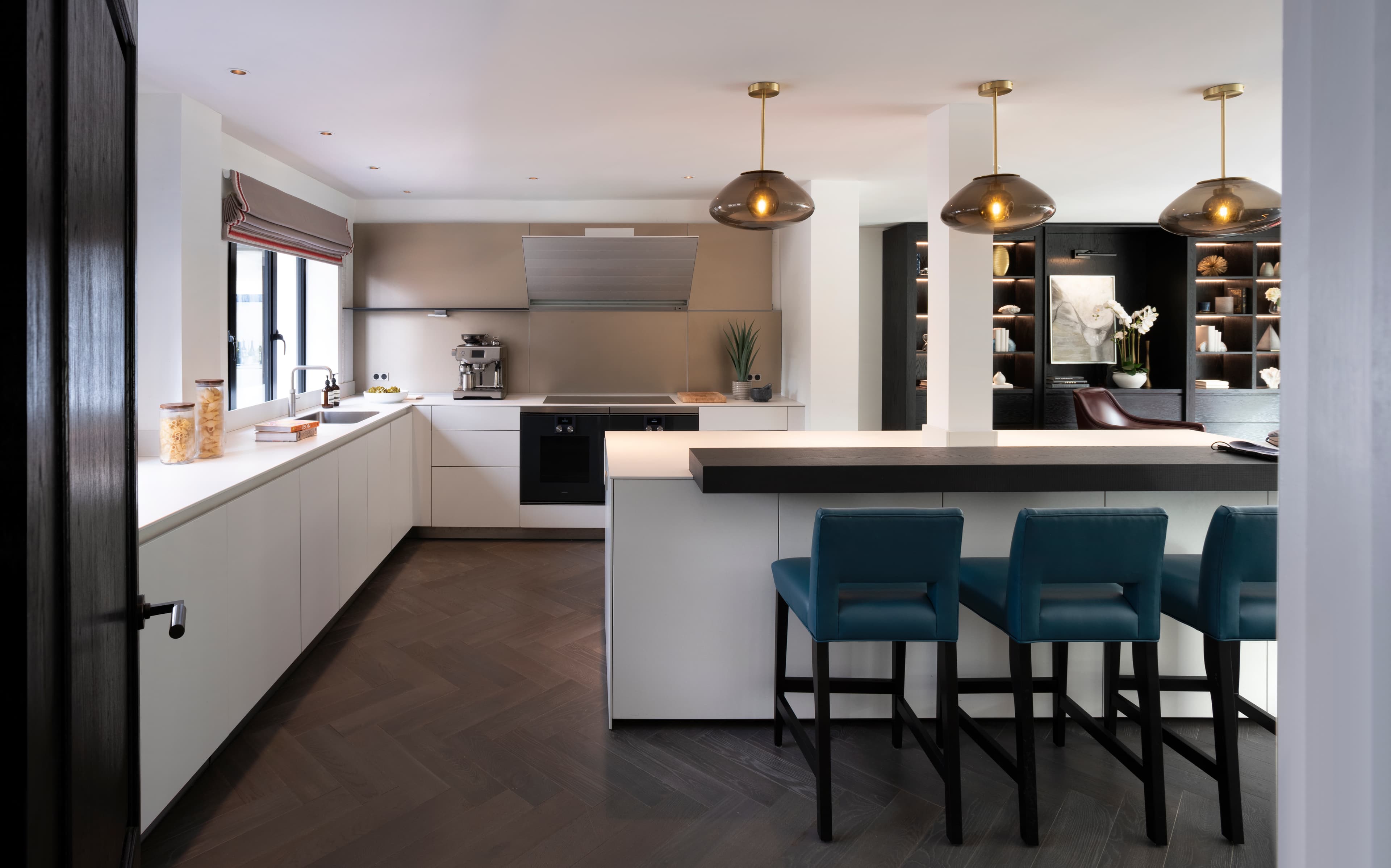
Every year, someone publishes a kitchen trends round-up that amounts to little more than a reshuffled mood board. A new shade of green. A different handle profile. Terrazzo, apparently, is back again.
We would rather offer something more useful.
At Albury House, we design and build roughly eighty bespoke kitchens a year — for clients across Hertfordshire, Essex, Cambridgeshire, and north London. We see what people actually ask for when they sit down with a designer, not what looks good in a curated Instagram grid. And the requests we are hearing in 2026 tell a clear and rather encouraging story: people are done with disposable kitchens. They want substance, warmth, craft, and character. They want kitchens that feel like they belong in their homes, not kitchens that look like they were ordered from a catalogue.
These are the ten kitchen design trends that are genuinely shaping the way we work this year — and, we think, for years to come.
1. The Return of Real Wood and Natural Timber Finishes
If there is a single defining theme of kitchen design trends 2026, it is the emphatic return of timber. Not wood-effect laminate. Not a printed vinyl wrap designed to look like oak from a polite distance. Real, solid, properly worked wood.
After the better part of a decade in which smooth, handleless, lacquered cabinetry dominated the luxury market, the pendulum has swung back towards kitchens that you can actually feel. Clients are requesting oak, ash, walnut, and elm — often left in a natural or lightly oiled finish that reveals the grain, the knots, and the subtle irregularities that make every piece of timber unique.
The reasons are both aesthetic and emotional. Natural wood brings warmth and texture to a room in a way that no synthetic surface can replicate. It ages beautifully — a well-oiled oak kitchen at fifteen years old has a depth and richness that its younger self could only hint at. And there is a tactile honesty to timber that resonates with the broader cultural shift away from the artificial and towards the authentic.
In our workshop, we have seen a particular surge of interest in quarter-sawn oak for frame-and-panel doors, pippy elm for feature islands, and scorched or limed finishes that give timber a weathered, time-worn quality without the wait. For clients who want to explore this further, our guide to the return of real wood kitchens covers the species, finishes, and construction methods in detail.
2. Earthy Saturated Colour Palettes
The cool greys that colonised British kitchens from roughly 2015 onwards have, at last, begun their retreat. In their place: warmth. Richness. Colour drawn not from a paint chart but from the natural world — the terracotta of kiln-fired clay, the deep green of a winter hedgerow, the muted copper of a patinated roof.
The kitchen colour trends for 2026 are earthy, saturated, and confident. Burnt umber, oxidised copper, muted emerald, deep plum, warm ochre, and forest teal are all appearing in our current design schemes. These are not pastel suggestions or timid accents; they are colours with real weight, applied to islands, pantry doors, dresser units, and feature cabinetry.
What makes them work is context. A deep plum island against a backdrop of natural oak cabinetry. A muted emerald pantry door framed by pale lime-plastered walls. Oxidised copper handles on a kitchen painted in soft chalk white. The palette is rich but never garish because the colours are always grounded by natural materials — timber, stone, aged metal, linen — that keep them honest.
We are also seeing a move towards imperfect, handmade paint finishes. Dead-flat estate emulsions, limewash effects, and chalky distempers that show brushwork and vary subtly with the light. The goal is a kitchen that looks as though it has always been there, not one that was installed last Thursday.
3. Sculptural Kitchen Islands as Furniture-Style Centrepieces
The kitchen island has been the focal point of open-plan living for two decades now. What has changed in 2026 is how it looks and, more importantly, how it is conceived.
The trend is away from the monolithic block — that vast, flat-sided rectangle of cabinetry — and towards islands that read as pieces of furniture. Curved ends, fluted panels, turned legs, open shelving, mixed materials, and asymmetric profiles are all in play. The island is becoming a sculptural object in its own right, something with visual interest from every angle rather than a uniform slab that happens to contain drawers.
This shift has practical benefits as well as aesthetic ones. A curved or tapered island end creates better circulation through the room. Open shelving on one face provides display storage for cookbooks or ceramics. Varying the height across the island — a raised breakfast bar at one end, a lowered prep surface at the other — allows a single piece to serve multiple functions without the visual monotony of one unbroken plane.
At Albury House, island design is where many of our most interesting conversations happen. Clients are increasingly bringing references from furniture, architecture, and sculpture rather than from other kitchens, and the results are all the better for it. Our kitchen island design guide explores the possibilities in depth.
4. Matte and Textured Finishes Everywhere
The high-gloss kitchen, once the default signifier of modern luxury, has been in decline for several years. In 2026, it feels genuinely dated. The finishes people want now are matte, tactile, and quietly complex — surfaces that invite touch rather than repel fingerprints.
This extends across every surface in the kitchen. Cabinetry in dead-flat or soft-sheen paint. Honed rather than polished natural stone worktops. Brushed and patinated metals for handles, taps, and light fittings. Textured ceramic tiles with handmade irregularity. Even appliance manufacturers are responding, with matte black, graphite, and bronze finishes replacing the ubiquitous stainless steel.
The appeal is partly visual — matte surfaces absorb light rather than bouncing it around the room, creating a calmer, more grounded atmosphere — and partly practical. A honed marble worktop does not show every water ring. A brushed brass tap develops a living patina rather than a gallery of thumbprints. A textured paint finish conceals the minor scuffs and marks of daily life, whilst a high-gloss finish broadcasts them.
For those interested in the technical side, our piece on matte finishes in kitchen design covers the coatings, sealers, and surface treatments that make these finishes viable in a working kitchen.
5. The Modern Larder and the Hidden Scullery
If the kitchen island is the public face of the modern kitchen, the larder and scullery are its private support system — and in 2026, they are more popular than ever.
The modern larder has evolved far beyond the traditional larder cupboard. Clients are requesting dedicated larder pantries with full-height shelving, cold storage zones, integrated spice drawers, and pull-out baskets that transform a cupboard into a walk-in-level storage solution within a single door width. The goal is to house the visual noise of daily cooking — the cereal boxes, the spice jars, the half-used bags of pasta — behind a single beautifully made door, leaving the kitchen itself serene and uncluttered.
The hidden scullery takes this logic a step further. A secondary kitchen concealed behind the main one, typically fitted with a sink, a dishwasher, additional worktop space, and ample storage, the scullery is where the mess happens so that the main kitchen never has to look anything other than impeccable. It is the backstage to the kitchen's stage, and for clients who entertain regularly, it is transformative.
Both concepts reflect a kitchen design trend that has been building for several years: the desire for kitchens that are simultaneously beautiful and brutally practical. You can have the serene, uncluttered kitchen you see in the magazines — but only if you have somewhere sensible to put everything that would otherwise clutter it.
Our guides to hidden scullery design and walk-in pantry design are essential reading if either concept appeals.
6. Architectural Lighting: Shadow Gaps, Concealed LEDs, and Theatrical Layering
Kitchen lighting in 2026 has moved well beyond the pendant-over-the-island formula that has dominated for the past decade. The trend is towards lighting as architecture — integrated, layered, and designed to shape the room rather than merely illuminate it.
Shadow-gap lighting, where a thin strip of concealed LED is recessed into the junction between cabinetry and ceiling or cabinetry and wall, creates the illusion that units are floating. It is subtle, architectural, and extraordinarily effective at giving a kitchen a sense of lightness and precision.
Below cabinets, LED strip lighting has been standard for years, but the execution is becoming far more sophisticated. Tuneable white systems that shift from cool daylight to warm amber over the course of the evening. Lighting recessed into shelving that turns a display niche into a gallery. Plinth lighting that washes the floor with a gentle glow, guiding the way during midnight trips for a glass of water.
Decorative lighting has not disappeared — a beautiful pendant or a pair of sculptural wall lights still has its place — but it is increasingly one layer in a carefully orchestrated scheme rather than the only source of light in the room. The best kitchen lighting in 2026 has three or four independently controllable layers: task, ambient, accent, and decorative, each doing a different job and each contributing to the overall atmosphere.
Our kitchen lighting design guide walks through the technical and aesthetic considerations in detail, from colour temperature to dimming protocols.
7. Sustainability as a Design Principle, Not an Afterthought
Sustainability in kitchen design has, until recently, occupied an awkward position — something clients felt they ought to care about but were not quite sure how to act upon. A bamboo worktop here, a recycled glass splashback there, and a lingering sense that none of it made much difference.
In 2026, the conversation has matured. Sustainability is no longer a feature to be bolted on; it is a principle that shapes the design from the outset. And the most compelling argument is also the simplest: the most sustainable kitchen is one that lasts.
A bespoke kitchen built from solid timber, constructed with traditional joinery techniques, finished with natural oils and waxes, and designed to be repaired rather than replaced is inherently more sustainable than any amount of recycled-content MDF wrapped in a vinyl film that will need replacing in fifteen years. Longevity is the ultimate environmental credential.
Beyond construction, we are seeing growing interest in the provenance of materials. Clients want to know where the timber was grown, how the stone was quarried, whether the metals are recycled, and what the paint is made from. British-grown hardwoods, locally quarried stone, and low-VOC finishes are all moving from niche requests to standard expectations.
Energy efficiency in appliances, water-saving taps, induction cooking, and thoughtful waste management systems all contribute, but the foundation of a sustainable kitchen remains the same: build it properly, build it to last, and build it from materials that will age with grace rather than end up in landfill. Our guide to sustainable kitchen materials covers the options in full.
8. Personalisation and One-of-a-Kind Details
The era of the identikit kitchen — however expensively executed — is drawing to a close. The kitchen design trends of 2026 point firmly towards personalisation: kitchens that reflect the specific tastes, habits, and histories of the people who use them.
This manifests in a hundred different ways. Bespoke handles cast from an original pattern. A hand-painted tile splashback commissioned from a local ceramicist. An antique marble slab sourced from a reclamation yard and repurposed as a pastry station. A drawer interior configured precisely around a particular collection of knives. A colour mixed to match a piece of fabric brought back from a holiday in Rajasthan.
What unites these details is intentionality. They are not decorative afterthoughts; they are decisions that embed personality into the fabric of the kitchen. A kitchen with a story — where this handle was made by that foundry, where this timber came from that estate, where this colour was chosen because it reminds someone of something they love — is a kitchen that its owners will never tire of.
At Albury House, personalisation has always been central to what we do. It is, in a sense, the entire point of commissioning a bespoke kitchen rather than selecting from a range. But the appetite for it has grown markedly. Clients are more confident, more adventurous, and more willing to trust their own taste over the safety of a showroom display.
9. Informal Dining Integration: Banquettes, Nooks, and Built-In Seating
The kitchen island with bar stools has served the open-plan era well, but it was always a compromise. You can eat at a breakfast bar, certainly, but you cannot linger. The stool is fundamentally a perching device — designed for the quick coffee, the children's homework supervision, the glass of wine while dinner finishes. It is not, and has never been, a place to sit down for a proper meal.
In 2026, the trend is towards integrating real dining into the kitchen — not in a separate dining room, but as part of the kitchen's architecture. Banquette seating built into a corner or along a wall. A window-seat nook with a table that catches the morning light. A curved booth at one end of an island that transforms the kitchen into a restaurant without leaving the house.
These arrangements are more space-efficient than freestanding tables and chairs, more comfortable than bar stools, and infinitely more sociable. A banquette in the corner of a kitchen changes the dynamic of every meal, turning a functional refuelling stop into an occasion — even on a Tuesday evening with nothing more ambitious than pasta and a salad.
The construction of a built-in banquette is a natural fit for a bespoke kitchen maker. The joinery integrates with the cabinetry, the upholstery is chosen to complement the scheme, and the dimensions are tailored to the room and to the table rather than forced into a standard footprint. Our guide to banquette seating in the kitchen covers dimensions, layouts, materials, and upholstery in satisfying detail.
10. Handcraft Over Mass Production
This final trend is, in many ways, the thread that connects all the others. The return to timber, the appetite for texture, the demand for personalisation, the rejection of high-gloss uniformity — all of it points towards a fundamental revaluation of craft.
The kitchen design trends of 2026 favour the hand-finished over the machine-perfect. The dovetail joint over the cam-and-dowel. The hand-sprayed finish over the factory-applied wrap. The kitchen made by people whose names you know, in a workshop you could visit, from materials whose origin you can trace.
This is not nostalgia for its own sake. Handcraft produces a materially better product. A hand-cut mortise-and-tenon joint is stronger than a machine-inserted dowel. A hand-applied paint finish can be touched up and refreshed; a vinyl wrap, once damaged, must be replaced entirely. A cabinet made from solid timber can be repaired, refinished, and adapted over decades; a cabinet made from particleboard has a finite and unforgiving lifespan.
There is also the less tangible but equally important quality of character. A handmade kitchen has a presence that a factory-produced kitchen simply cannot achieve. The slight variations in a hand-painted finish. The way light catches a hand-planed surface differently from a machine-sanded one. The evidence, however subtle, that a human being made this thing with skill and care.
At Albury House, every kitchen is built by hand in our Hertfordshire workshop by cabinetmakers who have been with us, in some cases, for decades. It is not the fastest way to make a kitchen. It is not the cheapest. But it is, we believe, the only way to make one that will still be beautiful and functional in thirty years.
Bringing It All Together
The kitchen design trends of 2026 are not ten separate movements pulling in ten different directions. They are, at heart, one story: the kitchen is growing up. After years of chasing novelty — new finishes, new gadgets, new configurations — the conversation has shifted towards substance. Towards materials that improve with age rather than degrade. Towards design that serves the people who use the kitchen rather than impressing the people who visit. Towards craft that endures.
If there is a single takeaway, it is this: invest in quality, invest in character, and invest in things that last. The trends that matter in 2026 are not trends at all. They are principles — and good principles do not go out of fashion.
If you are considering a new kitchen and any of these ideas have resonated, we would be delighted to talk. Our design consultations are unhurried, thorough, and entirely without obligation. Get in touch and let us help you create something that is genuinely, unmistakably yours.
Frequently Asked Questions
Thinking about a new kitchen?
Book Your Free ConsultationYou might also enjoy
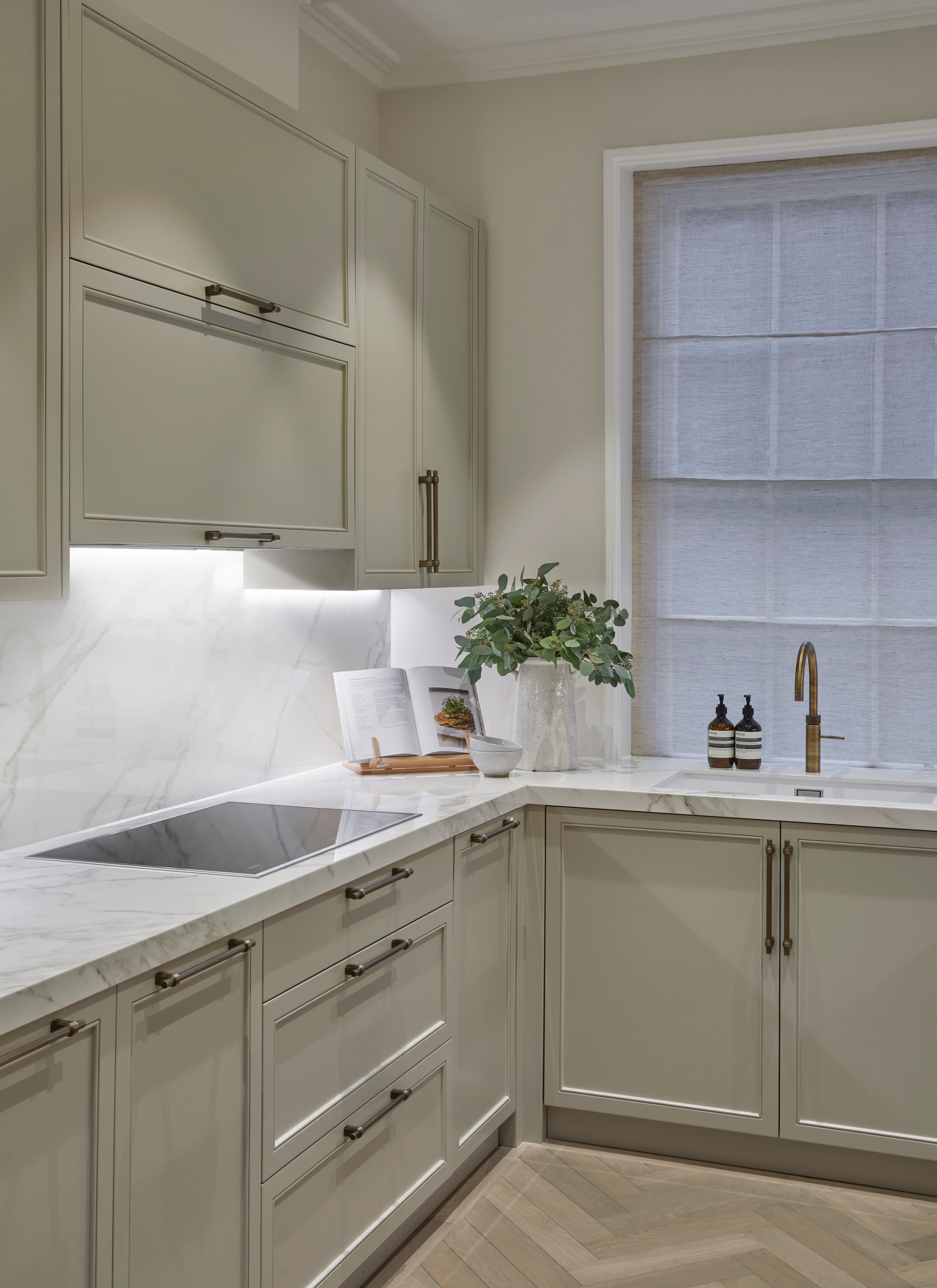
Earthy Kitchen Colours 2026: The Palette Shift Every Luxury Kitchen Needs
Why cool greys are fading and earthy, saturated kitchen colours are defining 2026. From sage green and terracotta to deep plum and burnt umber — how to choose, test, and live with the new warm palette in a bespoke kitchen.
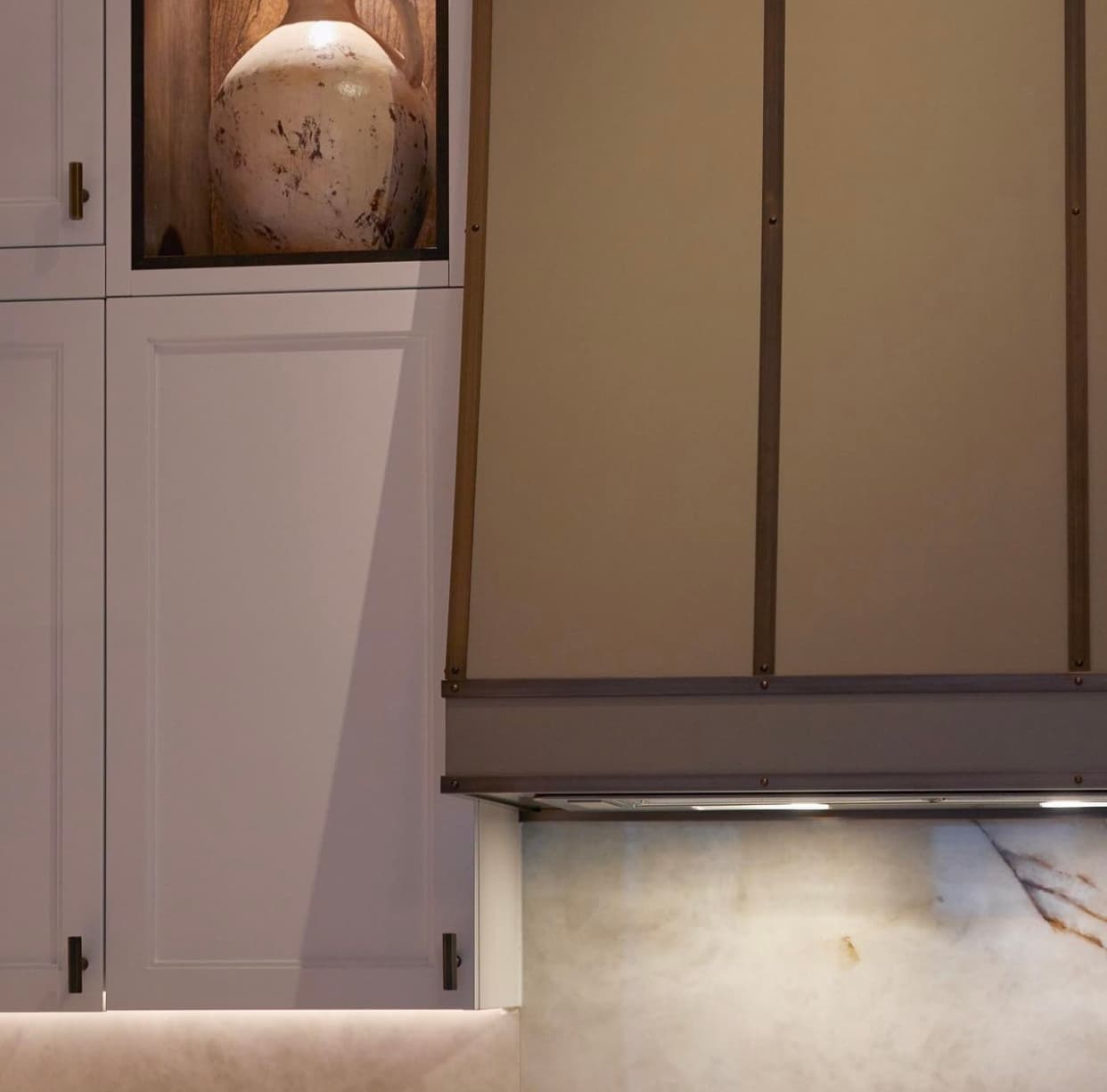
Matte Kitchen Finishes: Why the Quiet Surfaces Are Having Their Moment
The definitive guide to matte finishes in luxury kitchen design — from matt lacquer cabinetry and honed stone worktops to brushed brass hardware and limewash paint. How to use texture, sheen, and restraint to create a kitchen that feels as good as it looks.
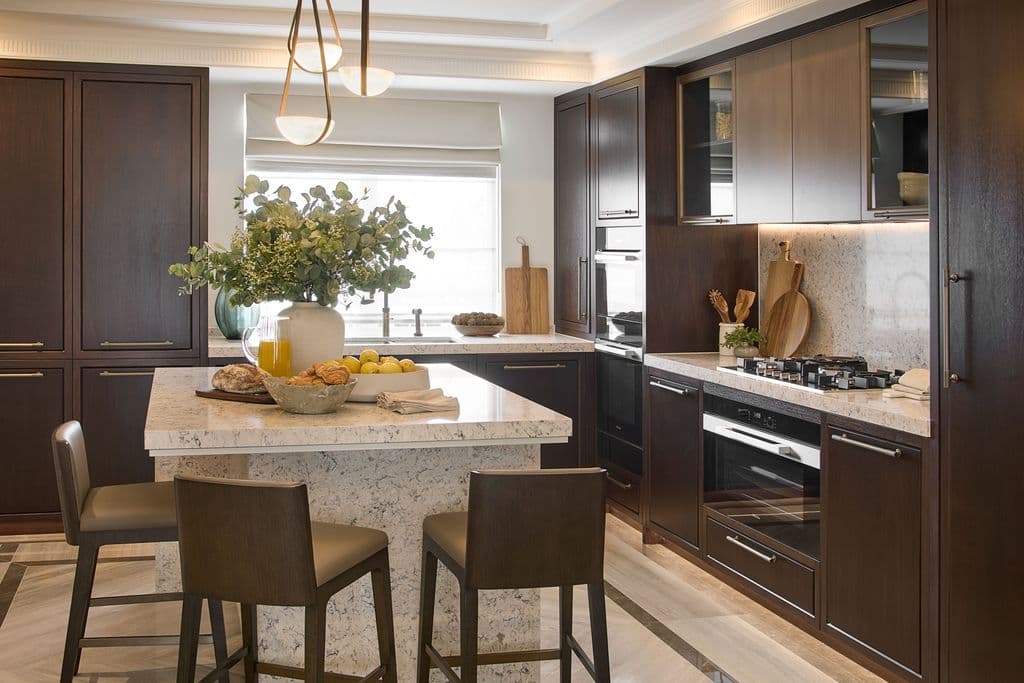
The Return of Real Wood Kitchens: Why Natural Timber Is the Defining Trend of 2026
After two decades of painted cabinetry, real wood kitchens are making a remarkable comeback. We explore the timbers, finishes, and design philosophies driving the return to natural, unpainted kitchen cabinetry.