

Luxury Kitchen Worktops: The Complete Guide to Choosing the Right Surface
A comprehensive guide to luxury kitchen worktop materials — from Carrara marble to engineered quartz, solid timber to sintered stone. Honest advice on looks, maintenance, cost, and daily living from the makers who work with them all.
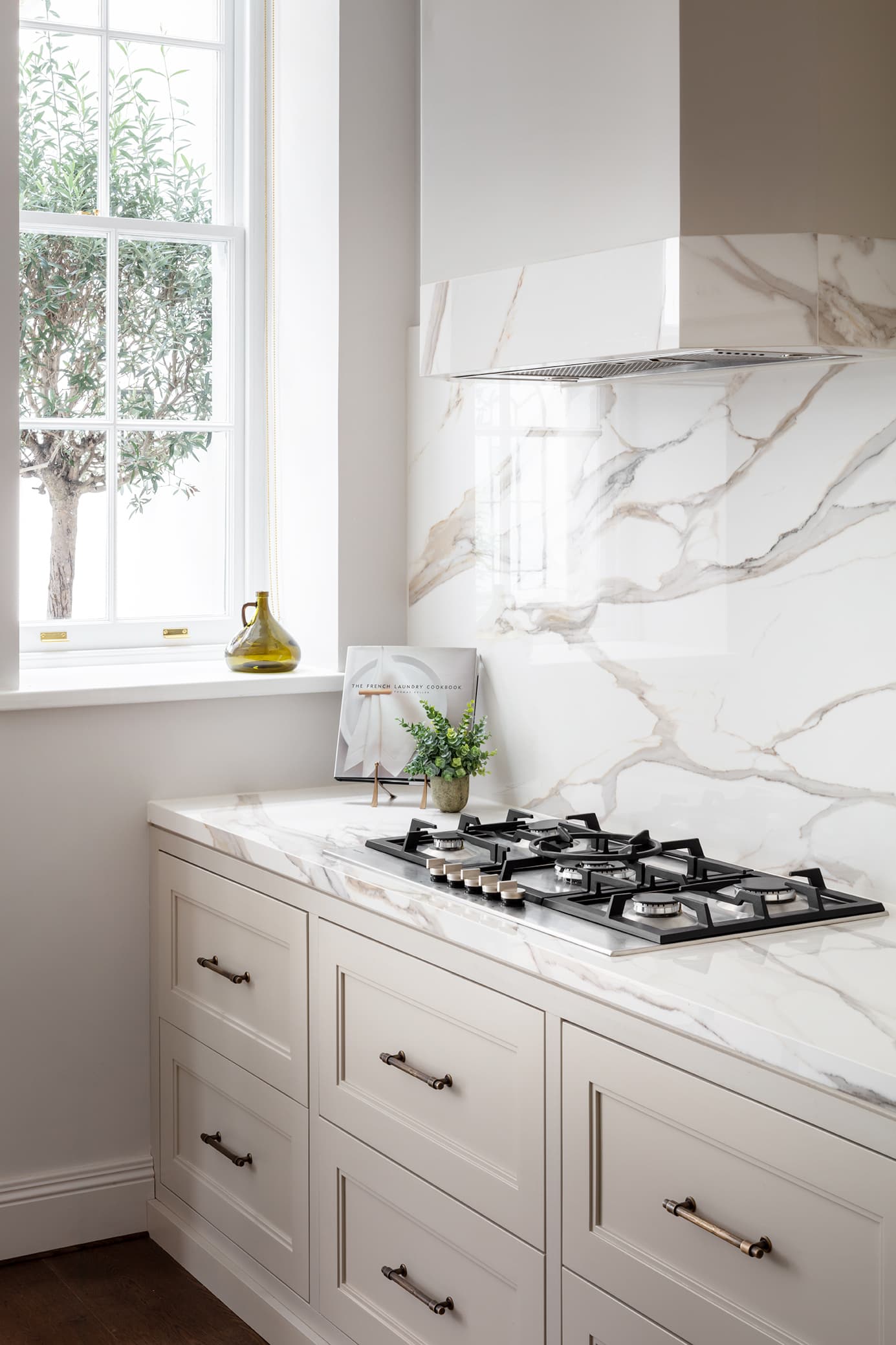
There is a particular moment in every kitchen design consultation when the conversation shifts. The layout is taking shape, the cabinetry style is agreed, the paint colours are narrowing — and then someone asks the question that changes the entire feel of the room: "What about the worktop?"
It is a deceptively simple question. The worktop is the surface you touch most, the backdrop against which every meal is prepared, and often the single most visually dominant element in the kitchen. Get it right and everything sings. Get it wrong and you'll feel it every single day.
At Albury House Kitchens, we work with every major worktop material — natural stone, engineered surfaces, solid timber, sintered composites, and more besides. We have no commercial allegiance to any single supplier or material, which means our advice is guided by one thing only: what is genuinely right for you, your kitchen, and the way you live.
This guide covers every luxury kitchen worktop material worth considering, with honest assessments of beauty, durability, maintenance, cost, and the intangible quality of what it actually feels like to live with each one.
Natural Marble: The Undisputed Classic
No material in the kitchen maker's repertoire carries quite the emotional weight of marble. Carrara, Calacatta, Statuario — even the names feel like an invitation to something beautiful.
Carrara
The most widely used and accessible of the Italian marbles. Carrara is characterised by soft grey veining on a white to blue-grey ground. It is the marble of Roman architecture, Renaissance sculpture, and — rather more prosaically — thousands of very beautiful kitchens. Its relative affordability (by marble standards) and consistent availability make it the natural starting point for many clients.
Calacatta
Rarer, bolder, and more expensive than Carrara. Calacatta features dramatic, sweeping veins — often gold or warm grey — on a brighter white background. The contrast is striking, and no two slabs are remotely alike. Selecting a Calacatta slab is closer to choosing a painting than specifying a building material.
Statuario
The rarest of the three, with a luminous white ground and crisp, defined grey veining. Statuario has an almost ethereal quality. It is also the most expensive, and the most difficult to source in consistent quality.
Pros: Unrivalled beauty. Depth and translucency that no engineered material can replicate. Every slab is unique. Ages with a patina that many homeowners come to love.
Cons: Soft and porous. Susceptible to etching from acidic foods (lemon, wine, tomato). Can stain if spills are not attended to. Requires sealing and periodic maintenance.
Maintenance: Seal annually with a quality impregnating sealer. Wipe spills promptly. Accept that the surface will change over time — this is part of the character, not a defect.
Price range: £5,000–£25,000+ depending on variety, slab quality, and layout complexity.
Best suited to: Traditional, transitional, and high-end contemporary kitchens where the worktop is intended as a focal point. Particularly effective in bespoke kitchen designs where the cabinetry is understated and the stone provides the drama.
If you are drawn to marble but want to understand natural stone in greater depth, our guide to natural stone worktops covers selection, care, and what to expect from life with a stone surface.
Granite: The Dependable Performer
Granite was, for a long time, the default choice for luxury kitchen worktops — and for good reason. It is extremely hard, heat-resistant, scratch-resistant, and available in a vast range of colours and finishes.
The material has suffered somewhat from its own success. Granite became so popular in the 1990s and 2000s that it now carries a faint whiff of ubiquity in some circles. This is rather unfair. A well-chosen granite, properly fabricated, remains an excellent worktop material.
The key is selection. Commodity granites — the blacks, the dark greys, the uniform beiges — are perfectly serviceable but unremarkable. The more interesting granites — Patagonia, Blue Bahia, Titanium, and the rich, deep-figured variants — are as visually exciting as any stone on the market.
Pros: Extremely hard and durable. Heat-resistant. Scratch-resistant. Wide colour range. More forgiving than marble in daily use.
Cons: Can feel cold and industrial if poorly chosen. Requires periodic sealing (though less than marble). Some varieties are visually dated.
Maintenance: Seal every one to two years. Clean with a pH-neutral cleaner. Granite is forgiving but not indestructible — sharp impacts can chip edges.
Price range: £4,000–£15,000+ depending on variety and layout.
Best suited to: Kitchens that need to work hard. Family kitchens where durability is paramount. Contemporary schemes where a bold, figured granite can serve as a statement.
Quartzite: The Best of Both Worlds
If marble is the heart and granite is the head, quartzite is the increasingly compelling case for having both. A natural metamorphic stone formed from sandstone under intense heat and pressure, quartzite offers the visual drama of marble — sweeping veins, luminous depth, extraordinary colour — with hardness that exceeds granite.
Varieties such as Taj Mahal, Mont Blanc, Calacatta Macaubas, and Sea Pearl have made quartzite the material of choice for discerning clients who want natural stone beauty without marble's vulnerability.
Pros: Harder than granite. Stunning natural beauty with dramatic veining. Heat-resistant. Does not etch from acids in the way marble does.
Cons: Expensive. Requires sealing (it is still a natural stone). Some varieties are softer than others — quality varies. Fabrication requires specialist expertise.
Maintenance: Seal annually. Clean with a pH-neutral stone cleaner. Treat it with the same respect you would give any natural stone, and it will reward you for decades.
Price range: £6,000–£25,000+ depending on variety and slab quality.
Best suited to: Clients who love the look of marble but want greater peace of mind. Statement islands. Waterfall ends where the veining can cascade uninterrupted down the sides.
Engineered Quartz: The Practical Powerhouse
Engineered quartz — produced by manufacturers such as Silestone, Caesarstone, and Cambria — is a manufactured surface typically comprising 90 to 94 per cent ground natural quartz bound with polymer resins and pigments. The result is a non-porous, highly consistent, and extremely durable worktop material.
Let us be candid: engineered quartz does not have the depth, translucency, or emotional resonance of natural stone. It is not trying to. What it offers instead is remarkable practicality — a surface that resists staining, requires no sealing, is consistent in colour and pattern from slab to slab, and can be specified with confidence from a sample rather than a yard visit.
In recent years, the aesthetics of engineered quartz have improved enormously. The best Calacatta-effect quartz surfaces are genuinely attractive, though they remain distinguishable from natural marble to the practised eye.
Pros: Non-porous. Stain-resistant. Requires no sealing. Huge colour and pattern range. Consistent appearance. Excellent value.
Cons: Can be damaged by excessive heat (trivets are advisable). Lacks the depth and character of natural stone. Not UV-stable — can discolour in direct sunlight over time. Some find it lacks soul.
Maintenance: Simply wipe clean. No sealing required. Avoid placing very hot pans directly on the surface.
Price range: £3,000–£8,000 for a typical kitchen layout.
Best suited to: Busy family kitchens where low maintenance is a priority. Contemporary designs where a clean, uniform aesthetic is desired. Kitchens with extensive natural light where natural stone would be budget-prohibitive across the full run.
Solid Wood: Warmth That No Stone Can Match
There is something about a timber worktop that makes a kitchen feel immediately like home. The warmth of the grain, the softness under the hand, the way the surface mellows and develops character over the years — wood engages the senses in a way that hard surfaces simply cannot.
Oak
The classic British choice. English oak has a beautiful, open grain and a warmth that is quintessentially domestic. It takes oil finishes beautifully and ages to a rich, honeyed patina.
Walnut
Darker, richer, and more contemporary in feel. American black walnut is a superbly beautiful timber for worktops, with a depth of colour and grain figure that makes every piece unique. It is softer than oak, however, and requires more careful treatment.
Iroko
Sometimes called African teak. Iroko is an excellent worktop timber — hard, naturally oily, and remarkably resistant to moisture. It starts as a warm golden-brown and darkens over time to a rich, deep tone. It is a genuinely practical choice for areas near sinks.
Pros: Unmatched warmth and tactile quality. Ages beautifully. Can be sanded and refinished repeatedly. Naturally antibacterial. Kinder to dropped crockery than stone.
Cons: Requires regular oiling. Susceptible to water damage if neglected. Scratches and marks easily (though many consider this part of the charm). Not heat-resistant — you will need trivets.
Maintenance: Oil every three to six months with a food-safe hardwax oil or Danish oil. Wipe up standing water promptly. Sand out any significant marks and re-oil.
Price range: £2,500–£6,000 depending on timber species and thickness.
Best suited to: Country kitchens. Warm, lived-in family spaces. Breakfast bars and island tops where the warmth of wood contrasts with stone on the main work surfaces. Period properties where stone would feel tonally wrong.
Sintered Stone: The New Contender
Sintered stone — produced under brand names such as Dekton (by Cosentino) and Neolith — is a relatively recent arrival in the luxury kitchen worktop market, and it has made a considerable impression.
The manufacturing process replicates the geological conditions that create natural stone, compressing a blend of raw minerals at extreme temperatures to produce a surface that is extraordinarily hard, heat-resistant, UV-stable, and scratch-resistant. It is, in many respects, the most technically advanced worktop material available.
The aesthetic range has expanded significantly. Early sintered stones tended towards uniform, concrete-like finishes. Current ranges include convincing marble, stone, and metal effects, as well as some rather striking abstract designs.
Pros: Extremely hard and scratch-resistant. Heat-resistant to a remarkable degree (you can place hot pans directly on the surface). UV-stable. Non-porous. Stain-resistant. Available in very large format slabs with minimal jointing.
Cons: Can feel characterless compared to natural stone. Lacks depth and translucency. Edges can chip if subjected to sharp impacts. Premium varieties are expensive. The surface feels distinctly manufactured to the touch.
Maintenance: Virtually none. Wipe clean. That's it.
Price range: £4,000–£12,000 depending on brand, design, and layout.
Best suited to: Contemporary and minimalist kitchens. Outdoor kitchen extensions. Kitchens where durability and zero maintenance are the overriding priorities. Waterfall islands where a seamless, modern aesthetic is desired.
Concrete: The Artisan Statement
Polished concrete worktops occupy a particular niche in the luxury kitchen market. They are handmade, individually cast, and no two are identical. The surface has a raw, industrial beauty that appeals to a certain kind of client — the sort who appreciates imperfection, texture, and the quiet confidence of something that clearly is not trying to be anything other than what it is.
Pros: Unique artisan character. Can be cast to any shape, including integrated sinks and draining areas. Tactile and warm to the touch (warmer than stone). Can be pigmented to virtually any colour.
Cons: Heavy. Porous unless meticulously sealed. Can crack if the supporting structure moves. Requires specialist fabricators. Limited repairability.
Maintenance: Seal regularly with a penetrating sealer. Treat with care — concrete is more delicate than it looks. Wax periodically for additional protection.
Price range: £5,000–£12,000 for a typical layout, though complex castings can exceed this.
Best suited to: Industrial-chic and contemporary loft-style kitchens. Architect-designed spaces where the worktop is part of a broader material narrative. Clients who value craft and individuality above all else.
Stainless Steel: The Professional's Choice
There is a reason that every professional kitchen in the world uses stainless steel. It is hygienic, heat-resistant, impervious to water, and essentially indestructible. In a domestic setting, it brings a clean, purposeful aesthetic that pairs beautifully with both contemporary and industrial cabinetry.
Pros: Supremely hygienic. Heat-resistant. Waterproof. Does not stain. Virtually indestructible. Can include integrated sinks and upstands for a seamless look.
Cons: Scratches visibly (though it develops a uniform patina over time). Shows fingerprints. Can feel cold and clinical. Noisy — dropping anything on a steel surface is an event the entire household hears.
Maintenance: Wipe with a stainless steel cleaner. Embrace the patina or keep it polished — the choice is yours.
Price range: £4,000–£10,000 depending on gauge, finish, and configuration.
Best suited to: Contemporary and professional-style kitchens. Keen cooks who want a surface that can truly take anything they throw at it. Laundry and utility rooms where practicality trumps aesthetics.
Material Comparison at a Glance
| Material | Durability | Heat Resistance | Maintenance | Stain Resistance | Unique Character | Price Range |
|---|---|---|---|---|---|---|
| Marble | Moderate | Moderate | High | Low | Exceptional | ££££ |
| Granite | High | High | Low–Medium | High | Good | £££ |
| Quartzite | Very High | High | Medium | High | Exceptional | ££££ |
| Engineered Quartz | High | Moderate | Very Low | Very High | Low | ££ |
| Solid Wood | Moderate | Low | High | Low | Exceptional | ££ |
| Sintered Stone | Very High | Very High | Very Low | Very High | Low–Moderate | £££ |
| Concrete | Moderate | Moderate | High | Low–Moderate | Exceptional | £££ |
| Stainless Steel | Very High | Very High | Low | Very High | Moderate | £££ |
Beyond the Material: Details That Define Luxury
Choosing the right material is only part of the story. In a genuinely luxurious kitchen, the details of how that material is fabricated and installed elevate the worktop from functional surface to centrepiece.
Edge Profiles
The edge of your worktop is the detail you see and touch most often, and it makes a surprising difference to the overall character of the kitchen.
- Pencil round — a subtle, softened edge. Clean and understated. The default choice for contemporary kitchens and the one we specify most frequently.
- Eased or straight — a sharp, squared edge with just the corners knocked off for safety. Architectural and modern.
- Bullnose — a fully rounded edge. Softer and more traditional in character. Works beautifully with country and classic Shaker kitchens.
- Ogee — a decorative, S-curved profile with classical proportions. Suited to traditional and period kitchens.
- Mitre-folded — the stone is cut at 45 degrees and joined to create the appearance of a much thicker slab. Creates a bold, monolithic aesthetic that works particularly well on islands.
Thickness
Standard worktop thickness for natural stone is 20mm or 30mm. In a luxury kitchen, the choice between the two — and the possibility of going thicker still — is worth careful consideration.
A 20mm worktop creates a refined, precise appearance. It reads as elegant and considered. A 30mm worktop feels more substantial and generous — it has visual weight. Some clients opt for 40mm or even 60mm on an island to create a truly monumental presence.
We often recommend combining thicknesses — perhaps 20mm on the perimeter runs and 30mm or thicker on the island — to create a subtle hierarchy that draws the eye without being obvious about it.
Waterfall Edges
A waterfall edge continues the worktop material down the sides of an island or peninsula, flowing vertically to the floor. The effect is dramatic, particularly with bold, figured natural stones where the veining can be matched to run seamlessly from horizontal to vertical.
Waterfall edges are not merely decorative. They protect the end of the island from knocks and scuffs, and they create a strong visual anchor that gives the island real presence in the room.
The fabrication is demanding. The mitred joint at the corner must be invisible, and on figured stones, the veining must be carefully aligned so the pattern flows without interruption. This is specialist work, and it is worth ensuring your stone fabricator has demonstrable experience.
Book-Matched Slabs
Book-matching is the technique of cutting a stone slab in half through its thickness and opening the two pieces like a book, so the veining pattern mirrors itself across the joint. The result, when executed well, is breathtaking — a symmetrical, butterfly-like pattern that transforms a worktop into a genuine work of art.
Book-matching is most effective with strongly figured stones — Calacatta marble, dramatic quartzites, and bold granites. It requires exceptional slab selection (the raw block must be thick enough to yield two usable pieces) and precise fabrication. It is not inexpensive. But for a statement island or a prominent run of worktop, the impact is unmatched.
The Importance of Seeing the Actual Slab
This is a point we make to every client, and we make no apology for repeating it here: if you are investing in natural stone, you should see the actual slab that will become your worktop. Not a photograph. Not a sample. The slab itself.
Natural stone varies enormously from block to block. Two pieces of Calacatta marble from the same quarry can differ as fundamentally as two paintings by the same artist. The veining, the tone, the balance of figure — all of these change from slab to slab. A small sample can give you the general character, but it cannot tell you whether your specific slab will have the graceful sweep of veining you imagined or a busy, fragmented pattern that is not quite what you had in mind.
We accompany our clients to the stone yard whenever possible. It is one of the more enjoyable parts of the process — selecting a slab feels genuinely special, and the confidence of knowing exactly what you have chosen removes any possibility of disappointment at installation.
For more on the process of commissioning a bespoke kitchen from start to finish, our comprehensive design guide covers every stage.
Practical Advice on Living With Your Worktop
Having installed hundreds of kitchens with every conceivable worktop material, we have seen what works in practice — not just in the showroom, but in the fifth year of daily family life. Here are the truths we share with our clients:
If you choose marble, relax. The first scratch, the first etch mark, the first ring from a wine glass — these feel catastrophic. They are not. Marble develops a patina, and that patina is beautiful. The clients who are happiest with marble are those who embrace it as a living material, not a museum exhibit.
If you want zero maintenance, engineered quartz or sintered stone is the honest answer. There is no shame in wanting a surface that asks nothing of you. Life is busy. If the thought of sealing, oiling, or fussing fills you with dread, choose a material that eliminates the question entirely.
Mixing materials is not a compromise — it is good design. Some of the most beautiful kitchens we have built use two or even three different worktop materials. Stone on the main runs, timber on the island seating overhang, a marble inset for pastry. Each material plays to its strengths.
Thickness and edge profile matter more than you think. The same material can look entirely different at 20mm with a pencil round edge versus 40mm with a straight edge. These details are the fingerprint of a well-designed kitchen, and they deserve the same attention as the material itself.
Budget for the slab, not just the material type. Saying "I'd like marble" is a bit like saying "I'd like a painting." The range within any material category is enormous. A standard Carrara is a fraction of the cost of a premium Calacatta. Understanding this spectrum early avoids surprises when quotations arrive. Our guide to bespoke kitchen costs explains how worktop choices affect the overall budget.
How We Work With Worktops at Albury House
Our approach to worktop specification is characteristically thorough. We begin by understanding how you use your kitchen — not how you imagine you might use it, but how you actually cook, entertain, and live. From there, we recommend materials and combinations that balance your aesthetic preferences with the reality of daily use.
We work with a trusted network of specialist stone fabricators, timber suppliers, and surface manufacturers — relationships built over decades. We do not mark up materials opaquely or steer you towards suppliers who give us the best margin. We recommend what is right for your project, and our quotations are fully transparent.
Every worktop we specify is templated on site after the kitchen furniture is installed, ensuring a perfect fit. For natural stone, we manage the slab selection, fabrication, and installation process from beginning to end. Nothing is left to chance.
Ready to Choose Your Worktop?
The worktop is where your kitchen comes to life. It is the surface that sets the tone, invites the touch, and — if chosen well — gives you quiet pleasure every time you walk into the room.
If you are planning a luxury kitchen and want genuinely impartial guidance on worktop materials, we would welcome the conversation. We can arrange stone yard visits, prepare material samples, and help you navigate the options with the benefit of decades of experience.
Book a free design consultation — and let us help you find the surface that your kitchen deserves.
Frequently Asked Questions
Thinking about a new kitchen?
Book Your Free ConsultationYou might also enjoy
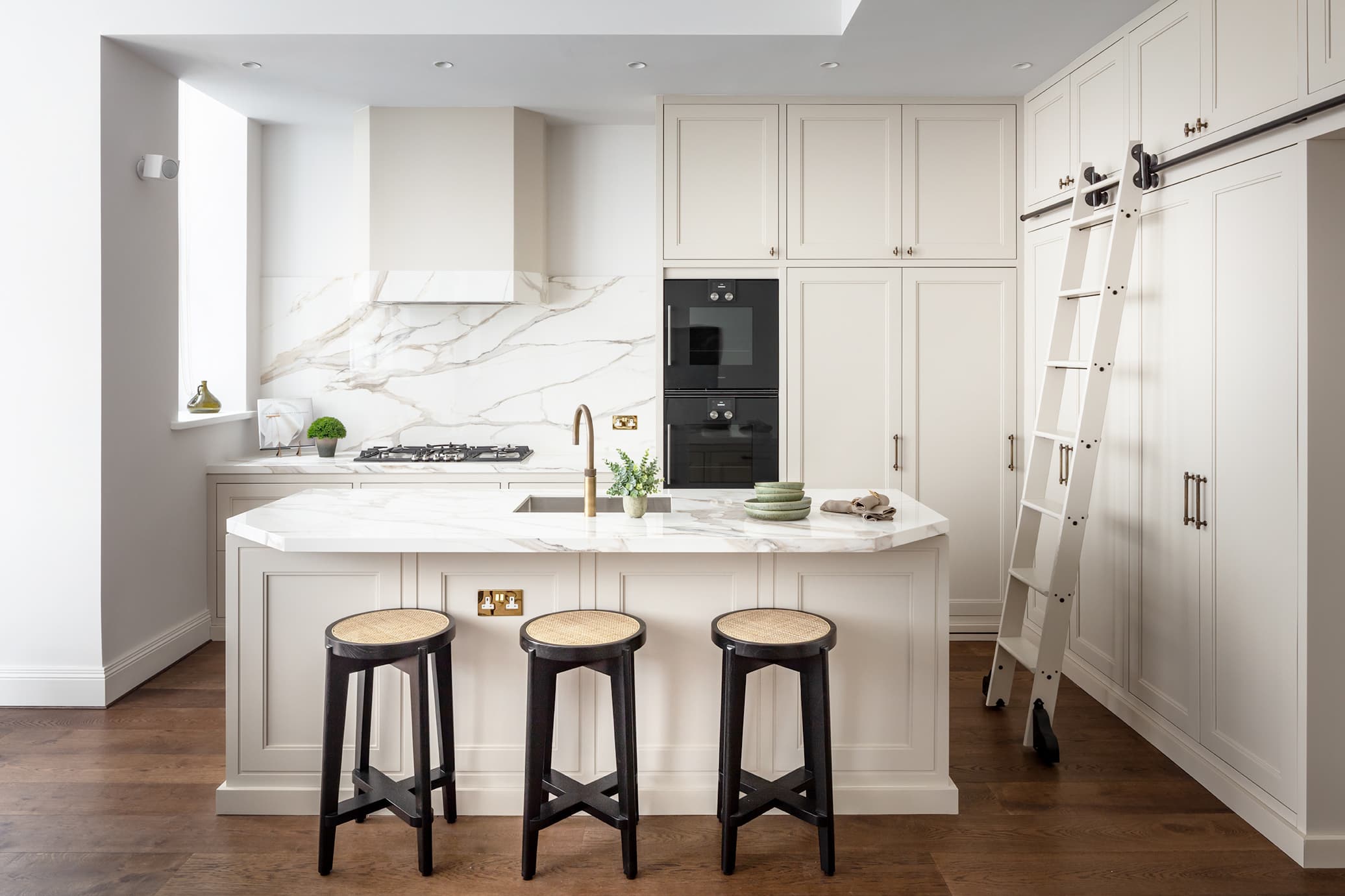
Bespoke Kitchen Cabinets: The Definitive Guide to Handmade Cabinetry
Everything you need to know about bespoke kitchen cabinets — from construction methods and timber selection to door styles, finishes, and the details that distinguish genuine craftsmanship from the merely expensive.
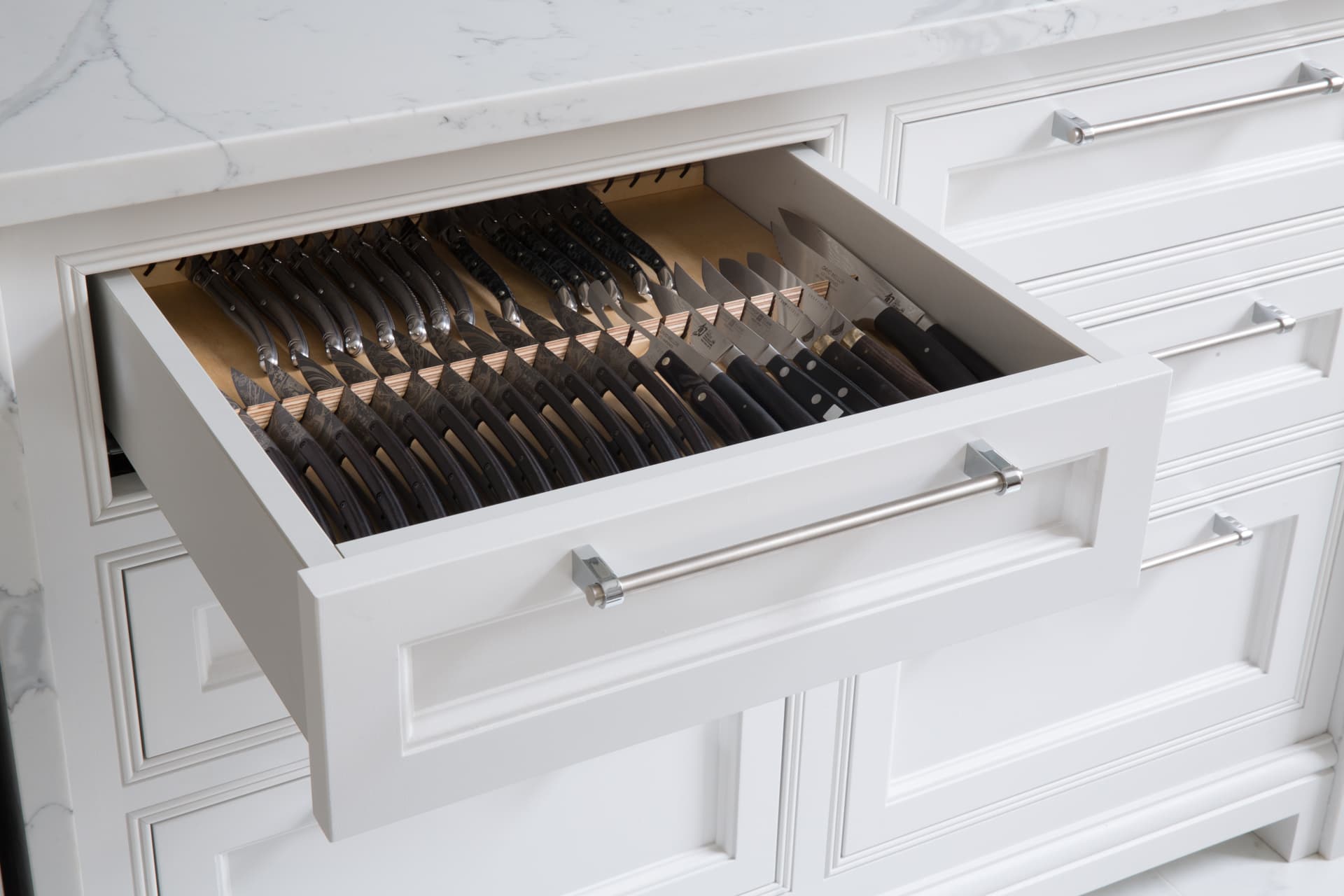
Bespoke Kitchen Joinery: The Craft Behind Cabinets That Last Generations
A detailed guide to the joinery techniques used in bespoke kitchen craftsmanship — from dovetail drawers and mortise-and-tenon frames to tongue and groove panels. Learn how to recognise quality joinery and why it determines how long your kitchen will last.
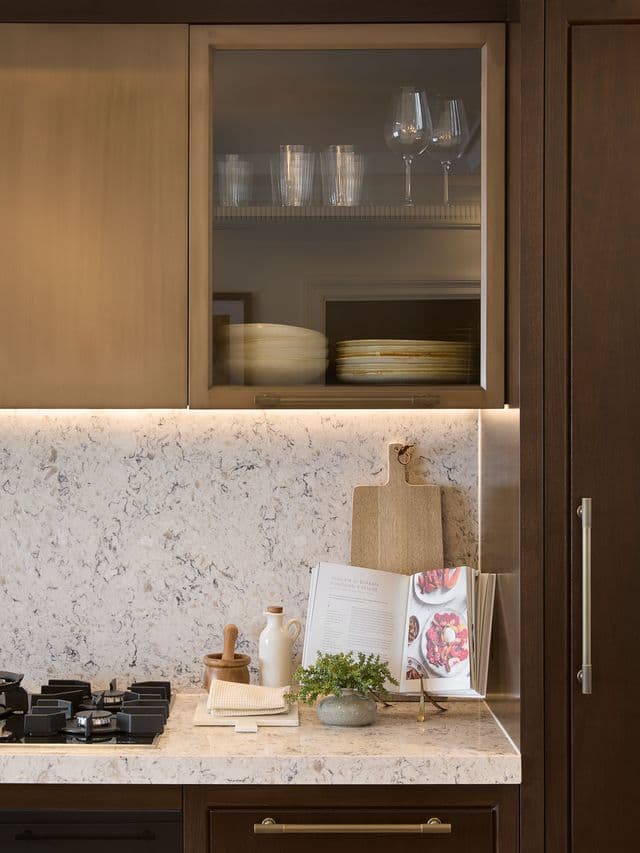
The Bespoke Kitchen Design Process: From Brief to Blueprint
How does a bespoke kitchen get designed? We walk through every stage of the design process — from developing the brief and spatial analysis to 3D visualisation, technical drawings, material specification, and sign-off.