

Kitchen Larder Ideas: The Modern Larder Reimagined for Bespoke Living
Discover kitchen larder ideas that transform traditional food storage into a design statement. From full-height larder cabinets to walk-in pantries, explore bespoke larder design for every kitchen style and space.
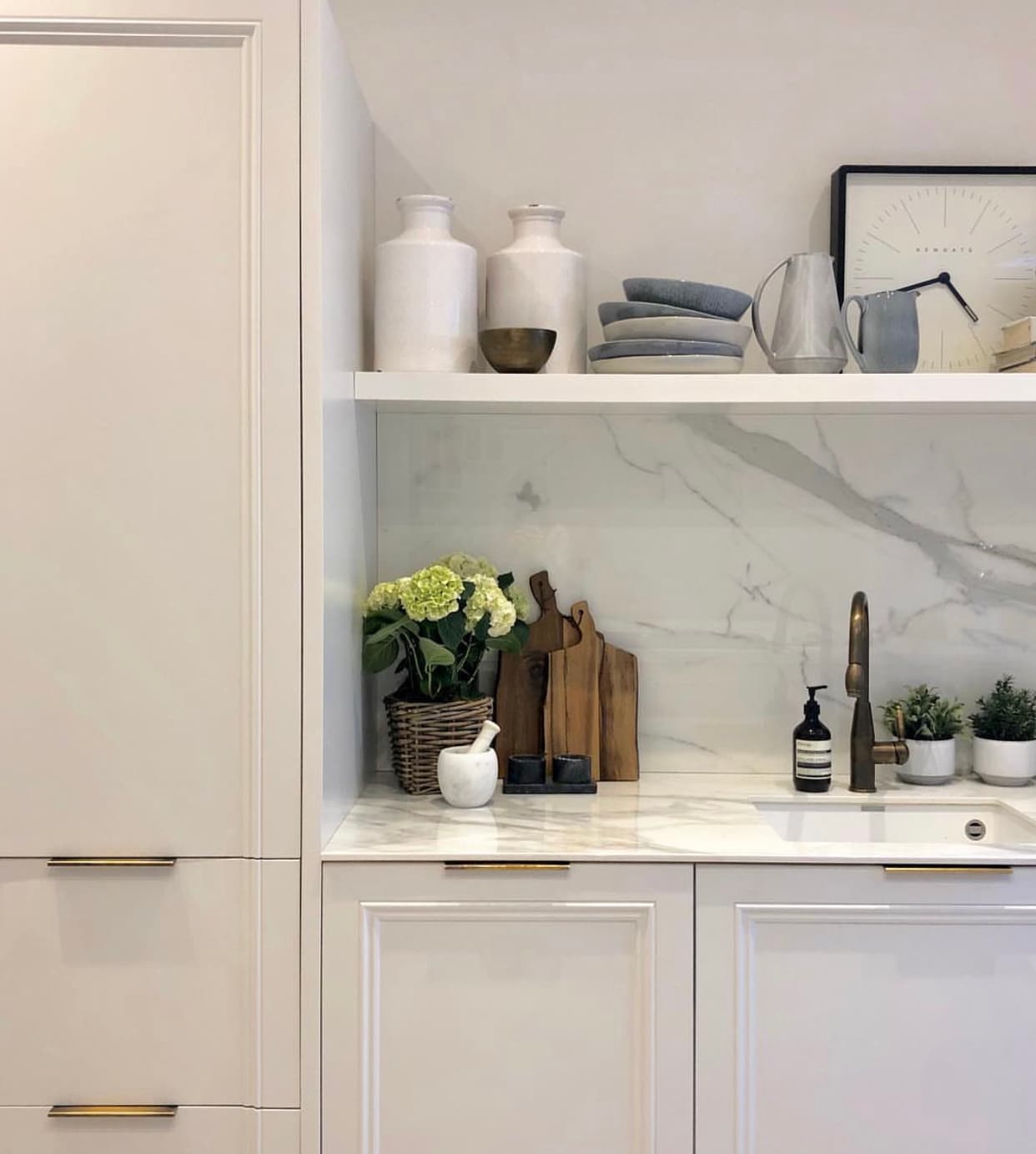
There is a particular satisfaction in opening a larder. Not the fridge — that functional box with its humming compressor and blue-white light — but a proper larder, with its neat rows of jars, its carefully arranged tins, its quiet promise that supper is well in hand. It is, in many ways, the most honest piece of furniture in the kitchen: everything visible, everything accessible, everything in its place.
The larder has been a fixture of the British kitchen for centuries. That it fell out of favour for a few decades — lost to the march of refrigeration and the shrinking of domestic architecture — makes its return all the more pleasing. Today, the kitchen larder is not merely back; it has been reimagined as one of the most desirable features in contemporary kitchen design.
What follows is a guide to kitchen larder ideas that goes beyond the obvious. Whether you are planning a full kitchen commission or simply exploring possibilities, these ideas are drawn from our experience designing and building bespoke kitchens across Hertfordshire, Essex, and Cambridge — kitchens where the larder is not an afterthought, but a centrepiece.
A Brief and Rather Useful History of the Larder
Understanding where the larder comes from helps explain why it works so well today. The word itself derives from the French lardier, a place for storing lard and preserved meats. In medieval English households, the larder was a dedicated room — cool, north-facing, often with thick stone walls and slate shelves designed to keep perishable food at a stable, low temperature long before mechanical refrigeration existed.
By the Georgian and Victorian eras, the larder had become an essential feature of any well-run household. Country houses had walk-in larders with marble or slate shelving, mesh-covered windows for ventilation, and a carefully considered position relative to the kitchen, the dairy, and the buttery. Even modest terraced houses had a small larder cupboard, typically under the stairs or in an alcove off the kitchen.
The twentieth century changed everything. Domestic refrigerators became affordable in the 1950s and 1960s, and the larder began its slow retreat. Kitchens shrank. Storage was reduced to a few overhead cabinets and a tall fridge-freezer. For a generation, the larder seemed obsolete.
It was never quite forgotten, though. And as kitchens have grown larger again — particularly in the open-plan extensions and barn conversions that characterise so much of the M11 corridor — the larder has made a return that feels less like nostalgia and more like common sense.
Why the Larder Deserves Its Comeback
The modern larder answers several problems at once. It provides generous, visible storage in an age when we buy more ingredients than ever. It keeps worktops clear — the single change that most improves how a kitchen looks and functions. And it offers a kind of domestic satisfaction that a cupboard full of half-visible tins simply cannot match.
There are practical reasons, too. A well-ventilated larder keeps many foods in better condition than a fridge. Root vegetables, onions, garlic, bread, preserves, oils, and spices all fare better at cool room temperature than in the cold, dry environment of a refrigerator. If you take food seriously — and most of our clients do — a larder is not a luxury but a sensible investment.
Then there is the design argument. A beautifully made larder cabinet is a statement of intent. It says: this kitchen was designed by someone who thinks carefully about how food is stored, prepared, and enjoyed. It says the same thing about the people who live here.
Types of Larder: Finding the Right Approach for Your Kitchen
Not all larders are created equal, and the right solution depends on your kitchen's size, layout, and character. Here are the principal types, each with its own strengths.
The Full-Height Larder Cabinet
This is the most popular larder solution in contemporary bespoke kitchens, and for good reason. A full-height larder cabinet — typically 2100mm to 2400mm tall and 600mm to 1200mm wide — delivers an extraordinary amount of storage within a single piece of cabinetry.
When the doors are closed, it reads as a handsome, proportioned element within the kitchen. When the doors are opened, it reveals a meticulously organised interior: adjustable shelving, door-mounted racks, pull-out trays, and perhaps a dedicated section for spices or wine. The effect is rather like opening a beautifully bound book — the exterior gives a hint, but the interior is where the real substance lies.
Full-height larder cabinets work in kitchens of almost any size. In a large kitchen, a pair of matching larder units flanking a cooking range creates a sense of symmetry and stature. In a smaller kitchen, a single larder cabinet can replace several wall units and a good deal of clutter.
The Built-In Larder Cupboard
Where a full-height cabinet stands proud of the wall, a built-in larder cupboard is recessed into it — set within an alcove, a chimney breast, or a purpose-built recess. The result is a larder that feels architectural rather than freestanding, as though it has always been part of the house.
This approach suits period properties particularly well. In a Georgian or Victorian kitchen, a built-in larder cupboard can be designed to echo the proportions of the room's existing joinery — matching the height of a dado rail, the depth of a window reveal, or the moulding profile of original doors. It is a way of adding serious storage without disrupting the character of the space.
Built-in larders also offer the practical advantage of depth. Because the cupboard sits within the wall, the shelves can be deeper than those in a freestanding cabinet, accommodating larger items such as stand mixers, stock pots, or bulk dry goods.
The Walk-In Larder
For those with the space, a walk-in larder is the ultimate expression of kitchen storage. A dedicated room — even a modest one of 1.5 by 2 metres — can hold more than most people imagine, and the experience of stepping into a well-stocked larder is genuinely pleasurable.
The best walk-in larders borrow from their historical predecessors: cool, ventilated, and lined with open shelving on three walls. Marble or slate shelves along the lower level keep root vegetables and dairy cool. Upper shelves accommodate dry goods, preserves, and baking supplies. A pull-out drawer section near the door holds everyday items — the things you reach for during every cooking session.
If you are considering a walk-in larder, our guide to walk-in pantry design covers layout, ventilation, and lighting in detail. It is one of the most rewarding spaces we design.
The Freestanding Larder
Before fitted kitchens became the norm, most larders were freestanding pieces of furniture — substantial cupboards that could be moved from house to house. There is a growing appetite for this approach again, particularly in kitchens that embrace an unfitted or semi-fitted aesthetic.
A freestanding larder adds character and individuality. It can be finished differently from the rest of the kitchen — a painted larder in a timber kitchen, or a natural oak piece among painted cabinetry. It introduces the sense that the kitchen has been assembled over time, which is a quality that many of our clients find enormously appealing.
The practical consideration with freestanding larders is stability and proportion. A tall, heavy larder needs to be exceptionally well made — mortise-and-tenon joinery, solid timber construction, and a low centre of gravity. This is furniture-making at its most demanding, and it is one of the areas where bespoke cabinetry truly earns its keep.
Design Features That Make a Larder Work Brilliantly
A larder is only as good as its interior. The external design matters — it should be beautiful and proportionate — but the real test is whether it makes daily cooking easier, more efficient, and more enjoyable. These are the features we find make the greatest difference.
Adjustable Shelving
Fixed shelves are the enemy of flexibility. What you store changes over time — seasonally, as your family grows, as your cooking evolves. Adjustable shelving on concealed brass or steel shelf supports allows the interior to be reconfigured in minutes. We typically set shelf positions at 200mm to 250mm intervals, but bespoke means bespoke: if you have a collection of particularly tall preserving jars, we will space the shelves accordingly.
Pull-Out Trays and Drawers
The lower section of a full-height larder is notoriously difficult to access if it relies on fixed shelves alone. Pull-out trays — full-extension runners in solid timber or wire — solve this elegantly. Heavy items such as bags of flour, bottles of olive oil, or root vegetables can be stored low and pulled forward for easy access.
Drawer inserts within pull-out trays add another layer of organisation. Divided compartments for spice jars, tea caddies, or baking essentials transform the lower larder from a forgotten zone into one of the most useful areas in the kitchen.
Door-Mounted Storage
The inside of a larder door is valuable real estate, and ignoring it is a waste. Narrow shelves or racks mounted on the door interior are ideal for items you use constantly — spices, oils, vinegars, condiments, and small jars. The depth of door-mounted storage is limited to around 100mm to avoid interfering with the main shelves when the door closes, but that is more than sufficient for most bottles and jars.
Integrated Lighting
A dark larder is an underused larder. Integrated LED strip lighting — warm white, around 2700K to 3000K — fitted to the underside of each shelf or to the top of the cabinet transforms the interior. It makes every item visible at a glance, and it adds a quiet sense of occasion when the doors swing open. Motion-activated or door-activated switching is a practical refinement that means you never fumble for a light.
Dedicated Wine Storage
For clients who appreciate wine but do not require a full cellar or climate-controlled unit, a dedicated section within the larder is an elegant solution. Timber wine racks — horizontal slots for a dozen or so bottles — can be integrated into the lower section, where the temperature is naturally coolest. It keeps wine accessible for everyday drinking while freeing up space elsewhere in the kitchen.
Spice Drawers and Rack Systems
Serious cooks accumulate serious spice collections, and there is nothing more frustrating than rummaging through a disordered shelf for a jar of smoked paprika. Dedicated spice storage — whether as tiered racks on the door interior, shallow pull-out drawers with angled inserts, or a vertical pull-out spice tower — is one of those details that quietly elevates daily life.
Materials and Finishes: Setting the Tone
The materials you choose for a larder set its character. The exterior should harmonise with the wider kitchen, while the interior can be a considered contrast — a reveal that rewards attention.
Painted Timber
The most popular choice for larder cabinetry, and with good reason. A painted finish in a carefully chosen colour — Farrow & Ball, Little Greene, or a bespoke colour match — creates a clean, timeless backdrop that suits both traditional and contemporary kitchens. Inside, painting the shelves in the same colour or a complementary tone creates a cohesive, considered feel.
Natural and Stained Timber
For kitchens with a warmer, more rustic character, natural timber larders in oak, walnut, or ash are magnificent. The grain and texture of the wood become a feature in themselves. Oiled or waxed finishes develop a rich patina over time, and the scent of natural timber inside a larder is one of those small domestic pleasures that never quite wears off.
Combination Finishes
Some of our most successful larders combine a painted exterior with natural timber shelving inside — the paint providing a crisp frame, the timber adding warmth and texture to the interior. This approach works particularly well in kitchens that already blend painted and timber elements, a hallmark of many of our bespoke kitchen designs.
Ventilation: The Detail Most People Overlook
Ventilation is the unsung hero of larder design. A sealed, unventilated larder will trap moisture and warmth, creating an environment that does fresh food no favours. Traditional larders solved this with perforated zinc panels, mesh-covered openings, or slate-backed vents — simple, effective solutions that allowed air to circulate without admitting dust or insects.
In a modern bespoke larder, ventilation can be as discreet as you wish. Small vents routed into the back panel, mesh inserts set into the door panels, or a narrow gap between the base and the floor all promote airflow without compromising the design. For walk-in larders, a low-level vent to an external wall is ideal, particularly if the larder is on a north-facing or shaded side of the house.
If your larder will store only dry goods, packaged items, and tins, ventilation is less critical but still worthwhile. A larder that breathes stays fresh, and fresh storage is better storage.
The Larder as a Design Centrepiece
There is a growing trend — one we wholeheartedly encourage — towards treating the larder not as a utilitarian necessity but as a focal point of the kitchen. A beautifully proportioned larder cabinet, flanked by counter-height cabinetry, can anchor a wall in the way a fireplace anchors a sitting room. It gives the eye somewhere to rest and the room a sense of hierarchy.
Consider the following approaches:
- Contrasting colour — painting the larder in a deeper or richer shade than the surrounding cabinetry, drawing the eye and creating a sense of depth
- Statement hardware — oversized brass or iron handles, turnbuckle latches, or traditional butterfly hinges that signal this is a piece of substance
- Architectural detailing — a cornice across the top, pilaster mouldings on the sides, or a plinth that echoes the room's skirting, grounding the larder within the architecture of the house
- Interior drama — a contrasting paint colour, decorative tiling on the back wall, or open shelving that turns the interior into a curated display when the doors are open
The larder is one of those rare kitchen elements that can be both supremely practical and genuinely beautiful. It rewards investment — in design, in materials, and in craftsmanship.
Integrating a Larder Into Different Kitchen Styles
One of the great virtues of the larder is its versatility. It belongs in almost every kitchen style, provided it is designed with sensitivity to its surroundings.
Shaker and In-Frame Kitchens
The larder is arguably most at home in a Shaker or in-frame kitchen, where its proportions and construction echo the honest, well-made character of the wider design. Beaded-edge door panels, traditional butt hinges, and a painted finish in a period-appropriate colour create a larder that feels entirely natural in this context.
Contemporary Kitchens
In a contemporary kitchen, the larder takes on a different character — sleeker, perhaps handle-less, with push-to-open doors and a clean, minimal interior. The principle is the same, but the expression is pared back. A floor-to-ceiling larder in a contemporary kitchen can be almost invisible when closed — a flush panel that conceals a world of storage behind it.
Country and Farmhouse Kitchens
A freestanding or semi-freestanding larder suits the country kitchen beautifully, particularly one with tongue-and-groove panelling, turned legs, or a plate rack across the top. It evokes the working kitchens of English country houses while delivering entirely modern functionality.
Transitional Kitchens
Transitional designs — those that blend traditional craftsmanship with contemporary sensibility — offer the most creative freedom. A larder with classic proportions but minimal moulding, modern interior fittings, and an unexpected material choice sits perfectly in this space. It is a meeting point between heritage and modernity, which is rather where we do our best work.
Size Options for Every Space
The beauty of a bespoke larder is that it can be designed for any kitchen, regardless of size. Here is a rough guide to what is possible:
- Compact kitchens (under 12m2) — a single full-height larder cabinet at 500mm to 600mm wide delivers remarkable storage without dominating the room
- Medium kitchens (12m2 to 20m2) — a double-door larder at 900mm to 1200mm wide, or a pair of single larder units, provides ample capacity for a family
- Large kitchens (over 20m2) — consider a walk-in larder or a substantial larder wall combining full-height cabinets with counter-height units and open display shelving
- Kitchen-diners and open-plan spaces — the larder can serve as a visual anchor and a practical divider, its tall form defining the boundary between cooking and living zones
Whatever the size, the principle is the same: design the interior around what you store, not the other way around. A bespoke larder is planned from the contents outward, which is why it works so much better than anything off the shelf.
Beginning the Conversation
If any of these kitchen larder ideas have sparked something, we would be glad to take the conversation further. Every larder we design begins with a simple discussion about how you cook, what you store, and how you want the kitchen to feel. From there, our designers develop a solution that is specific to your space, your habits, and your aesthetic.
You can explore more of our thinking on storage and kitchen design in our guide to bespoke kitchen cabinets, or browse design ideas from recent commissions.
When you are ready to talk, get in touch. The larder, like the best things in a kitchen, begins with a good conversation.
Frequently Asked Questions
Thinking about a new kitchen?
Book Your Free ConsultationYou might also enjoy
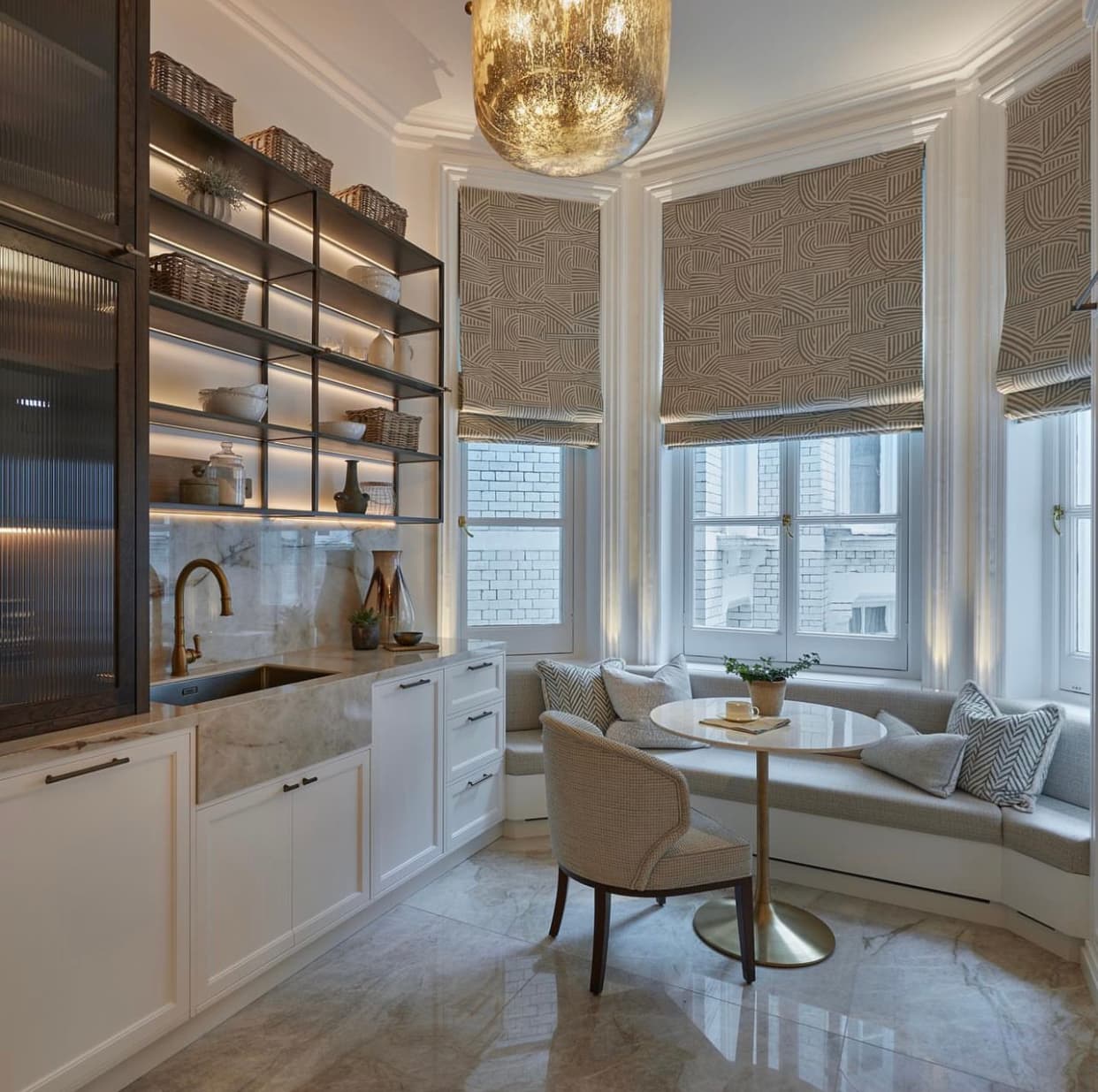
Banquette Seating Kitchen: The Art of Built-In Dining Done Properly
Explore how banquette seating transforms kitchen dining — from L-shaped corners and curved booths to storage-smart benches, upholstery choices, and dimensions that actually work. Inspiration for bespoke kitchens that invite you to sit down and stay.
Arts and Crafts Kitchen Design: Where Handcraft Meets the Heart of the Home
Explore how the Arts and Crafts movement inspires truly bespoke kitchen design — from hand-forged ironmongery and English oak to William Morris colour palettes. A guide to creating kitchens that honour the handmade.
Barn Conversion Kitchen Design: Bespoke Kitchens for Extraordinary Spaces
Designing a kitchen for a barn conversion demands a bespoke approach. From double-height ceilings and exposed trusses to acoustic management and island design, discover how Albury House Kitchens creates luxury kitchens that honour agricultural architecture whilst delivering modern performance.