

Kitchen Renovation Timeline UK: A Realistic Guide from Start to Finish
How long does a kitchen renovation take in the UK? A week-by-week breakdown of every phase — from first plans to finished kitchen — with practical advice on what to expect, what can go wrong, and how to stay on track.
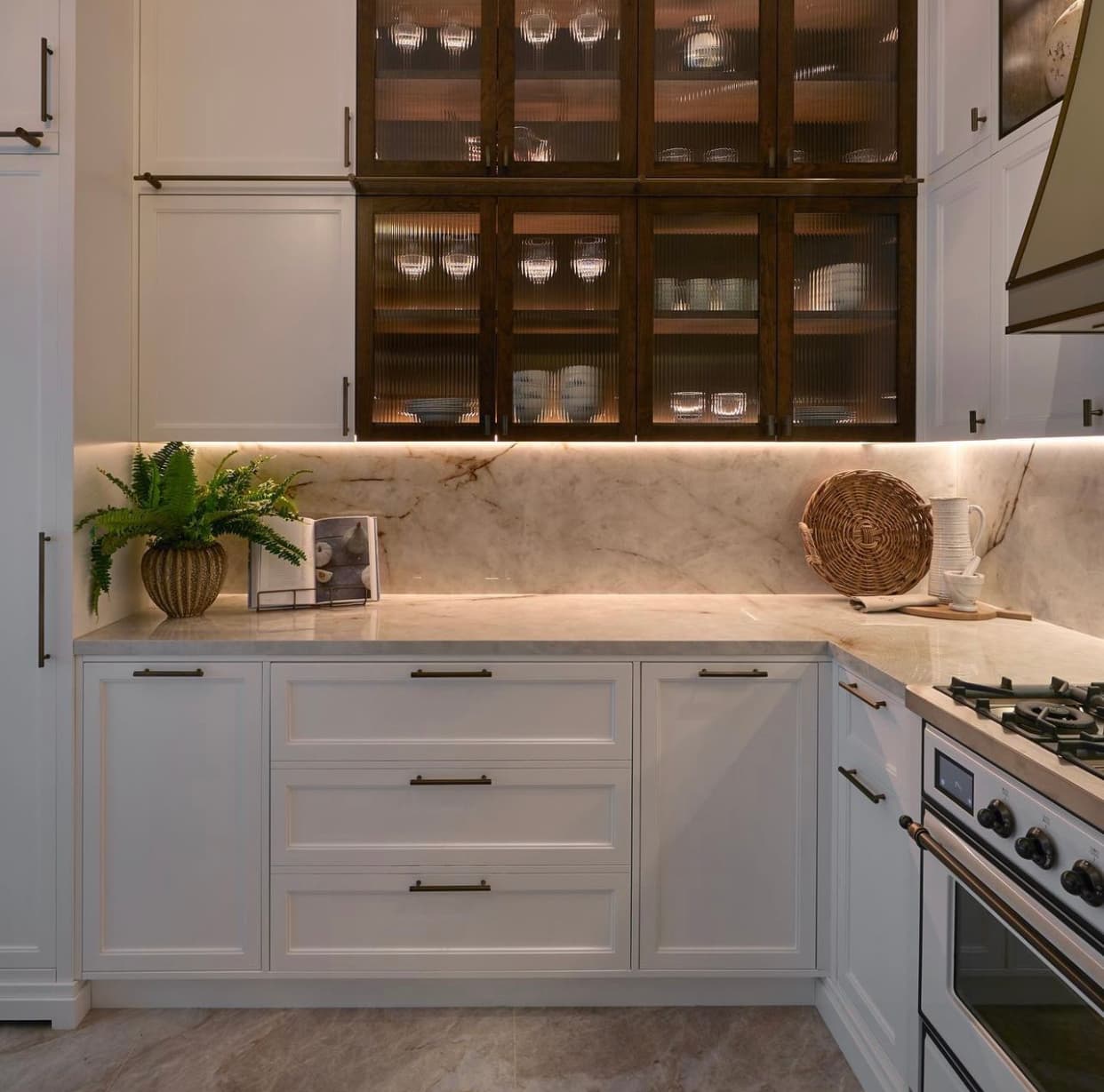
There is a particular kind of optimism that overtakes people at the beginning of a kitchen renovation. The Pinterest boards are bursting, the mood is buoyant, and someone has said the words "it'll only take a few weeks" with tremendous confidence.
We admire the enthusiasm. We also know how the story tends to unfold.
A kitchen renovation is one of the most rewarding things you can do to a home — but it is also one of the most complex. The number of trades involved, the sequencing of work, and the sheer quantity of decisions to make mean that even well-planned projects can drift if you don't understand the timeline from the outset.
This guide sets out a realistic kitchen renovation timeline for the UK, covering every phase from initial planning to the moment you finally cook a proper meal in your new kitchen. We've drawn on decades of experience at Albury House Kitchens, where we design, build, and install bespoke kitchens for homes across the M11 corridor and beyond.
Whether you're planning a straightforward refit or a full structural transformation, this is what you should actually expect.
The Complete Kitchen Renovation Timeline at a Glance
Before we explore each phase in detail, here's the full picture. The timeline below assumes a mid-to-large kitchen renovation with some structural work — the most common type of project we manage.
| Phase | What Happens | Typical Duration |
|---|---|---|
| Planning and Research | Gathering ideas, setting budget, choosing a kitchen company | 2 – 4 months |
| Design and Specification | Detailed design, material selection, final sign-off | 4 – 8 weeks |
| Planning Permission (if required) | Application, determination period, conditions | 8 – 12 weeks |
| Ordering and Lead Times | Kitchen manufacture, worktops, appliances, tiles, fixtures | 8 – 16 weeks |
| Structural Work | Demolition, wall removal, steelwork, extensions | 2 – 4 weeks |
| First Fix | Electrics, plumbing, plastering, underfloor heating | 2 – 3 weeks |
| Kitchen Installation | Cabinetry fitted, scribing, adjustments | 1 – 2 weeks |
| Second Fix | Electrics connected, plumbing completed, appliances fitted | 3 – 5 days |
| Worktop Templating and Fitting | Laser survey, fabrication, installation | 2 – 4 weeks |
| Tiling, Decoration, and Finishing | Splashbacks, painting, flooring trim, sealants | 1 – 2 weeks |
| Snagging | Final checks, adjustments, sign-off | 2 – 3 days |
Total elapsed time from first thought to finished kitchen: 5 to 9 months.
That range is wide for good reason. A like-for-like replacement in an existing layout is a fundamentally different proposition from a rear extension with a bespoke kitchen at its heart. Let's walk through each phase so you can calibrate the timeline to your own project.
Phase 1: Planning and Research (2 to 4 Months Before Work Starts)
The planning phase is where most of the important decisions are made — and where the most time is saved or lost later on.
Setting Your Budget
Before you speak to a single kitchen company, establish your total project budget. This means everything: the kitchen itself, building work, worktops, appliances, tiling, flooring, lighting, decoration, and a contingency of at least 10 to 15 per cent.
If you're considering a bespoke kitchen, our cost guide sets out what to expect at different price points. Being clear about budget from the outset prevents the painful experience of falling in love with a design you can't afford.
Choosing Your Kitchen Company
This decision shapes everything that follows. Spend time visiting showrooms, reviewing portfolios, and speaking to previous clients. The relationship between you and your kitchen designer will span months — personal rapport matters as much as design capability.
At Albury House Kitchens, we encourage prospective clients to visit our workshop as well as the showroom. Seeing how a kitchen is actually built tells you more about quality than any brochure.
Appointing Your Build Team
If your project involves structural work, appoint your builder, architect, or project manager early. The kitchen design and the building work must be coordinated from the start — not bolted together later. Too many projects suffer because the kitchen designer and the builder first meet on site.
Phase 2: Design and Specification (4 to 8 Weeks)
Once you've chosen your kitchen company, the design process begins in earnest.
Initial Concepts
Expect one or two rounds of concept design — 3D visualisations and layout drawings that explore how the kitchen might work within your space. At this stage, you're making big decisions: layout, island or no island, door style, and overall material direction.
Detailed Design
The concept is refined into a fully specified design. Every cabinet is drawn. Every hinge, runner, and handle is selected. Appliance models are confirmed. Paint colours are chosen. Worktop materials are specified.
This is the phase that demands the most from you as a client. Decisions deferred here become delays later. Our advice: treat the design sign-off as a genuine deadline. If you're still deliberating over tap finishes when the builder starts on site, you're already behind.
The Specification Document
A good kitchen company will produce a detailed specification — a line-by-line document that records every element of your kitchen. This is your contract, your reference, and your protection. Read it carefully.
Phase 3: Planning Permission (If Required — 8 to 12 Weeks)
Not every kitchen renovation requires planning permission, but many of the more ambitious projects do. Single-storey rear extensions, changes to listed buildings, and properties in conservation areas all have their own requirements.
A standard householder planning application in England takes eight weeks for determination, though the reality is often closer to ten or twelve when validation delays and officer workloads are factored in. If your property is listed, expect listed building consent to run in parallel, with a similar or longer timeline.
The critical point: do not order your kitchen, book your builder, or commit to a start date until planning permission is granted. Conditional approvals sometimes carry requirements that affect the kitchen design — particularly in listed buildings where internal alterations may be scrutinised.
If your project falls within permitted development, you can bypass this phase entirely, but do confirm this with your architect or a planning consultant. Assumptions about permitted development rights are one of the most common sources of project delay.
Phase 4: Ordering and Lead Times (8 to 16 Weeks)
With the design signed off and planning permission secured, everything is ordered. This is the phase that tests patience — there's a great deal happening, but none of it is visible in your kitchen.
Kitchen Cabinetry
A bespoke kitchen is built by hand. There are no flatpack components arriving from a distribution centre. Manufacturing typically takes 8 to 14 weeks from sign-off, depending on complexity. In our workshop, your kitchen goes through design translation, timber selection, cutting, joinery, assembly, and a multi-coat finishing process that alone takes two to three weeks.
Mass-produced kitchens have shorter lead times — typically 4 to 8 weeks — but the principle is the same: order early.
Worktops
Natural stone and engineered stone worktops are not ordered at this stage — they're templated after the kitchen is installed (more on that below). However, if you're choosing a specific slab of marble or quartzite, reserve it now. Popular stones sell quickly, and your perfect slab won't wait.
Appliances
Ovens, hobs, and dishwashers from major manufacturers are usually available within 2 to 4 weeks. Range cookers (particularly AGA and Lacanche) and specialist extraction can take 6 to 12 weeks. If you have your heart set on a specific model, order it the moment the design is signed off.
Tiles, Flooring, and Fixtures
Handmade tiles, natural stone flooring, and bespoke metalwork all carry lead times that can catch people out. Moroccan zellige tiles, for instance, routinely take 6 to 10 weeks. Order these alongside your kitchen, not as an afterthought.
Phase 5: Structural Work (2 to 4 Weeks)
This is when the house starts to feel like a building site. Walls come down, steelwork goes in, floors are dug up, and everything gets considerably worse before it gets better.
Common structural work in kitchen renovations includes:
- Removing internal walls — typically requiring a steel beam (RSJ) designed by a structural engineer
- Rear extensions — from small infill extensions to full-width glass boxes
- Lowering floors — sometimes necessary in older properties to gain ceiling height
- Underpinning — if foundations are affected by the new layout
- New openings — windows, doors, or bi-fold systems
Structural work must be completed and signed off by building control before the first fix trades arrive. Any overlap between structural and installation phases is a recipe for damage, delays, and frayed tempers.
Phase 6: First Fix (2 to 3 Weeks)
First fix is when the infrastructure goes in behind the walls and under the floors. This phase involves:
- Electrics — new circuits for ovens, hobs, lighting, sockets, and underfloor heating
- Plumbing — repositioned water supply and waste pipes for sinks, dishwashers, and boiling water taps
- Gas — if you're installing a gas hob or range cooker
- Plastering — walls and ceilings skimmed smooth, ready for decoration
- Underfloor heating — if included, this is laid before the screed or directly below the finished floor
The sequencing within first fix matters. Electrics and plumbing typically happen simultaneously, followed by any floor levelling or screeding, then plastering. Each trade needs the previous one to be complete and the area to be dry before they can start.
Allow adequate drying time for plaster and screed. Freshly plastered walls need a minimum of two weeks before painting. Screeded floors can take considerably longer depending on depth and ambient conditions. Rushing this step leads to paint failures and damp problems.
Phase 7: Kitchen Installation (1 to 2 Weeks)
The moment you've been waiting for. The kitchen arrives — carefully wrapped, meticulously labelled — and installation begins.
A bespoke kitchen installation is not a rapid process. Every unit is scribed precisely to the walls and floor, which are never perfectly flat or square, regardless of how good your plasterer is. Adjustments are made on site to ensure gaps are invisible and alignments are true.
At Albury House Kitchens, our own installation team carries out this work — the same craftsmen who built the kitchen in our workshop. This continuity matters: they understand every joint, every detail, and every intention behind the design.
A typical installation programme:
- Day 1–2 — base units positioned, levelled, and secured
- Day 3–4 — wall units, tall units, and island structure installed
- Day 5–7 — doors, drawers, and internal fittings adjusted and aligned
- Day 8–10 — final scribing, fillers, pelmets, and cornice work
For larger or more complex kitchens, allow a full two weeks.
Phase 8: Second Fix (3 to 5 Days)
With the cabinetry in place, the second fix trades return to complete their work:
- Electrician — wiring connected to sockets, switches, and under-cabinet lighting
- Plumber — sinks, taps, dishwashers, and water filtration systems connected
- Gas engineer — hob or range cooker connected and tested
- Appliance installation — ovens, microwaves, warming drawers, and integrated refrigeration slotted into their prepared housings
This phase runs quickly provided the first fix was done correctly and the cabinetry is exactly where the drawings said it would be. Coordination between trades is essential — your builder or project manager should schedule each visit with military precision.
Phase 9: Worktop Templating and Fitting (2 to 4 Weeks)
Here's the part that surprises many clients: worktops are not measured from the design drawings. They're laser-templated after the kitchen is installed.
This is because the installed kitchen — however carefully planned — will differ by a few millimetres from the design. Those millimetres matter when you're cutting a £15,000 slab of marble. Templating ensures a perfect fit.
The process:
- Laser survey — a specialist templator visits site and creates a precise digital record of every worktop run, cutout, and edge profile
- Fabrication — the stone is cut, profiled, and polished. This typically takes 10 to 15 working days
- Installation — the worktops are delivered and fitted, usually in a single day
The gap between kitchen installation and worktops being fitted is one of the most frustrating waits in any renovation. You have a beautiful kitchen that you can't yet use. Plan for it, accept it, and resist the urge to use the cabinetry as a temporary worksurface.
Phase 10: Tiling, Decoration, and Finishing (1 to 2 Weeks)
With worktops in place, the finishing trades move in:
- Splashback tiling — behind hobs, sinks, and along worktop runs
- Painting — walls, ceilings, and any exposed joinery or trim
- Flooring trim — skirting, thresholds, and any edge details
- Sealants — silicone joints between worktops and walls, around sinks, and along splashbacks
- Final clean — a thorough deep clean of every surface, inside every cabinet
These tasks seem minor individually, but collectively they take longer than people expect. A complex tiling scheme alone can occupy a skilled tiler for four to five days.
Phase 11: Snagging (2 to 3 Days)
The final inspection. Walk through the kitchen with your project manager or kitchen company and note anything that needs attention — a door that doesn't close perfectly, a drawer runner that needs adjustment, a paint touch-up, a silicone line that could be neater.
A good kitchen company will welcome snagging. It's not a confrontation; it's the final step in delivering a kitchen you're completely satisfied with.
What Can Go Wrong (and Add Time)
Every renovation carries risk. Here are the most common causes of delay:
- Late decisions — changing your mind about appliances, worktop materials, or layout details after ordering has begun can add weeks or months
- Structural surprises — older properties are full of them. Unexpected steelwork, asbestos, inadequate foundations, or concealed services can all require additional work
- Back-ordered items — that specific tap you chose goes out of stock. The handmade tiles are delayed. The range cooker won't arrive for another eight weeks
- Trade availability — plumbers, electricians, and tilers are in high demand. If one trade overruns, the knock-on effect ripples through the entire programme
- Weather — extensions and external work are vulnerable to prolonged rain, frost, and extreme temperatures
- Building control delays — inspections may not happen when you need them, particularly during busy periods
Our advice: build a 2 to 3 week buffer into your overall timeline. If you don't need it, you'll finish early. If you do, you'll be grateful rather than panicked.
How to Compress the Timeline
If you need to move quickly, there are ways to accelerate the process without cutting corners:
- Make all decisions before work starts — this is the single most effective way to save time. Every specification locked down before day one eliminates potential delays
- Order everything simultaneously — kitchen, appliances, tiles, flooring, and fixtures should all be ordered at the same time
- Appoint one project manager — a single point of coordination prevents the gaps between trades that cost days
- Pre-order long-lead items — if you know you want a specific range cooker or stone, order it during the design phase
- Avoid structural work — a renovation that works within the existing footprint and layout will always be faster
- Choose standard-lead materials — engineered quartz rather than rare marble, stock tiles rather than handmade imports
A disciplined, well-coordinated project with no structural work can move from site start to completion in as little as 6 to 8 weeks.
Seasonal Considerations: Planning for a Christmas Kitchen
The "finished by Christmas" deadline is one we hear more than any other. It's entirely achievable, but it demands early action.
Here's the backward planning:
| Target | Date |
|---|---|
| Kitchen complete and snagged | Late November |
| Tiling and decoration | Early to mid-November |
| Worktops fitted | Late October |
| Kitchen installation | Mid-October |
| Second fix | Early October |
| First fix | Mid to late September |
| Structural work | Early September |
| Ordering complete | Late May / early June |
| Design signed off | May |
| Begin planning and design | March / April |
Start in spring, eat Christmas dinner in your new kitchen. Leave it until summer and you're gambling. Leave it until autumn and you're dreaming.
There's another seasonal factor worth noting: builders and tradespeople are busiest from September to December, precisely because everyone wants to be finished by Christmas. Booking your team early — before the autumn rush — gives you the best choice of dates and the most reliable scheduling.
Living Without a Kitchen: Practical Survival Tips
Unless you have the luxury of a second kitchen or an accommodating neighbour, you'll need to adapt. Here's how to make it bearable:
- Set up a temporary kitchen in a dining room, utility room, or even a bedroom. A trestle table, a microwave, a kettle, a portable induction hob, and a mini fridge will cover most meals
- Budget for eating out — be realistic about the fact that you'll eat more takeaways and restaurant meals than usual. Factor this into your overall renovation budget
- Protect the rest of the house — dust from demolition and plastering gets everywhere. Seal doorways with dust sheets and tape. Your builder should do this, but check
- Keep a sense of humour — the disruption is temporary. The kitchen is forever. Or at least for a very long time
- Move out if you can — for the structural and first fix phases (the dustiest, noisiest weeks), staying with family or renting a short-term let can preserve both your sanity and your relationships
The total period of serious disruption — when the kitchen is completely unusable — is typically 4 to 6 weeks. Before and after that core period, you'll have partial use or be living alongside finishing work that's far less invasive.
Bringing It All Together
A kitchen renovation is a marathon, not a sprint. The projects that run smoothly share common traits: thorough planning, decisive clients, a single point of coordination, and realistic expectations about timing.
At Albury House Kitchens, we manage the entire process — from initial design through manufacture in our own workshop to installation by our own team. That continuity eliminates the gaps and miscommunications that cause delays on so many projects.
If you're beginning to think about a kitchen renovation and want to understand what's involved, we'd welcome a conversation. No obligation, no hard sell — just honest advice from people who've done this hundreds of times.
Get in touch to start the conversation.
Frequently Asked Questions
Thinking about a new kitchen?
Book Your Free ConsultationYou might also enjoy
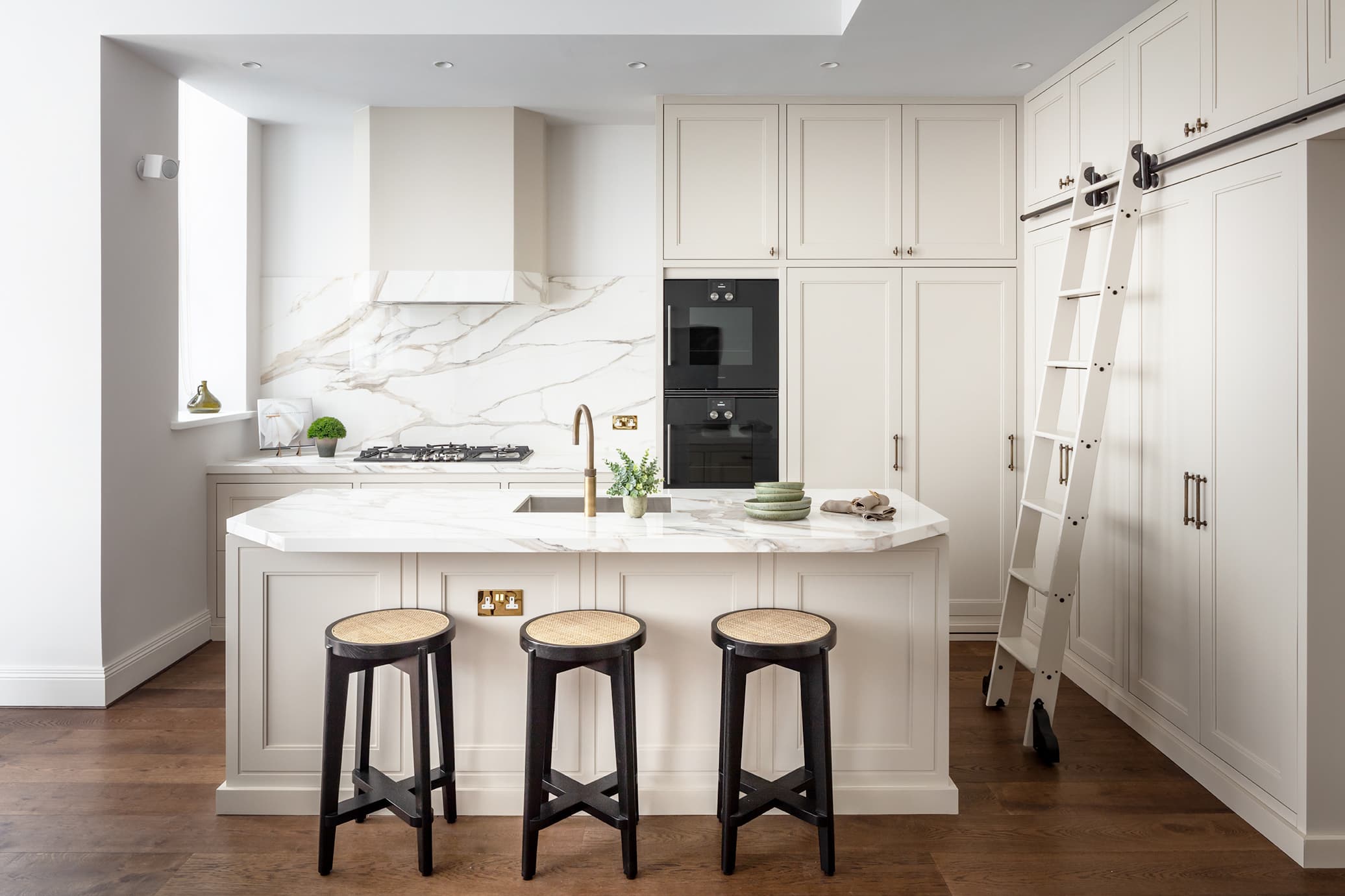
Bespoke Kitchen Cabinets: The Definitive Guide to Handmade Cabinetry
Everything you need to know about bespoke kitchen cabinets — from construction methods and timber selection to door styles, finishes, and the details that distinguish genuine craftsmanship from the merely expensive.
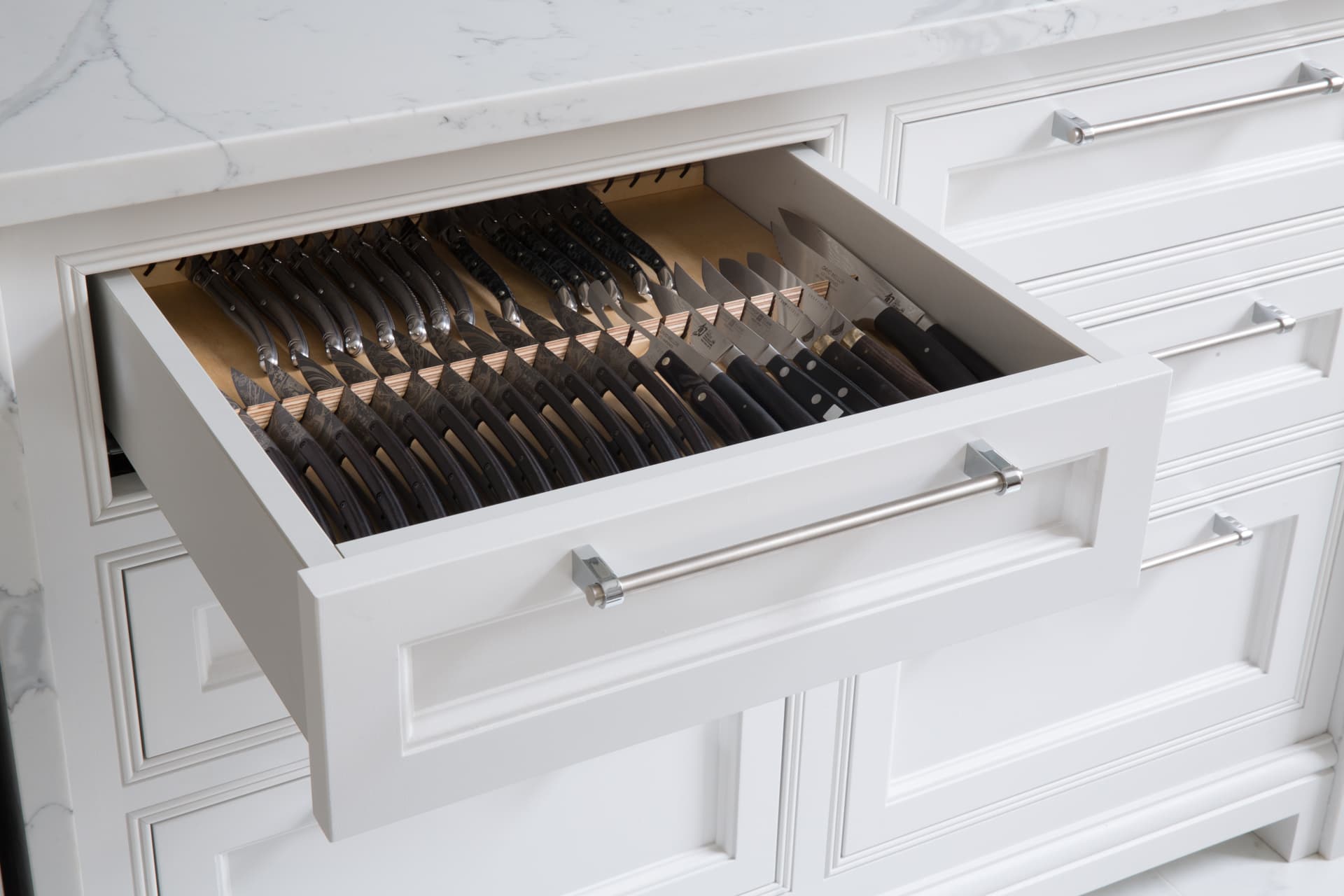
Bespoke Kitchen Joinery: The Craft Behind Cabinets That Last Generations
A detailed guide to the joinery techniques used in bespoke kitchen craftsmanship — from dovetail drawers and mortise-and-tenon frames to tongue and groove panels. Learn how to recognise quality joinery and why it determines how long your kitchen will last.
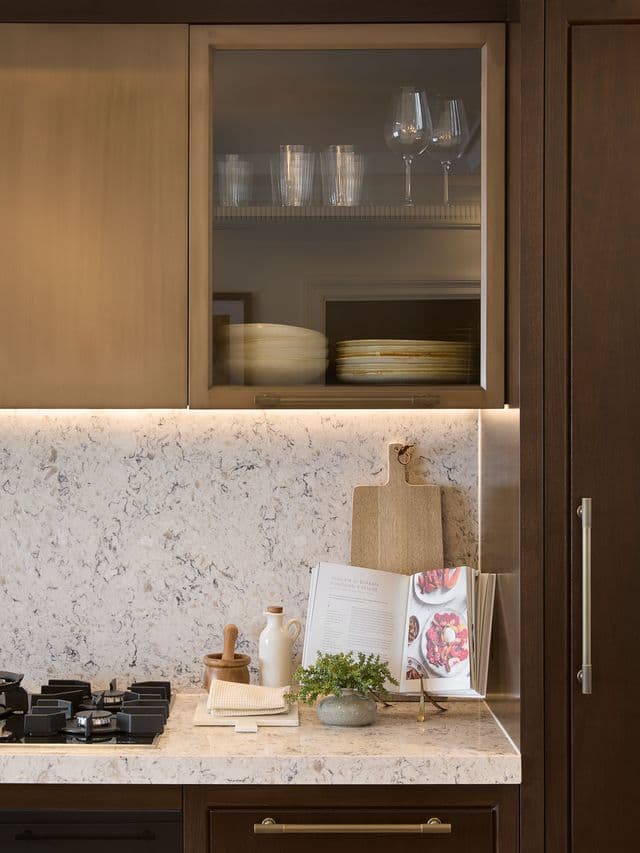
The Bespoke Kitchen Design Process: From Brief to Blueprint
How does a bespoke kitchen get designed? We walk through every stage of the design process — from developing the brief and spatial analysis to 3D visualisation, technical drawings, material specification, and sign-off.