

Bespoke vs Fitted Kitchens: An Honest Comparison
What's the real difference between bespoke and fitted kitchens? We compare design, quality, cost, and timelines — honestly — so you can choose the right approach for your home.
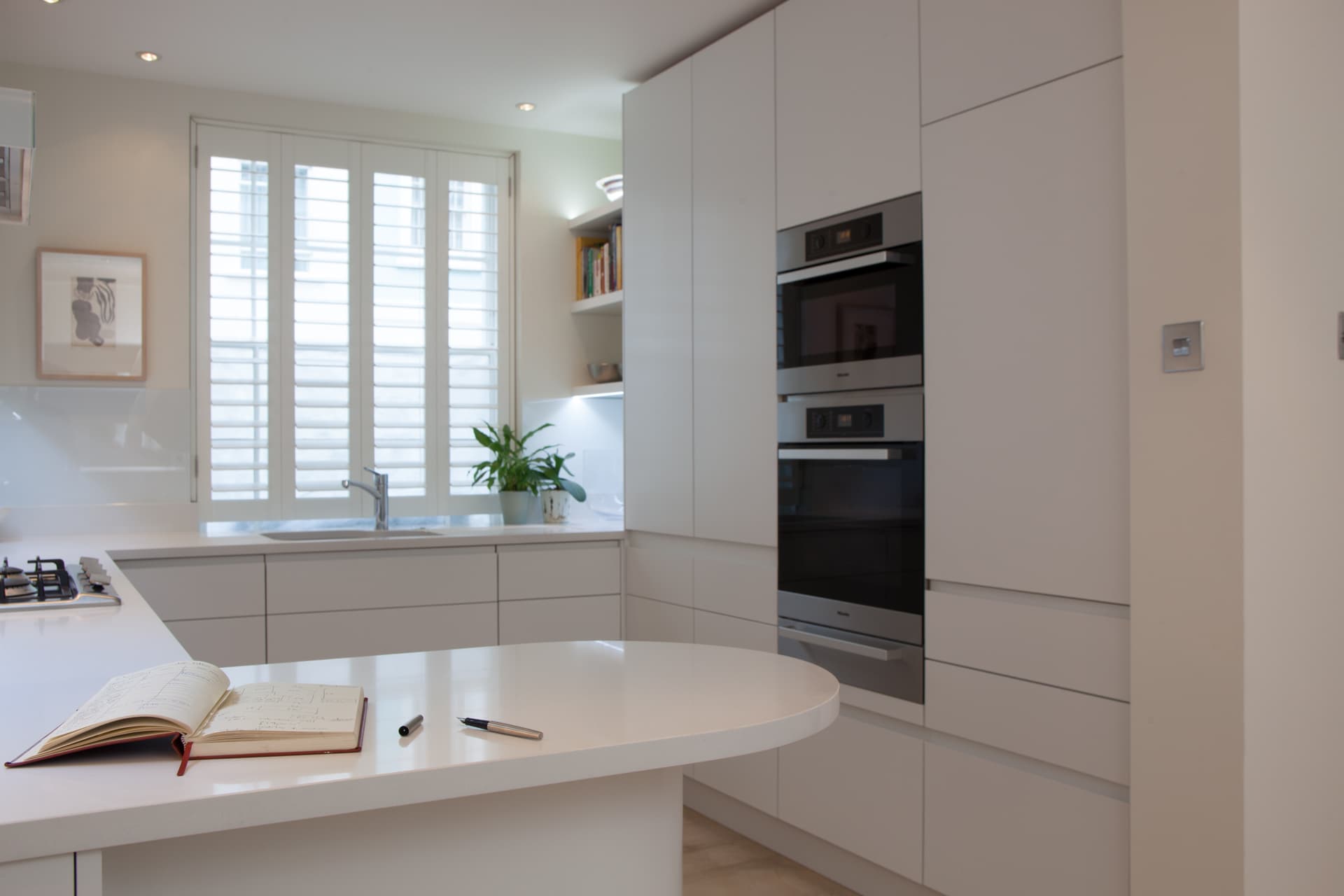
The question of bespoke vs fitted kitchens comes up in nearly every initial conversation we have with prospective clients. It's a sensible question, and it deserves an honest answer — not a sales pitch dressed up as guidance.
So here it is, from a workshop that builds bespoke kitchens for a living: fitted kitchens are perfectly good for a great many homes. They wouldn't dominate the market if they weren't. But they're not the right solution for every project, and understanding why requires knowing what each approach actually involves.
This guide sets out the genuine differences — in design, construction, cost, and outcome — so you can decide which is right for your home.
What Is a Fitted Kitchen?
A fitted kitchen is assembled from pre-manufactured units — cabinets, drawers, doors, and panels — produced in standard sizes by a factory. You choose from a range of styles, finishes, and configurations, and a designer arranges them to suit your room.
The best fitted kitchens come from reputable manufacturers with excellent quality control. Units are precision-engineered, consistent, and reliable. The process is well established and efficient: you visit a showroom, work with a designer, select your specification, and the kitchen arrives ready to install.
Where fitted kitchens work well
- New-build properties with straight walls, level floors, and standard dimensions
- Kitchens where speed matters — if you need a result in weeks rather than months
- Mid-range budgets seeking a good balance of aesthetics and value
- Rental properties or homes you may not keep long-term
- Straightforward layouts without complex architectural features
There's nothing wrong with any of this. A well-chosen fitted kitchen, properly installed, will serve a household admirably for fifteen to twenty years.
What Is a Bespoke Kitchen?
A bespoke kitchen is designed from a blank page and built entirely by hand. There are no standard carcasses, no preset modules, and no catalogue to choose from. Every element — from the overall layout to the depth of an individual spice drawer — is drawn, specified, and crafted for your particular space and your particular way of living.
At Albury House Kitchens, bespoke means the design team, the workshop joiners, and the installation crew are all part of the same operation. The people who draw your kitchen are working alongside the people who build it. This continuity matters more than most clients expect.
Where bespoke kitchens come into their own
- Period and listed properties where nothing is straight, level, or standard
- Architecturally ambitious projects involving structural reconfigurations
- Homes where the kitchen is the centrepiece — large open-plan spaces, entertaining kitchens
- Clients with specific requirements that no catalogue can satisfy
- Long-term family homes where the kitchen should last decades, not just years
Bespoke vs Fitted Kitchens: A Direct Comparison
Here's how the two approaches compare across the factors that matter most:
| Feature | Fitted Kitchen | Bespoke Kitchen |
|---|---|---|
| Design | Selected from a range; configured to your room | Designed from scratch for your specific space |
| Cabinet sizes | Standard increments (usually 50mm or 100mm) | Any dimension, to the millimetre |
| Construction | Factory-produced, machine-made | Hand-built in a dedicated workshop |
| Materials | Supplier's current range | Any timber, finish, or material you choose |
| Finish quality | Consistent factory finish | Hand-applied, multi-coat finish |
| Lead time | 4–8 weeks | 16–24 weeks |
| Installation | Often subcontracted fitters | In-house team who built the kitchen |
| Cost range | £8,000–£40,000 | £50,000–£250,000+ |
| Lifespan | 15–20 years | 25–50+ years |
| Adaptability | Limited by standard sizes | Fits any space, however irregular |
| Resale value | Moderate | Significant |
The numbers tell part of the story. The experience of living with the result tells the rest.
Design: Configuration vs Creation
The design process is where the two approaches diverge most dramatically.
With a fitted kitchen, design means selecting from existing options and arranging them thoughtfully. A skilled fitted-kitchen designer can produce an attractive, functional result — and the best ones are genuinely talented at working within the constraints of standard modules.
But constraints they remain. If your room calls for a cabinet that's 437mm wide, you'll get one that's 400mm or 500mm, with a filler panel to bridge the gap. If you want a curved island end, you'll choose from the curves the manufacturer offers. If you'd like drawers at a non-standard depth, you'll adjust your expectations.
Bespoke design starts differently. There are no modules to arrange — just your space, your requirements, and a designer with a blank page. The question isn't "which of these units fits?" but "what should we build here?"
This distinction matters most in homes with character. A Georgian townhouse in Cambridge, a Victorian villa in Hampstead, a converted barn in Essex — these properties have alcoves, chimney breasts, uneven walls, and ceiling details that resist standardisation. A bespoke kitchen doesn't fight the architecture; it responds to it.
If you're curious about what that design process involves in practice, our guide to commissioning a bespoke kitchen walks through every stage.
Construction Quality: The Differences You Can Feel
Open a drawer in a well-made fitted kitchen and you'll find perfectly adequate construction — typically 16mm or 18mm chipboard or MDF carcasses with melamine interiors, supported by reliable hardware. It does the job. Millions of these kitchens function without complaint.
Now open a drawer in a bespoke kitchen built by a proper workshop. The carcass is solid timber or high-grade birch plywood. The drawer is dovetailed — not because anyone demands it, but because it's stronger and more beautiful. The runners are soft-close, rated for tens of thousands of cycles. The drawer front has been sanded through multiple grits before receiving a primer coat, two undercoats, and two topcoats of specialist paint, each sanded between applications.
You feel the difference before you see it. The weight of the drawer, the smoothness of its travel, the precision of its closure. These are not things that show up in a photograph, but they define the daily experience of using your kitchen.
What sits behind the doors
It's worth noting what you can't see. In a bespoke kitchen:
- Joints are structural, not just mechanical — mortise and tenon, dovetail, or biscuit-joined depending on the application
- Back panels are solid, not pinned hardboard
- Adjustable shelving uses proper shelf supports, not plastic clips
- Integrated features — pull-out bins, spice racks, plate racks — are built as part of the cabinet, not retrofitted
None of this is visible when the doors are closed. But it determines whether your kitchen still feels new in ten years or twenty-five.
Cost: What You're Actually Paying For
Let's be direct about money, because the cost difference between bespoke and fitted kitchens is significant and deserves honest explanation.
A good-quality fitted kitchen for a typical family home might cost between £15,000 and £35,000, including design, supply, and installation. Premium fitted brands push higher — £30,000 to £50,000 is not unusual for a German-manufactured kitchen with high-specification appliances.
A bespoke kitchen from a reputable maker starts at around £50,000 and frequently reaches £100,000 to £150,000 for larger projects. Complex installations — large open-plan kitchens, boot rooms, utility suites, integrated pantries — can exceed £200,000.
The question isn't simply "why does bespoke cost more?" It's "what does the additional investment buy?"
The cost breakdown
In a bespoke kitchen, you're paying for:
- Original design work — not configuration from a catalogue, but genuine architectural design
- Premium raw materials — solid timber, natural stone, specialist hardware
- Skilled hand labour — joiners with years of training crafting each element individually
- Time — a bespoke kitchen takes hundreds of workshop hours to complete
- Continuity — the same team designs, builds, and installs
- Aftercare — ongoing support from the people who made your kitchen
In a fitted kitchen, manufacturing efficiencies keep costs down. Factories produce thousands of identical units, and the economies of scale are passed to the customer. This is a perfectly sensible model — it just produces a different result.
For a more detailed discussion of investment levels, our bespoke kitchen cost guide covers what to expect at different budgets.
Timeline: Patience vs Speed
If you need a kitchen installed quickly, a fitted kitchen wins every time. From showroom order to completed installation, you're looking at four to eight weeks — sometimes less if stock is available.
A bespoke kitchen is a different proposition entirely:
| Phase | Typical Duration |
|---|---|
| Initial consultation and survey | 1–2 weeks |
| Concept design | 2–4 weeks |
| Design development and specification | 2–4 weeks |
| Manufacture | 6–10 weeks |
| Installation | 1–3 weeks |
| Total | 16–24 weeks |
That's four to six months from first conversation to cooking supper. For some clients, that's too long. For others — particularly those managing a broader renovation — it aligns perfectly with the building programme.
The timeline isn't padding. Every week serves a purpose. The design phases ensure you're investing in exactly the right kitchen before a single piece of timber is cut. The manufacturing period reflects the reality of hand-building cabinetry to exacting tolerances. And the installation, carried out by the team who built everything, ensures the finished result matches the original vision.
Rushed craft is compromised craft. We'd rather be honest about that.
When a Fitted Kitchen Is the Right Choice
We'd be doing you a disservice if we pretended bespoke is always the answer. It isn't. A fitted kitchen makes excellent sense when:
- Your budget is under £40,000 — below this threshold, you'll get substantially more kitchen from a good fitted manufacturer than from most bespoke workshops
- You're working to a tight deadline — renovation projects with immovable completion dates sometimes can't accommodate bespoke lead times
- The property is relatively new — modern builds with straight walls and standard dimensions don't present the challenges that make bespoke essential
- You're not planning to stay long-term — a bespoke kitchen is an investment that rewards decades of ownership; if you're selling in three years, the return may not justify the outlay
- Your requirements are straightforward — if a well-designed galley or L-shaped layout with standard appliances is all you need, a fitted kitchen delivers it efficiently
There's no shame in choosing fitted. The shame would be in spending bespoke money when fitted would have served you just as well.
When Bespoke Is Worth Every Penny
Bespoke comes into its own when the stakes are higher — when the property, the space, or your ambitions for the room demand something that can't be pulled from a catalogue.
Consider bespoke if:
- Your home has character — period features, irregular dimensions, architectural details that deserve respect
- The kitchen is the heart of a major renovation — you're investing significantly in the property and the kitchen should match
- You have specific requirements — unusual storage needs, accessibility considerations, professional-grade cooking setups, or integrated elements like window seats, dressers, or built-in dining
- You value craft and provenance — knowing your kitchen was built by hand, by people you've met, from materials you selected together
- This is your long-term home — the house you'll raise children in, retire to, or simply love for decades
- Standard sizes don't work — your space has alcoves, angles, or proportions that defeat modular planning
For our clients in Cambridge, Hampstead, and across Essex, the decision usually comes down to this: they're investing in a property they love, and they want the kitchen to be worthy of the house. That's not extravagance. That's good stewardship.
The Middle Ground: Semi-Bespoke and Premium Fitted
It's worth acknowledging that the kitchen market isn't a simple binary. Between mass-produced fitted and fully bespoke sits a middle tier: semi-bespoke and premium fitted kitchens.
These manufacturers offer higher-quality carcasses (sometimes plywood), a wider range of finishes, and more flexibility in sizing — cabinets in 25mm increments rather than 100mm, for example. Some offer bespoke sizing on selected units for an additional charge.
This middle ground suits clients who want better quality than standard fitted but don't need — or can't justify — fully bespoke. Prices typically range from £30,000 to £60,000.
The trade-off is predictable: you get more than fitted, less than bespoke, and pay accordingly. For the right project, it's a sensible compromise.
What We'd Tell a Friend
If a friend asked us whether to go bespoke or fitted, we'd ask three questions:
What's the property like? If it's a characterful home with architectural personality, bespoke will serve it better. If it's a clean-lined modern space, fitted may be perfectly adequate.
How long are you staying? A bespoke kitchen is a twenty-five to fifty year proposition. If you're planning to move within five years, it's harder to justify — though it will certainly enhance the sale.
What's your budget, honestly? If it's under £40,000, spend it on an excellent fitted kitchen and don't look back. If it's above £50,000, a conversation about bespoke is worthwhile. Between £40,000 and £50,000, explore the premium fitted and semi-bespoke options.
That's about as straightforward as we can make it.
Ready to Explore Your Options?
If you're weighing up bespoke vs fitted kitchens for a project in Cambridge, Hampstead, Essex, or anywhere along the M11 corridor, we're happy to have an honest conversation about which approach suits your home, your ambitions, and your budget.
There's no obligation and no pressure. Just a cup of tea and a frank discussion about what's possible.
Book your free design consultation — and we'll help you work out the right path forward.
Frequently Asked Questions
Thinking about a new kitchen?
Book Your Free ConsultationYou might also enjoy
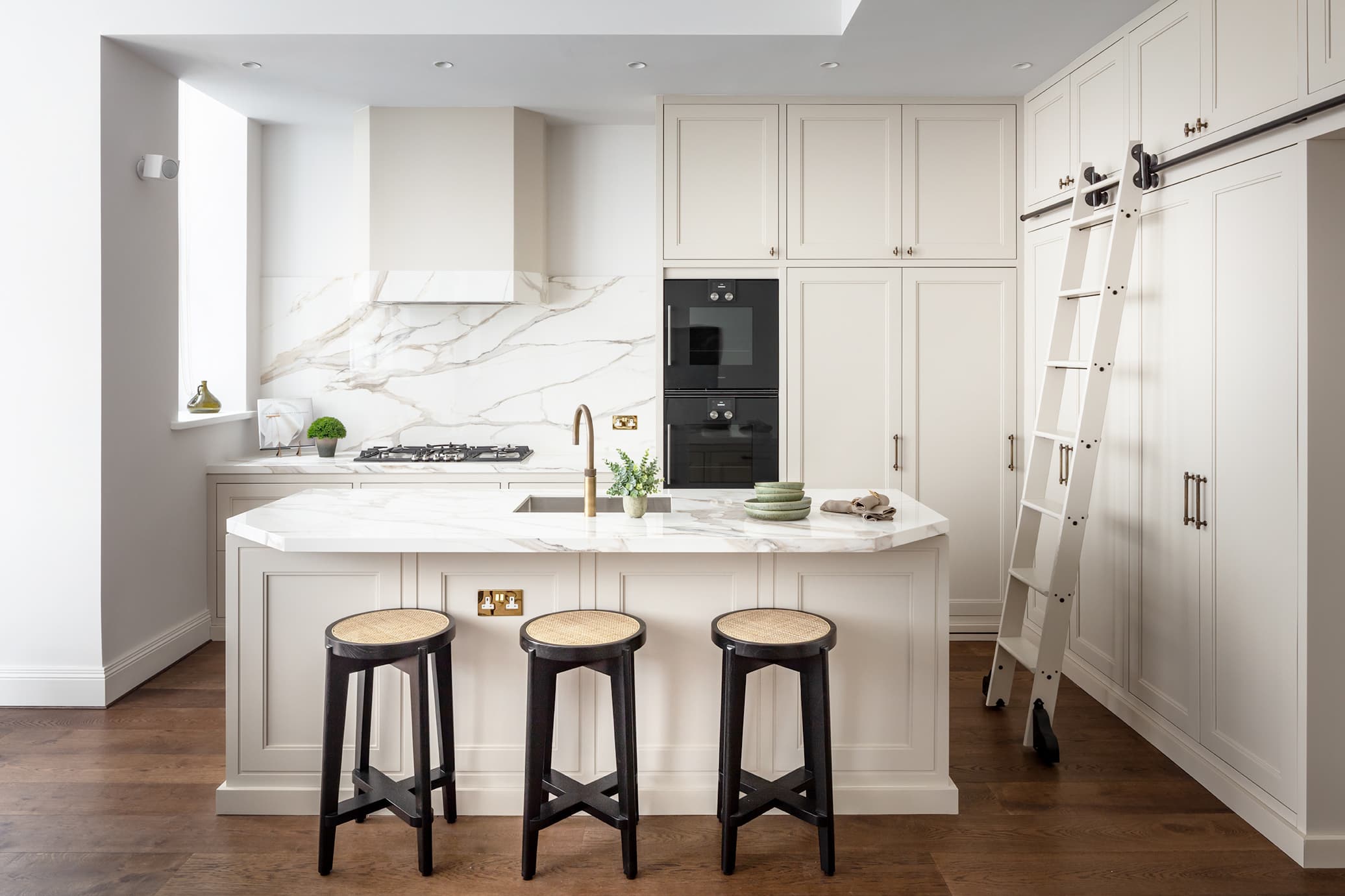
Bespoke Kitchen Cabinets: The Definitive Guide to Handmade Cabinetry
Everything you need to know about bespoke kitchen cabinets — from construction methods and timber selection to door styles, finishes, and the details that distinguish genuine craftsmanship from the merely expensive.
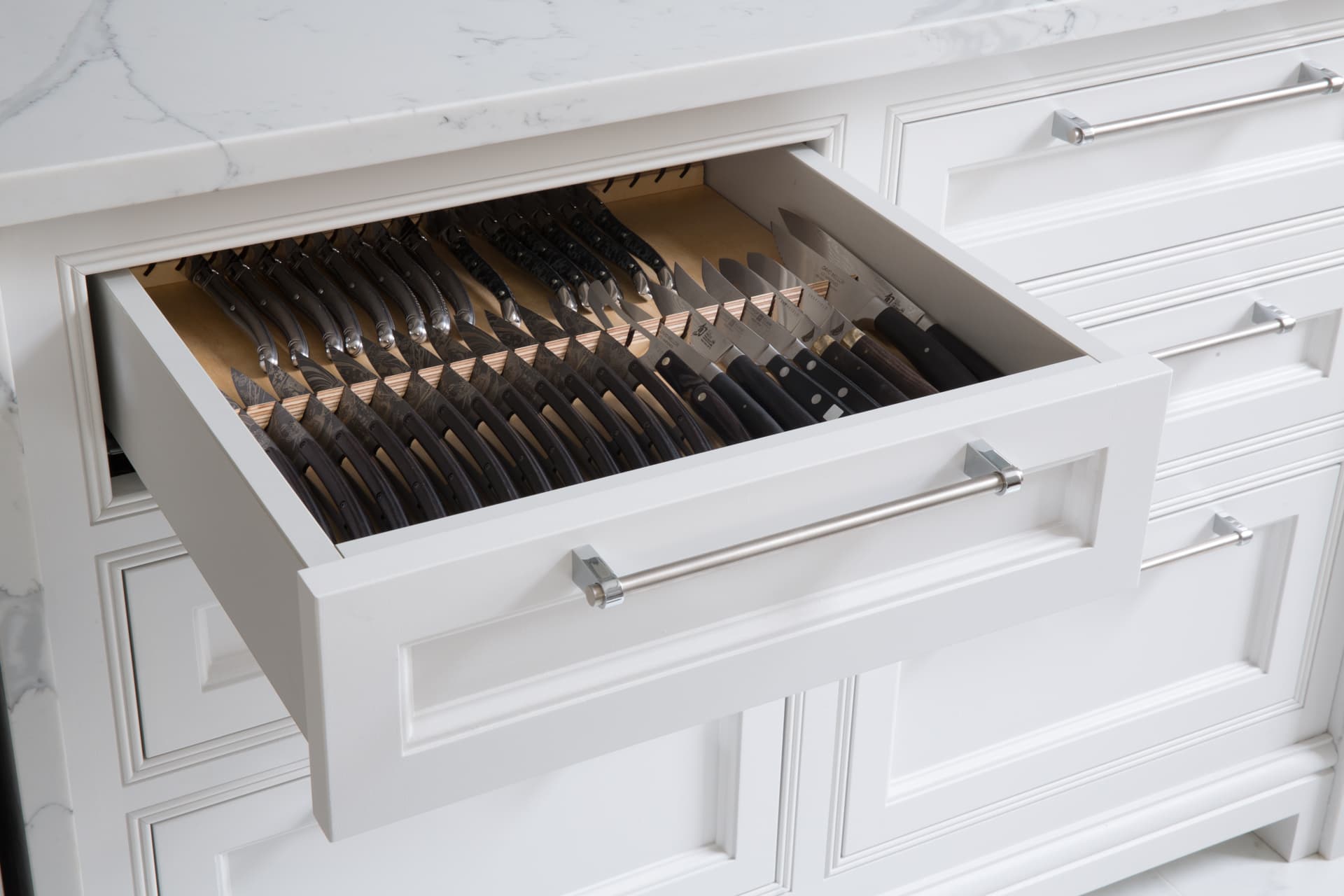
Bespoke Kitchen Joinery: The Craft Behind Cabinets That Last Generations
A detailed guide to the joinery techniques used in bespoke kitchen craftsmanship — from dovetail drawers and mortise-and-tenon frames to tongue and groove panels. Learn how to recognise quality joinery and why it determines how long your kitchen will last.
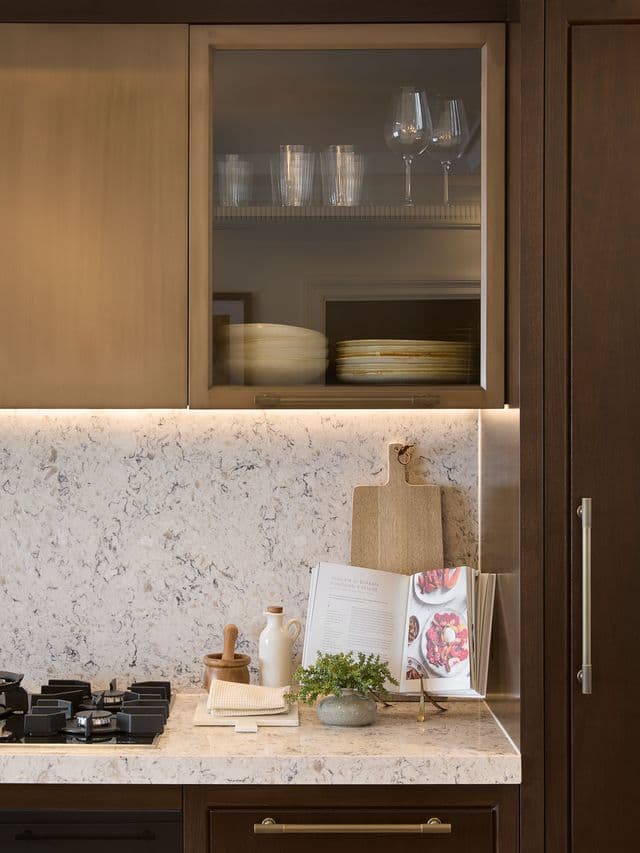
The Bespoke Kitchen Design Process: From Brief to Blueprint
How does a bespoke kitchen get designed? We walk through every stage of the design process — from developing the brief and spatial analysis to 3D visualisation, technical drawings, material specification, and sign-off.