

Luxury Kitchens in Bishops Stortford: Bespoke Design Along the M11 Corridor
Discover why Bishops Stortford and the M11 corridor have become one of England's most exciting areas for luxury bespoke kitchens. From half-timbered cottages to Georgian manor houses, we design kitchens that honour the character of Hertfordshire and Essex border properties.
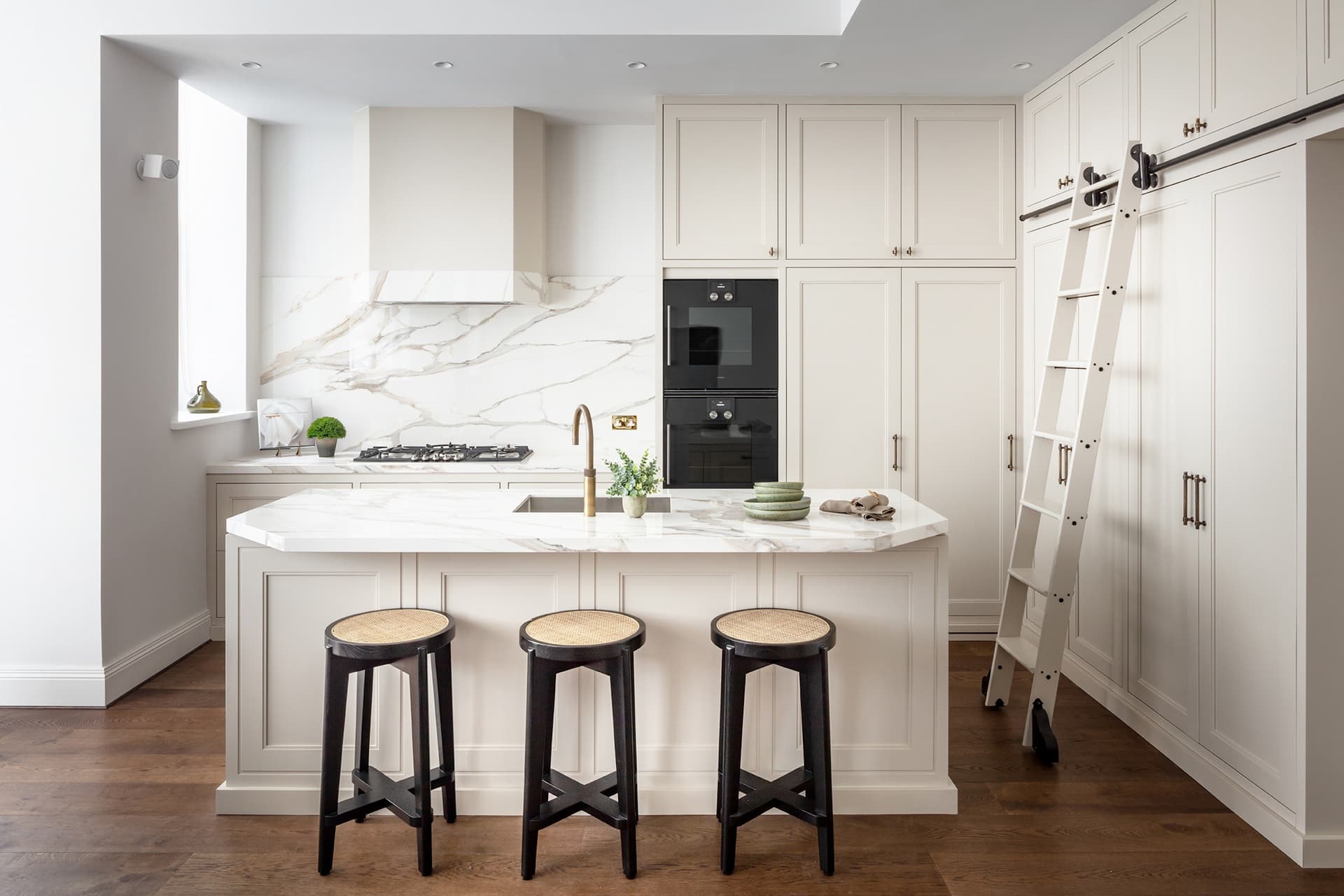
If you drew a line from the spires of Cambridge down through the Hertfordshire countryside to the leafy reaches of North London, you'd trace one of England's most quietly desirable stretches of real estate. The M11 corridor — that ribbon of motorway connecting the capital to the university city — has long been home to families who appreciate the good life without needing to broadcast it.
And at the very heart of this corridor sits Bishops Stortford.
For those of us who design and build luxury kitchens in Bishops Stortford and its surrounding villages, this is fertile ground. Not because the properties are uniformly grand (though some most certainly are), but because the people who live here share something valuable: a genuine appreciation for quality, an eye for detail, and the good sense to invest in the room they actually use most.
The M11 Corridor: England's Quiet Luxury Kitchen Belt
It's a curious thing about the M11 corridor. While other parts of the Home Counties have become synonymous with a certain kind of ostentation, the stretch from Bishops Stortford through to Saffron Walden and beyond has cultivated something altogether more refined. This is old money territory where it rubs shoulders with new, a landscape of rolling farmland punctuated by market towns that have evolved gracefully rather than explosively.
The property stock reflects this character. Drive ten minutes in any direction from Bishops Stortford and you'll find everything from medieval farmhouses with timber frames that have stood for five centuries to crisp contemporary builds that could grace the pages of an architecture journal. Each demands a different approach to kitchen design, and each rewards a maker who understands the vernacular.
This diversity is precisely what makes the area so rewarding for a bespoke kitchen designer along the M11 corridor. There is no template here, no one-size-fits-most solution. Every project begins with the house itself — its history, its proportions, its light — and the kitchen grows from that understanding.
For clients who are considering a broader exploration of what bespoke really means, our complete guide to commissioning a bespoke kitchen walks through every stage of the process.
Bishops Stortford and the Villages That Surround It
Bishops Stortford itself has matured into one of Hertfordshire's most desirable market towns. The combination of excellent schools, a thriving high street, direct trains to London Liverpool Street, and proximity to Stansted Airport makes it attractive to families and professionals who want countryside living without compromising on connectivity.
But the town is only the beginning. The real treasure lies in the constellation of villages that radiate outward from it, each with its own distinct character.
Stansted Mountfitchet
Just up the road, Stansted Mountfitchet offers a village atmosphere with a surprisingly rich architectural heritage. The Norman castle mound and medieval street plan give the village genuine historic weight, and many of the properties here — including some rather splendid Georgian houses along the main street — have kitchens that haven't been touched for decades. When they are finally updated, the owners tend to want something that respects the building's history while functioning beautifully for modern life. Bespoke kitchens in the Stansted area are increasingly in demand for precisely this reason.
Sawbridgeworth
Cross the border into Hertfordshire and you reach Sawbridgeworth, a town of quiet elegance where period properties line streets that have changed remarkably little in a century. The maltings buildings, the Georgian townhouses, and the converted agricultural buildings along the Stort Valley all present fascinating design challenges. We've found that clients in Sawbridgeworth tend to be particularly engaged in the design process — they know their homes well and they want a kitchen that feels as though it has always been there.
Much Hadham
Travel west and the landscape opens up into the gentle hills around Much Hadham — a village so perfectly English that it almost feels staged. It isn't, of course. This is genuine rural Hertfordshire, where Grade II listed cottages sit alongside substantial farmhouses and the occasional manor house that has been in the same family for generations. The sculptor Henry Moore lived here for forty years, which tells you something about the calibre of the place.
Designing luxury kitchens for Much Hadham properties requires a sensitivity to scale and proportion that mass-produced cabinetry simply cannot achieve. When your kitchen wall follows a curve that was set in the sixteenth century, you need a maker who can follow it.
Furneux Pelham and the Eastern Hertfordshire Villages
Further into the countryside, the hamlets of Furneux Pelham, Stocking Pelham, and Braughing represent the quieter, more pastoral side of the M11 corridor's catchment. Properties here tend toward the substantial: farmhouses with multiple reception rooms, barns that have been sympathetically converted, and the occasional rectory that has found a new lease of life.
These are homes where the kitchen is the indisputable heart of family life — often the room where everyone gathers, where homework is done alongside cooking, where Sunday lunches extend well into the afternoon. A bespoke kitchen for this kind of living needs to be robust, beautiful, and utterly practical in equal measure.
The Properties: What We Work With
One of the genuine pleasures of working across bespoke kitchens in Hertfordshire and the Essex border is the sheer variety of architectural settings. In a single month, our design team might move from a sixteenth-century hall house to a brand-new build, and each requires a fundamentally different approach.
Half-Timbered Cottages and Medieval Houses
The Hertfordshire and Essex border is blessed with some of England's finest timber-framed buildings. These are houses with low ceilings, uneven floors, and walls that haven't been truly vertical since the Tudors were in charge.
For a kitchen designer, these properties are simultaneously challenging and thrilling. Every measurement must account for the building's idiosyncrasies. Standard cabinets are useless when the floor drops forty millimetres across the width of the room and the ceiling beams dictate the height of your wall units. This is where genuinely bespoke construction — cabinetry made to follow the building rather than fight it — becomes not a luxury but a necessity.
We typically work with natural timber finishes in these settings, allowing the kitchen to sit comfortably alongside the existing fabric of the house. Hand-painted finishes in heritage colours are equally at home, provided the palette respects the building's period character.
Georgian Manor Houses and Townhouses
The Georgian properties of Bishops Stortford, Sawbridgeworth, and the surrounding villages demand a different sensibility entirely. Here, symmetry and proportion are everything. The rooms tend to be generous — high ceilings, tall windows, elegant cornicing — and the kitchen must rise to meet that architectural confidence.
In these settings, we often design kitchens with a more formal structure: balanced arrangements of cabinetry, carefully proportioned islands, and materials that echo the restrained elegance of the house. Natural stone worktops, unlacquered brass hardware, and hand-painted cabinetry in muted, historically informed colours create kitchens that feel entirely of a piece with their surroundings.
Barn Conversions
The agricultural heritage of the Hertfordshire and Essex border has left a legacy of magnificent barn conversions. Soaring rooflines, exposed trusses, and vast open-plan living spaces present a design opportunity that few settings can match.
The key challenge with barn kitchens is scale. A kitchen that would look perfectly proportioned in a Georgian townhouse can feel lost beneath a double-height barn roof. We address this through carefully considered vertical elements — tall larder units, statement lighting, and sometimes an architectural canopy above the island that defines the kitchen's territory within the larger space.
Material choices in barn conversions tend toward the tactile: rough-sawn oak, hand-finished concrete, blackened steel. The kitchen should complement the raw honesty of the barn's structure rather than compete with it.
Contemporary New Builds and Modern Extensions
Not every property on the M11 corridor has centuries of history behind it. The area has seen thoughtful residential development, and many of the finest houses are contemporary builds designed by architects who understand the landscape.
For these projects, we enjoy the freedom to explore more minimalist design language: handleless cabinetry, seamless surfaces, integrated appliances that disappear into the architecture. The precision of our bespoke manufacturing process comes into its own here, where the tolerance between panels might be two millimetres and any imperfection is immediately visible.
We also work extensively on modern kitchen extensions to period properties — those beautifully judged glass and steel additions that bring light and contemporary living to older homes. These hybrid projects, where a twenty-first-century kitchen must sit harmoniously alongside eighteenth-century architecture, are among the most satisfying we undertake.
Design Considerations for the Hertfordshire and Essex Border
Working across bespoke kitchens in Hertfordshire and the neighbouring Essex villages has taught us a good deal about the particular considerations that apply to this area. Some are practical, others are more nuanced, but all of them inform our approach to every project.
Listed Building Sensitivity
A significant proportion of the properties we work with hold some form of heritage designation. Grade II listing is common across Bishops Stortford and its villages, with Grade II* and even Grade I buildings not uncommon. Working within these constraints requires an understanding of what conservation officers expect and a willingness to engage with the listing process rather than circumvent it.
In practice, this means designing kitchens that are sympathetic to the building's historic character while accommodating every modern convenience. It sometimes means concealing dishwashers behind timber panels that match the existing joinery, or designing extraction systems that don't require visible external ducting on a listed facade.
We've found that a well-presented application — supported by detailed drawings showing how the kitchen integrates with the building's historic fabric — is almost always received positively. Conservation officers want to see that you care about the building. So do we.
Rural Water and Drainage
Properties in the more rural villages often rely on private water supplies or older drainage systems. We always consider the practical infrastructure during our survey phase, ensuring that the kitchen design accounts for water pressure, waste pipe runs, and any limitations imposed by septic tanks or treatment plants.
These aren't glamorous design considerations, but they're the kind of thing that separates a kitchen that works flawlessly from one that causes problems a year after installation.
The Aga Question
Let's address the elephant in the room — or rather, the cast-iron range cooker in the inglenook. A significant number of homes in this area have existing Agas or Rayburns, and many clients want to retain them alongside a modern cooking setup.
We've designed dozens of kitchens that integrate an Aga within a bespoke layout, treating it as a complementary heat source and slow-cooking station while providing a separate run of contemporary cooking appliances for everyday use. It's a very particular design challenge, but it's one we rather enjoy solving.
The Convenience of Proximity: Our Workshop and the M11
There's a practical dimension to our work in Bishops Stortford and the surrounding area that's worth mentioning. Our workshop is situated along the M11 corridor, which means that every stage of the process — from initial consultation through design development, workshop visits, and installation — is conveniently close.
This proximity matters more than you might think. During the design phase, we visit your home multiple times. During manufacture, we encourage clients to visit the workshop and see their kitchen taking shape. And during installation, our fitting team travels to your property daily, often for one to three weeks.
When your kitchen maker is nearby, these visits are easy, frequent, and productive. There's no logistical overhead, no long-distance surcharges, and no delay when a quick site visit can resolve a question in twenty minutes.
For clients in Bishops Stortford and the nearby villages, our location along the M11 corridor means we're typically on your doorstep within thirty minutes. For those closer to Cambridge, we're equally accessible — as our work across bespoke kitchens in Cambridge demonstrates. And for clients in the Essex villages along the corridor, you'll find more about our approach in our guide to bespoke kitchens in Essex.
What Our Clients in This Area Value Most
Over the years, we've noticed some consistent themes among our clients in the Bishops Stortford area. These are people who have typically owned several homes and have experienced both off-the-shelf and higher-end fitted kitchens. They come to Albury House because they've reached a point where compromise feels unnecessary.
What they value, above all, is:
- Craftsmanship that endures — a kitchen built to last decades, not a kitchen cycle
- Design that respects their home — not a showroom kitchen transplanted into a period property
- A transparent process — knowing what they're getting, what it costs, and who is making it
- Personal service — dealing with the same team from first sketch to final adjustment
- Quiet confidence — a kitchen that impresses through quality rather than ostentation
These values align precisely with how we work. We don't build kitchens to impress the neighbours. We build kitchens to delight the people who use them, every single day.
Exploring Our Full Range of Services
A luxury kitchen project often extends well beyond the kitchen itself. Many of our clients in the Bishops Stortford area commission us for complementary joinery and cabinetry work throughout their homes — boot rooms, utility rooms, libraries, and dressing rooms designed and built to the same exacting standards as the kitchen.
If you're earlier in your thinking and want to understand what the bespoke process involves before committing to a consultation, our guide to commissioning a bespoke kitchen covers every stage in detail.
Start the Conversation
Every Albury House kitchen begins with a conversation. If you're considering a luxury kitchen in Bishops Stortford, Sawbridgeworth, Stansted Mountfitchet, Much Hadham, or any of the villages along the M11 corridor, we'd genuinely love to hear from you.
There's no obligation and no sales pitch — just an honest discussion about your home, your ambitions, and what the right kitchen might look like for the way you live.
Book your free design consultation and let's talk about what's possible.
Frequently Asked Questions
Thinking about a new kitchen?
Book Your Free ConsultationYou might also enjoy
Bespoke Kitchens Cambridge: Handcrafted Luxury for Every Style of Home
Discover why Cambridge homeowners choose bespoke kitchens from Albury House. From Victorian terraces to barn conversions, we design and build luxury handmade kitchens tailored to Cambridge's finest properties.
Bespoke Kitchens in Saffron Walden: Designing for One of England's Finest Market Towns
Bespoke kitchens designed and handmade for Saffron Walden homes — from listed timber-frame houses to Georgian townhouses and country estates across Uttlesford. Discover how we approach kitchen design in North Essex's most characterful town.
Luxury Kitchen Design in Hampstead: Bespoke Kitchens for North London's Finest Homes
Luxury kitchen design for Hampstead homes — from Georgian townhouses to contemporary new-builds. Bespoke kitchens crafted by Albury House Kitchens for NW3 and surrounding areas.